Journal · Collector’s Guide
SKS Rifles Buyer’s Guide — Type 56, Soviet & Yugo
The SKS is the rifle caught between two legends — chambered in the same 7.62×39 as the AK that replaced it, but built like the Mosin it retired. Semi-automatic, with a fixed ten-round magazine and a folding bayonet, it was produced across the Eastern Bloc for a generation. The Chinese Type 56 is the one most Americans grew up with, but the Soviet original and the Yugoslav grenadier each have their following. Here’s how to tell them apart, from a Plano shop that handles surplus every week.
The SKS is a Soviet-designed gas-operated semi-automatic carbine chambered in 7.62×39mm, with a fixed ten-round magazine and a folding bayonet, and almost every example on the collector market came from one of three producers. The Soviet SKS-45 is the original: a milled receiver, a spring-loaded blade bayonet, and a Tula or Izhevsk arsenal mark. The Chinese Type 56 was built in far larger numbers, moving from milled receivers with blade bayonets to stamped receivers with spike bayonets, and is identified by a numbered arsenal code such as Factory 26. The Yugoslav M59/66 carries a permanently fitted 22mm grenade spigot and, unlike most others, an unlined bore.
At a glance
- Caliber — 7.62×39mm on every factory variant; no factory SKS was chambered in anything else
- Action — gas-operated semi-automatic, fixed 10-round magazine, folding bayonet
- Main producers — USSR (Tula, Izhevsk), China (numbered state arsenals, Type 56), Yugoslavia (Zastava, M59/66)
- Arsenal marks — Tula: a star with an arrow through it. Izhevsk: an arrow inside a triangle. Chinese Factory 26: “26” inside a triangle
- Matching numbers — the receiver serial is repeated on the bolt, bolt carrier, trigger group and magazine; a swapped receiver cover is the most common exception
- C&R threshold (2026) — made 1976 or earlier; every Soviet SKS-45 qualifies on age, later Chinese and Yugoslav production may not
- Most often confused with — the Type 56 assault rifle, China’s AK pattern, which shares the name and the cartridge but is a different weapon
Soviet, Chinese, Yugo — which SKS is which
Almost every SKS on the market traces to one of three producers, and the differences drive both price and character. The Soviet SKS-45 is the original — milled, superbly finished, and the benchmark collectors chase. The Chinese Type 56 is the workhorse most American shooters know: built in staggering numbers, ranging from early milled receivers to later stamped ones. The Yugoslav M59/66 is the oddball with a grenade launcher fitted from the factory. Same basic rifle, three very different collecting stories.
Variants compared — SKS-45, Type 56, M59/66
| Feature | Soviet SKS-45 | Chinese Type 56 | Yugoslav M59/66 |
|---|---|---|---|
| Caliber | 7.62×39mm | 7.62×39mm | 7.62×39mm |
| Barrel length | 20.5 in (520 mm) | 20.5 in (520 mm) | 20.5 in (520 mm), plus a permanently fitted 22mm grenade spigot at the muzzle |
| Overall length | ≈40.2 in (1,020 mm) | ≈40.2 in (1,020 mm) | ≈44.1 in (1,120 mm) |
| Weight, unloaded | ≈8.5 lb (3.85 kg) | ≈8.5 lb (3.85 kg) | ≈9.3 lb (4.2 kg) |
| Production years | Adopted 1945; Soviet production into the mid-1950s | 1956 into the 1970s | M59 from 1959; M59/66 from 1966, continuing past 1976 |
| Origin & arsenals | USSR — Tula and Izhevsk | China — numbered state arsenals (Factory 26, 416, 0136, 306) | Yugoslavia — Zastava, Kragujevac |
| Arsenal mark | Tula: a star with an arrow through it. Izhevsk: an arrow inside a triangle | Numerals set inside a shape; Factory 26 uses “26” inside a triangle | Zastava markings |
| Identifying features | Milled receiver; spring-loaded blade bayonet; chrome-lined bore; refurbished guns often carry arsenal-applied electropencil serials | Early: milled receiver, blade bayonet. Later: stamped receiver, spike bayonet. Chrome-lined bore. Paratrooper variant has a shorter barrel | 22mm grenade spigot, flip-up ladder sight, gas cutoff valve, night sights on many. Bore not chrome-lined |
| Matching numbers | Receiver serial repeated on bolt, bolt carrier, trigger group and magazine | Same parts set; a swapped receiver cover is the most common exception | Same parts set |
| C&R status in 2026 | Eligible — all Soviet production predates 1976 | Eligible if built 1976 or earlier; later production is not | Depends on the individual rifle’s date, as production ran past 1976 |
Dimensions are nominal service specifications for each pattern; individual rifles vary with arsenal, production year and refurbishment. The shorter-barrelled Chinese Paratrooper is a further Type 56 variant and is not covered by the column above. Curio & Relic status is determined by an individual rifle’s year of manufacture — confirm current requirements with the ATF.
The Soviet SKS-45 — the original
Adopted in 1945 and produced at Tula and Izhevsk into the mid-1950s, the Soviet SKS is the design as Simonov intended it: a milled receiver, a spring-loaded blade bayonet, and the beautifully finished arsenal work the Soviets reserved for a front-line rifle. Most were later refurbished and carry arsenal-applied electropencil serials. A matching-numbers Tula or Izhevsk SKS in honest condition is the rifle every SKS collection is built around — and increasingly hard to find at a shooter’s price.
Chinese Type 56 SKS — the one most Americans own
China built the Type 56 under license from 1956 well into the 1970s, and it’s the SKS that flooded the U.S. market in the ’80s and early ’90s. Early guns wear a milled receiver and a blade bayonet; later production moved to a stamped receiver and the distinctive spike bayonet. Watch for the triangle-26 (Factory 26) arsenal mark, one of the most sought-after Chinese makers, and the scarce Paratrooper variant with its shorter barrel. Chinese Type 56 quality is better than its reputation — these were real military rifles, not commercial knock-offs.
Norinco Type 56 SKS — Commercial Imports vs Military Surplus
Norinco — China North Industries Corporation — is the state export conglomerate that sold Chinese arms abroad, not a factory. A rifle described as a Norinco Type 56 was built at one of the numbered state arsenals just like any other Type 56; the difference is how it reached the United States. The arsenal code stamped on the receiver tells you who made it, and the importer stamp tells you who brought it in.
In practice the distinction lines up with two eras. Military-contract Type 56 rifles that came in before the import-marking requirement often carry no importer stamp at all — the non-import guns collectors pay a premium for. Norinco-marked commercial imports belong to the later period that ran until Chinese rifle imports were halted in the 1990s, and they are normally import-marked on the receiver or under the barrel. Neither is a copy of the other: both are genuine Type 56 rifles, and the markings are what separate them.
Non-import & pre-ban — why the markings matter
A 1994 executive order banned further import of Chinese firearms, which froze the supply of Chinese SKSs and split the market in two. A rifle with no importer stamp — a non-import gun that came in before the marking requirement, or a bring-back — commands a real premium over an import-marked example, because the receiver reads clean the way it left the arsenal. Our 1968 non-import Factory 26 is exactly that kind of gun. When you’re comparing two Chinese SKSs, the import mark (or its absence) is often the single biggest price driver.
Yugoslavian M59/66 — the grenadier
Yugoslavia’s M59/66 is the SKS you can spot across the room: it wears a permanently-fitted 22mm grenade-launching spigot, a flip-up ladder sight, and a gas cutoff valve, plus night sights on many examples. The one thing to know going in — the M59/66 bore is not chrome-lined, unlike most Soviet and Chinese SKSs, so bore condition matters more on these and is worth insisting on. In exchange you get the most feature-packed, unmistakable SKS variant made. The gas cutoff valve exists so the rifle can be switched to grenade-launching mode, and a valve left closed is the usual reason a used M59/66 appears not to cycle. The ladder sight folds up for launching and back down for ordinary shooting. Yugoslavia built both this rifle and the earlier M59 — the same carbine without the spigot and its fittings — at Zastava.
Reading the markings
- Arsenal stamp — Soviet Tula is a star, Izhevsk an arrow; Chinese Factory 26 is a triangle around “26”; Yugo rifles carry Zastava markings.
- Import mark — a small importer stamp is normal and legal; its absence on a Chinese gun is a value premium (non-import / pre-ban).
- Matching numbers — receiver, bolt carrier, bolt, magazine, and stock ideally share the serial, or a correct refurbishment number.
- Blade vs. spike bayonet — a quick date tell on Chinese guns: early production is a blade, later is the spike.
What to inspect before you buy
Check the bore first — most SKSs are chrome-lined and stay bright for decades (the Yugo M59/66 is the exception, so scrutinize those). Confirm matching numbers and that the bolt carrier and gas system are clean and correct. Work the action, and — an SKS-specific point — check the firing pin: these use a free-floating pin that should rattle, and a gummed-up or aftermarket spring-loaded pin is worth a conversation. Look the stock over for arsenal repairs and import-era refinishing, and read the rollmarks so you know maker, era, and import status.
Caliber & shooting — 7.62×39
Every SKS here is chambered in 7.62×39, the same intermediate cartridge the AK made famous — inexpensive by centerfire standards, sold everywhere, and mild to shoot. The SKS’s fixed ten-round magazine and longer barrel actually make it more accurate off the bench than most AKs, which is why it endures as a truck gun, a first centerfire rifle, and a genuinely fun range piece. The round is the Soviet M43 cartridge, developed during the Second World War and adopted for the SKS before the AK was built around it. Ballistically it sits close to the .30-30 Winchester rather than to a full-power service round like 7.62×54R or .30-06, which is what makes the recoil so mild. Most SKS bores are chrome-lined, which is why decades of corrosive-primed surplus ammunition did comparatively little harm to them — the Yugoslav M59/66 is the exception and deserves more care. The rifle loads from the top with ten-round stripper clips.
C&R eligible — and the FFL part is easy
Soviet SKSs and older Chinese guns are over fifty years old and Curio & Relic eligible — with a C&R license they can ship straight to your door. Otherwise it’s the usual painless routine: we ship fully insured to your local FFL, who runs the background check at pickup. In the Dallas area? Pick up in store in Plano and handle the rifle first. Every SKS is inspected in-house — browse the full rack of surplus & collectible rifles, or email sales@oldsteelarsenal.com for photos of a specific bore, bayonet, or set of markings.
In the Case Right Now
Live inventory — every SKS currently on the floor. Each is one of one; when it sells, it is gone.
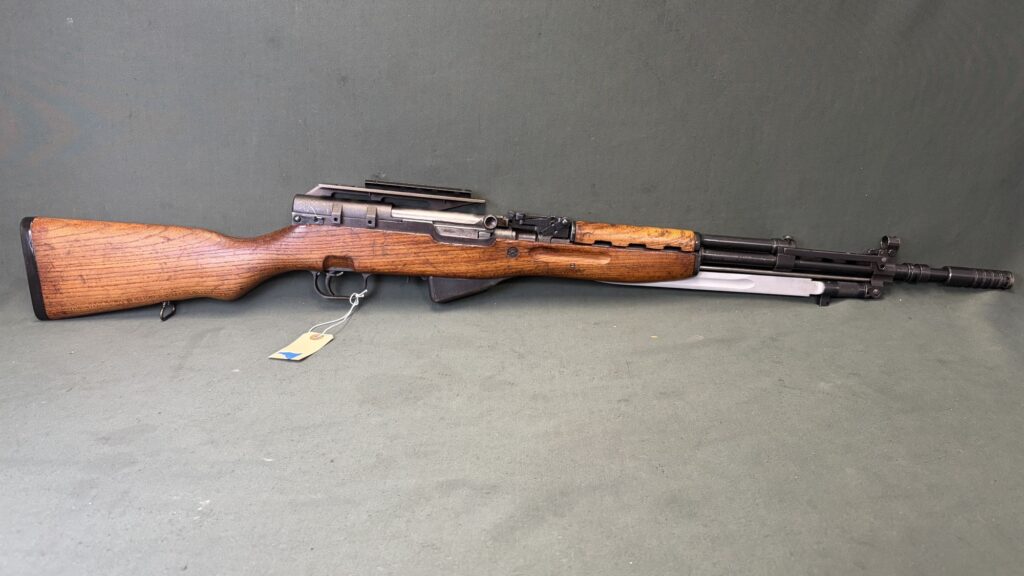 Yugoslavian Zastava SKS M59/66 7.62×39 Mirror Bore with Optic Mount$585.00
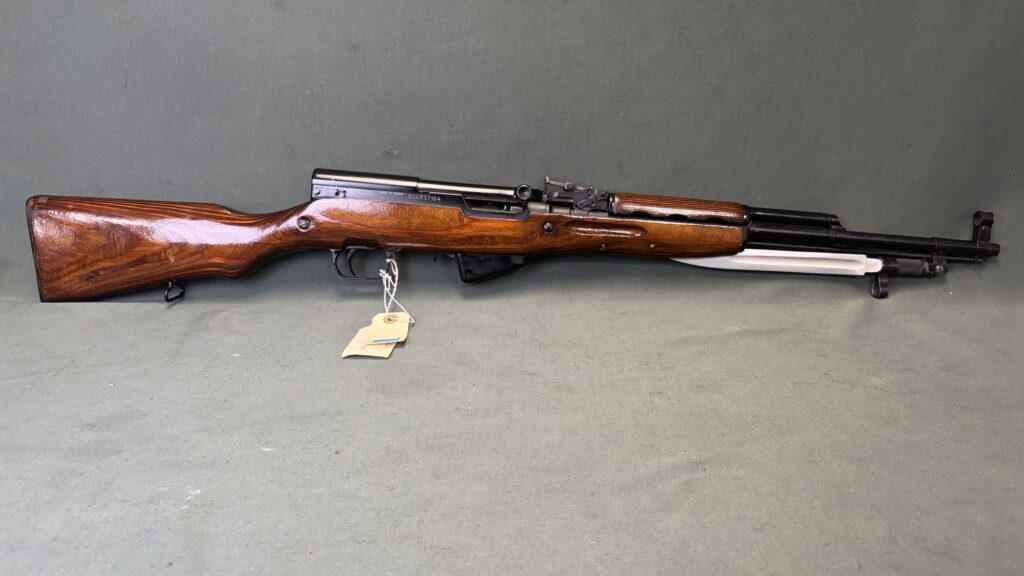 Late Tula Soviet SKS 7.62×39 Left Side Star Arsenal Refurbished Appears Unfired$969.00
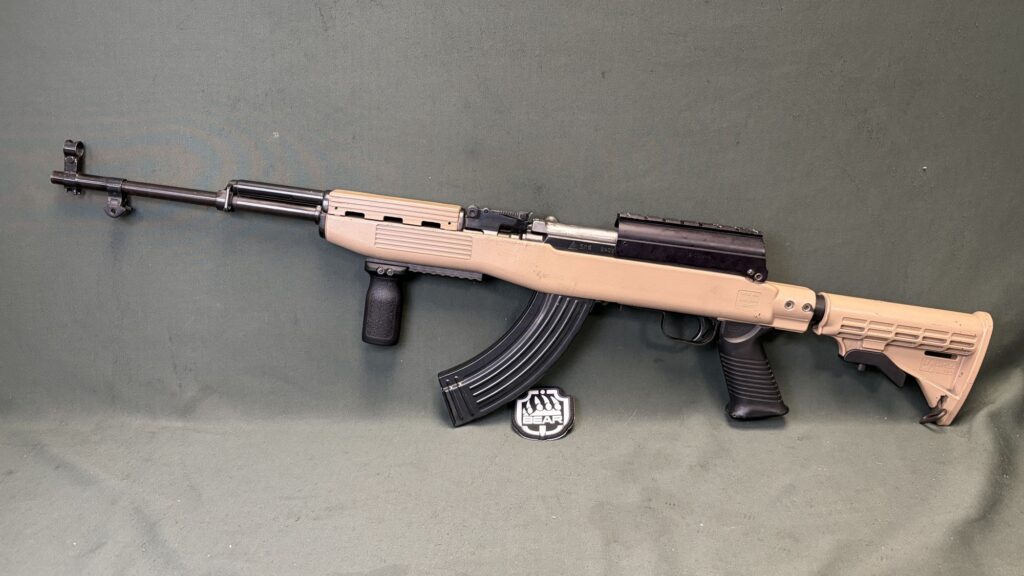 Chinese Type 56 SKS Factory 26 7.62×39 Tapco Stock 35 Round Magazine Optic Mount$589.00
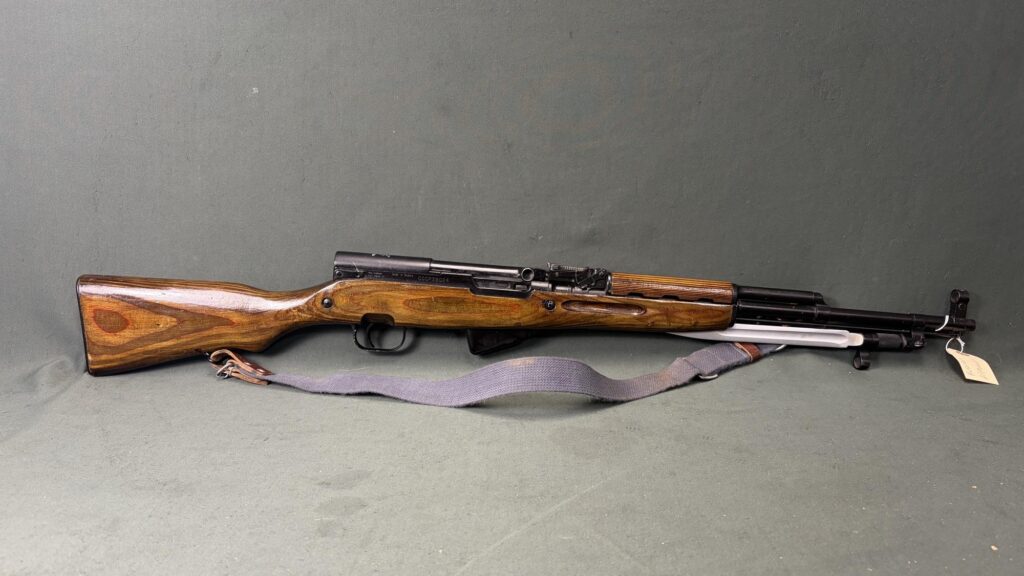 1950 Tula SKS 7.62×39 Arsenal Refurbished Matching Mirror Bore Blade Bayonet$975.00
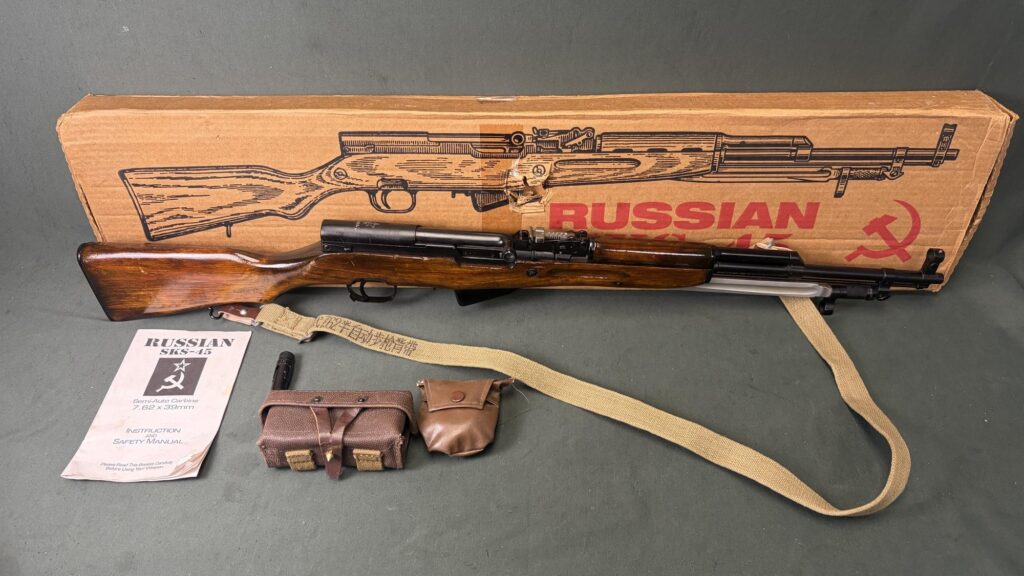 1950 Early Tula SKS 7.62×39 New Old Stock Factory Box and Accessories$1,085.00
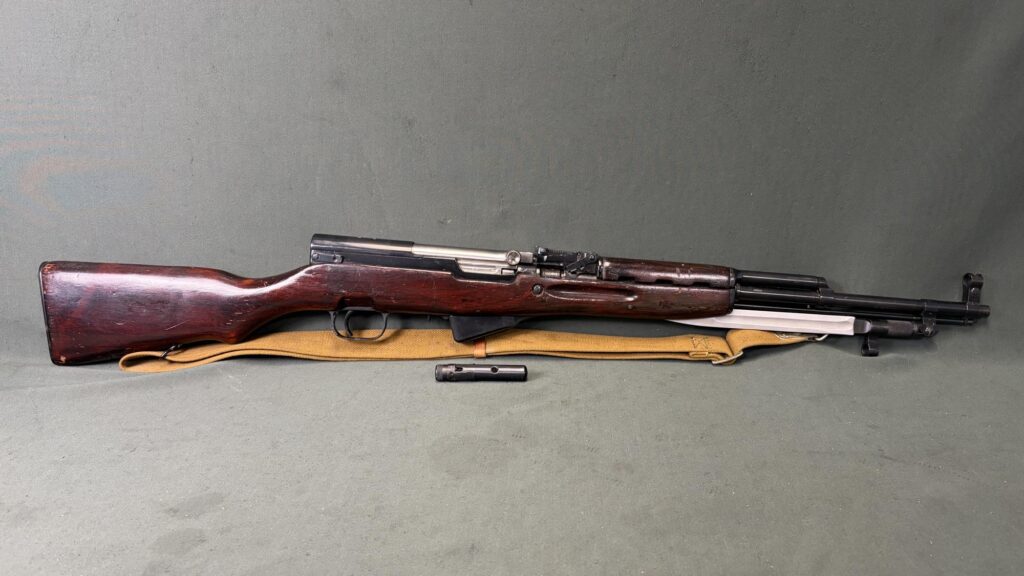 1954 Tula SKS 7.62×39 Arsenal Refurbished Matching Original Sling and Kit$929.00
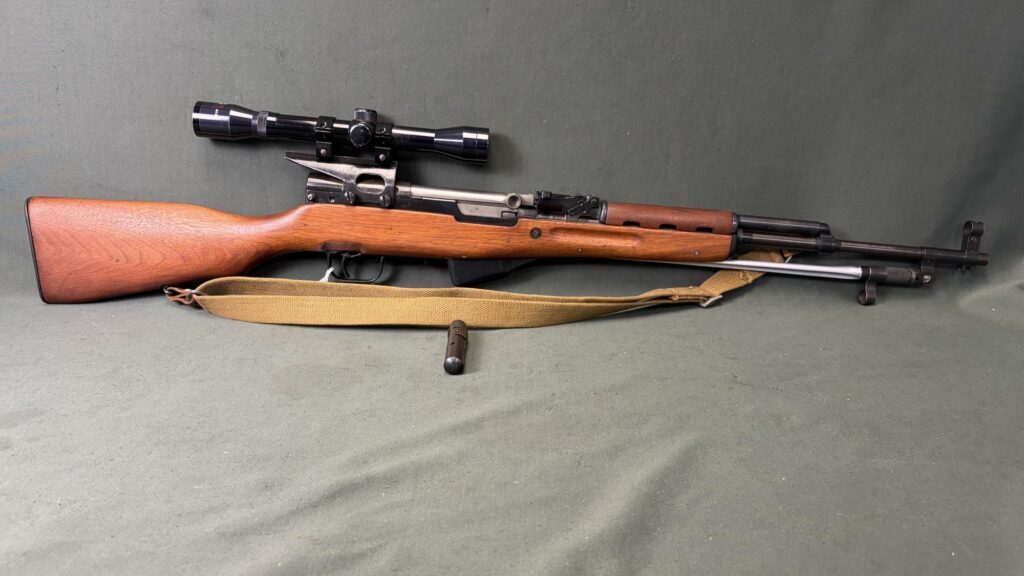 Chinese Type 56 SKS 7.62×39 Factory 0134 Matching$649.00
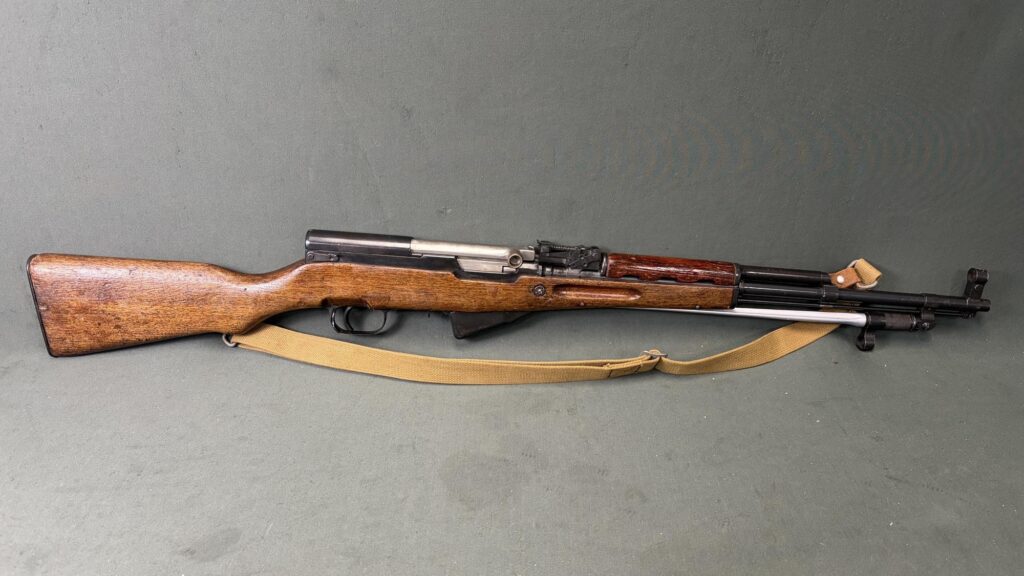 Chinese Type 56 SKS 7.62×39 Factory 206 All Matching Non Import Marked$745.00
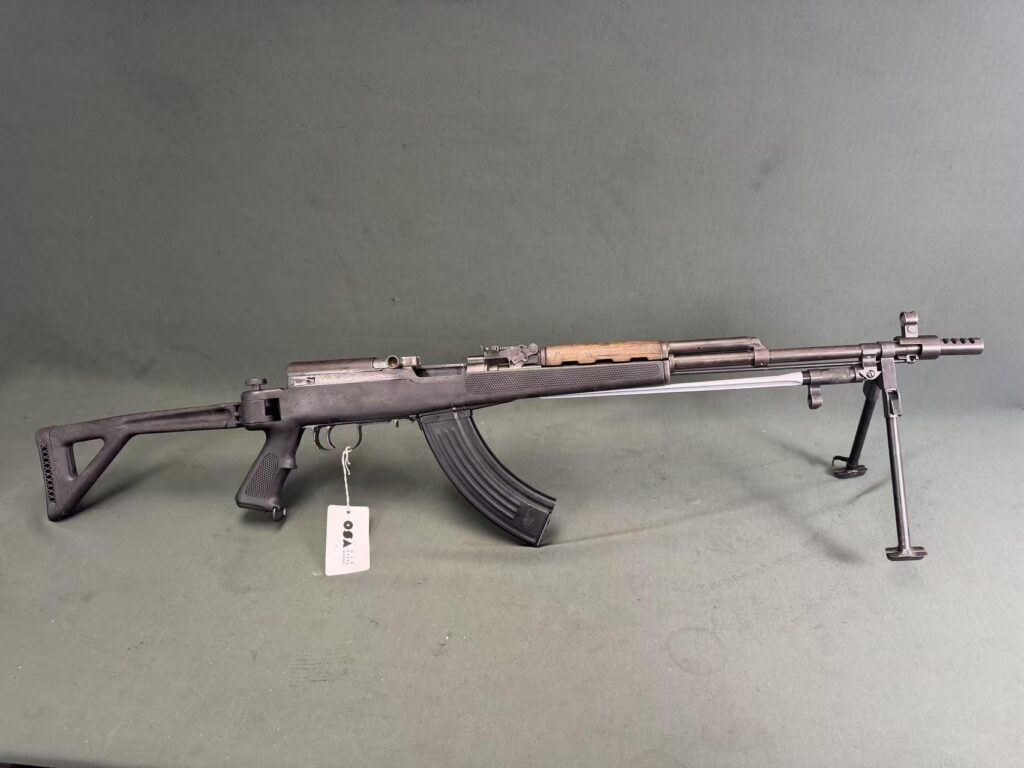 Ultra rare, pre-ban, tactical, “mil spec” type 56 sks$5,749.67
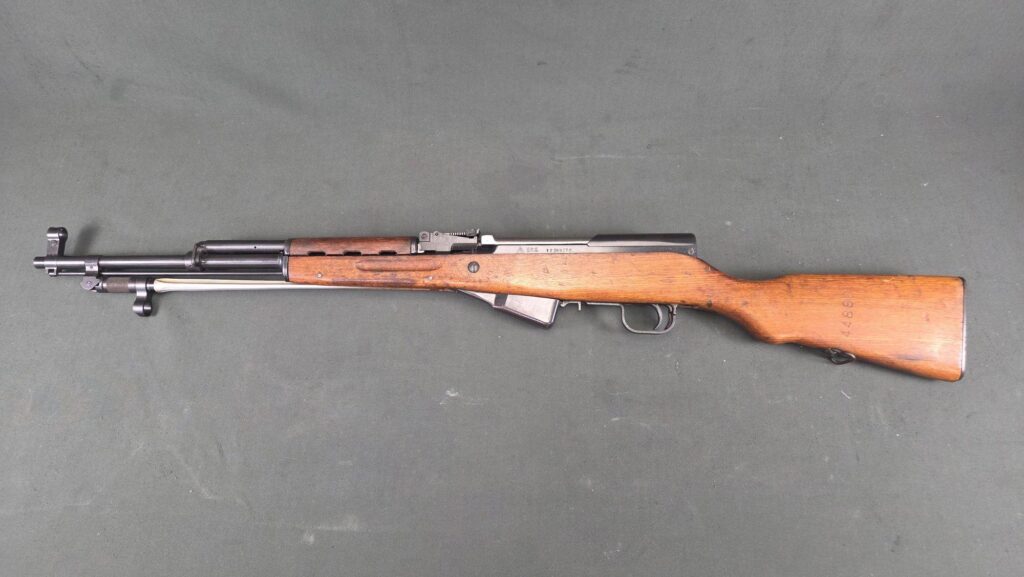 Chinese Type 56 SKS — Factory 26, 1968, Non-Import, All Matching$949.00
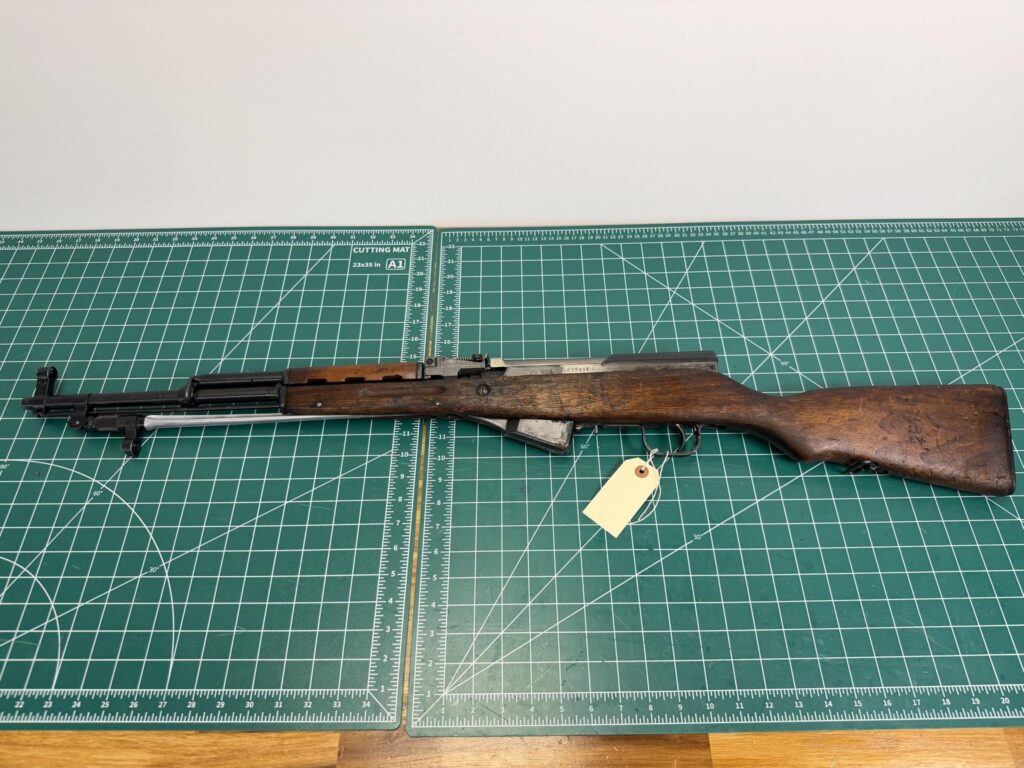 Chinese Type 56 SKS — Factory 26, 1970, Spike Bayonet$579.00
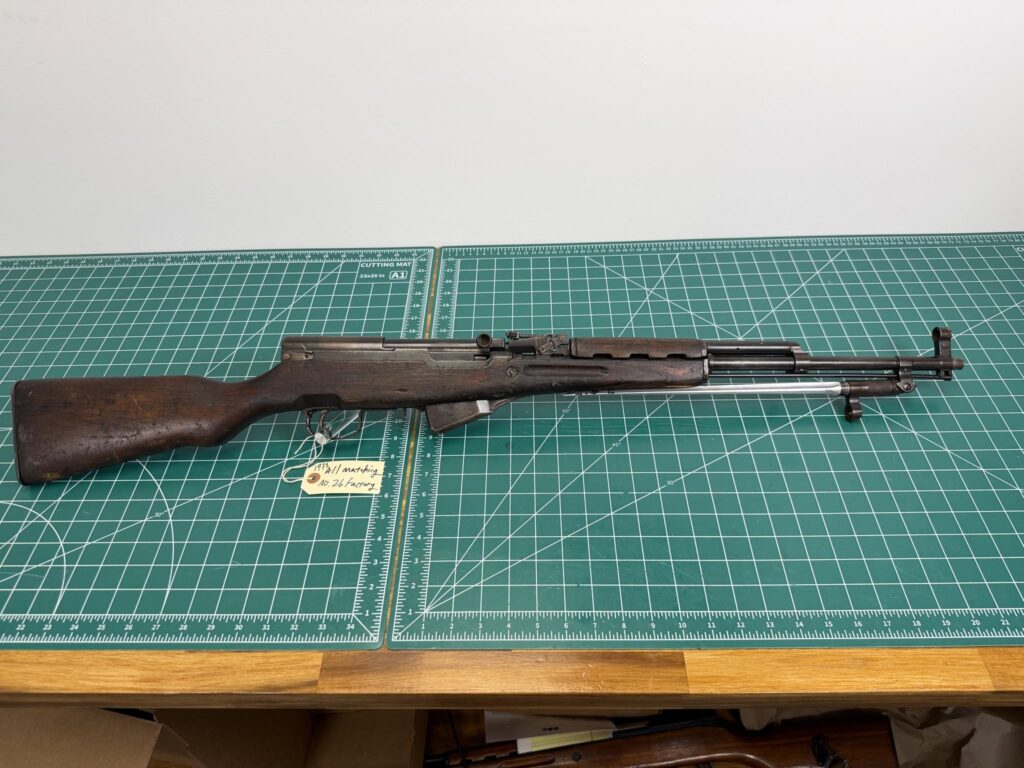 Chinese Type 56 SKS — Factory 26, 1971, All Matching$569.00
Shop Chinese Type 56 SKS rifles for sale →