
Journal · Collector’s Guide
Schwarzkopf’s M9: General Officer Pistol GO-00698
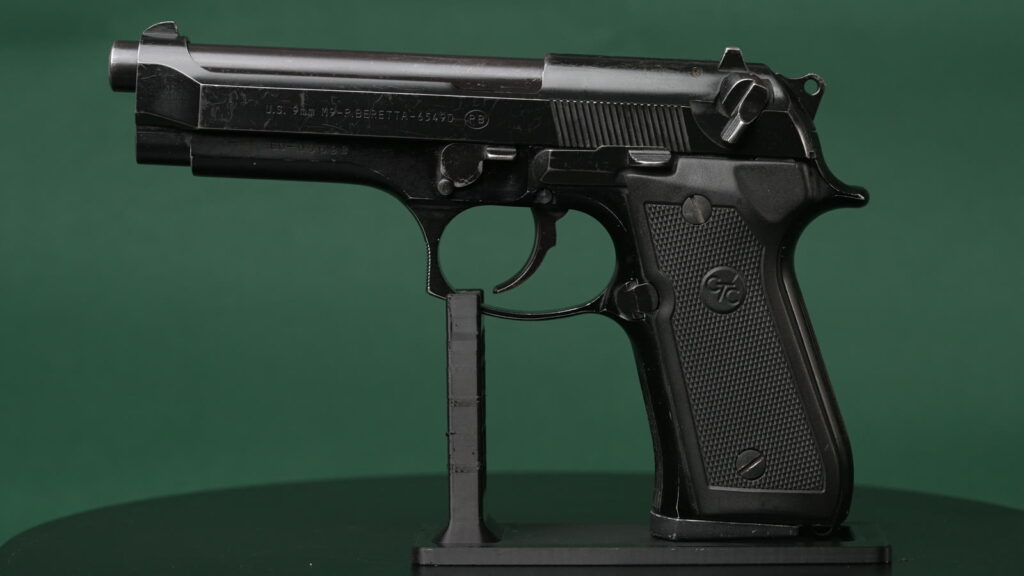
The Schwarzkopf M9 is the Beretta M9 General Officer pistol, serial GO-00698, that General H. Norman Schwarzkopf carried as his sidearm in the Gulf War. Three things tie it to him: the serial number on the frame, the Army hand receipt for that same number that he signed in April 1989, and a letter from his daughter that lists the number again and identifies it as his Gulf War sidearm. It came to us with his general officer’s belt, holster and magazine pouch, and it is part of the Old Steel Arsenal collection.
How we know the Schwarzkopf M9 was his
The pistol, the Army paperwork and the family letter all carry the same number.
The pistol. On the left side, the slide reads U.S. 9mm M9-P.BERETTA-65490 with the PB mark in an oval, and the frame below it carries the serial, GO-00698. GO stands for General Officer.

The hand receipt. The Army’s 2008 article on the program says a general who has one of these pistols must confirm every year that it is in his or her possession. This DA Form 2062 records that kind of certification. It describes the item as “Pistol, Semi Automatic, General Officer, 9MM,” serial number GO 00698. Below it is the certification, “I certify that the weapon described above is currently in my possession, under the conditions of chapter 3, AR 725-1,” his signature, and the date in his hand, 14 April 89. The address block reads: General H. Norman Schwarzkopf, Commander-in-Chief, United States Central Command, MacDill Air Force Base, Florida. When he signed it, he was commanding Central Command.

The letter. His daughter’s letter lists the pistol as a Beretta M9, serial GO-00698, 9mm, and says: “My father noted this pistol as being his sidearm during the Gulf War.”

The hand receipt and the letter are originals, and they are here with the pistol.
What is a General Officer M9?
The U.S. Army has issued sidearms to its generals since 1944. As Bruce Canfield writes in American Rifleman, the Army instituted the practice in early 1944 as a badge of rank, starting with Colt’s Pocket Model pistols in .32 and .380. The M15 General Officer’s pistol, a shortened M1911A1 .45, followed in the 1970s, and from 1982 to 1986 general officers received standard M1911A1 pistols. In 1985 the Army adopted the Beretta M9 to replace the M1911A1, and soon after, a general officer’s M9 was approved for newly promoted Army and Air Force generals. Canfield describes it as essentially the standard M9 service pistol with a special serial number carrying a “GO” prefix.
According to the Army’s 2008 article, each active-duty general officer may receive a general officer model M9 on loan, and along with the pistol comes a flag, belt buckle, holster, magazine, cleaning rod and brush. Published counts of general officer M9s cover different periods and do not agree, so we give no total.
When the Army replaced the M9 with the SIG Sauer M17 and M18, Canfield notes, it set aside personalized M18s for general officers, again with GO-prefix serials.
His other pistols hang on our wall, among them the .45 that was his Army-issued general officer’s pistol before the M9.
A left-handed general’s pistol
Look at the right side of GO-00698, behind the trigger guard. The magazine release button sits there, not on the left. The M9’s magazine release is reversible: as Wikipedia’s description of the pistol notes, it can be positioned for right- or left-handed shooters. On the left side of this pistol, the end of the release sits flat. General Schwarzkopf was left-handed, and his M9 was set up for his hand.
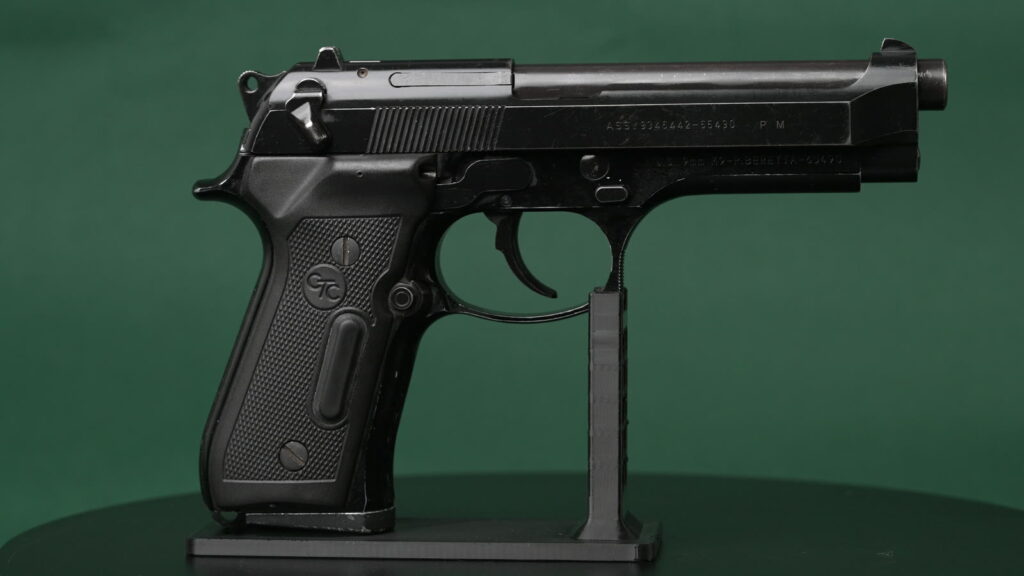

He wore it the same way, on his left hip.
The belt, holster and magazine pouch
The pistol came with his black general officer’s belt, its eagle buckle, a holster and a two-cell magazine pouch. One magazine rides in the pouch now; the other is in the pistol. The back of the holster is molded BIANCHI INTERNATIONAL #G100 GENERAL OFFICERS MODEL.

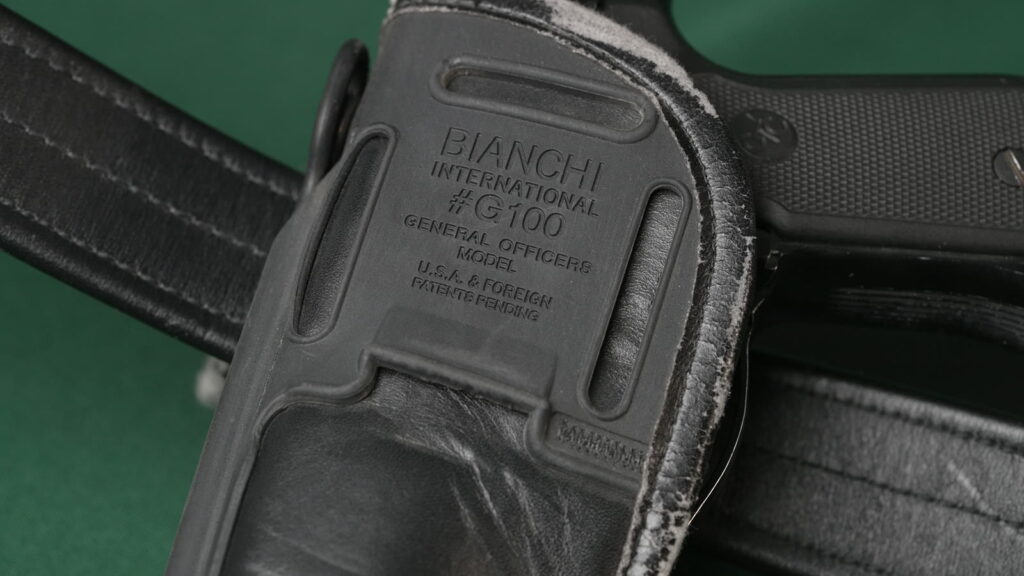

The leather shows long wear. The edges of the holster flap and the magazine pouch are worn through to pale material, and threads have worked loose along the seams.
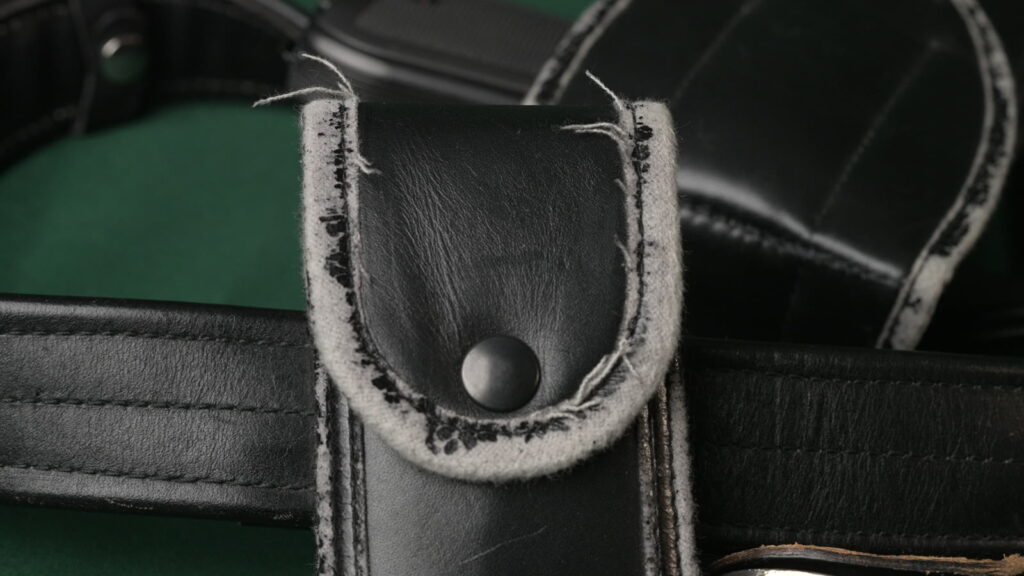
Wear inside and out
When the pistol came in, we stripped it to clean it. The wear goes inside, on the working parts, as well as on the finish. Our reading of that wear is simple: he shot this pistol, and he shot it often.

The laser grips came later
The pistol now wears Crimson Trace laser grips, with the Crimson Trace logo on the grip panels. They were not on it in the Gulf War. Crimson Trace dates its own founding to 1994, three years after Desert Storm, so the grips were added later.
Why we will never fire it
When we cleaned it, we found it mechanically sound. It would fire today. We will never fire it.
Firing this pistol was his to do, and no one else’s. For us, preserving its history matters more than firing it ourselves. The general led the coalition in what we see as the first modern war, and he did it decisively: after the air campaign, a ground offensive of about 100 hours drove Iraqi forces from Kuwait in early 1991. We keep the pistol and its papers together, and we will not fire it.
Specifications
| Item | General Schwarzkopf’s M9 |
|---|---|
| Model | Beretta M9, General Officer |
| Serial | GO-00698 |
| Slide marking | U.S. 9mm M9-P.BERETTA-65490 (PB) |
| Cartridge | 9mm Luger |
| Action | Short recoil, double action / single action |
| Magazine | Standard M9 magazine, 15 rounds |
| Magazine release | Moved to the right side for a left-handed shooter |
| Grips | Crimson Trace laser grips, added after the Gulf War |
| Hand receipt | DA Form 2062, signed 14 April 1989, CENTCOM, MacDill AFB |
| Belt | General officer’s belt, eagle buckle, Bianchi #G100 General Officers Model holster, two-cell magazine pouch |
On the floor at OSA
The Schwarzkopf M9 is part of the Old Steel Arsenal collection, together with the general’s other pistols. If the service pistols of the M9’s era interest you, these are on the floor at Old Steel Arsenal:
- German-made SIG P228, German police and Israeli service: the P228 served U.S. forces as the M11, the compact 9mm that sat alongside the M9. Our guide to telling a P228 from a P226 covers how to read one.
- 1995 SIG P228 with the Swiss Ticino police crest: another P228, made in Germany in the M9 years.
- Auto-Ordnance 1911A1 .45 ACP: a modern pistol on the M1911A1 pattern, the .45 the Army adopted the M9 to replace in 1985.
The grid below updates by itself as pieces come and go.
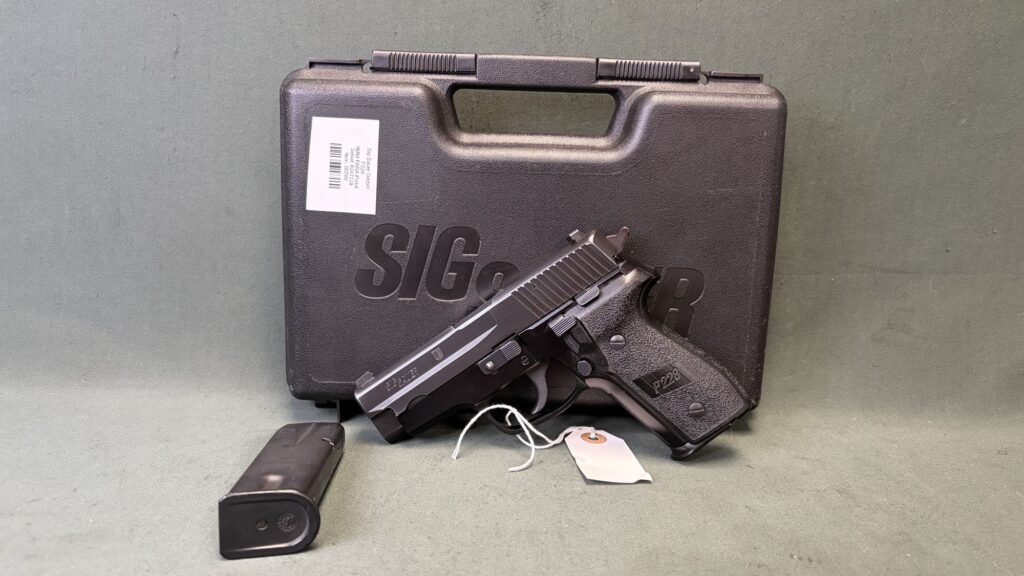 SIG Sauer P228 9mm 1995 German Ticino Police Crest No Import Mark Box$1,249.00
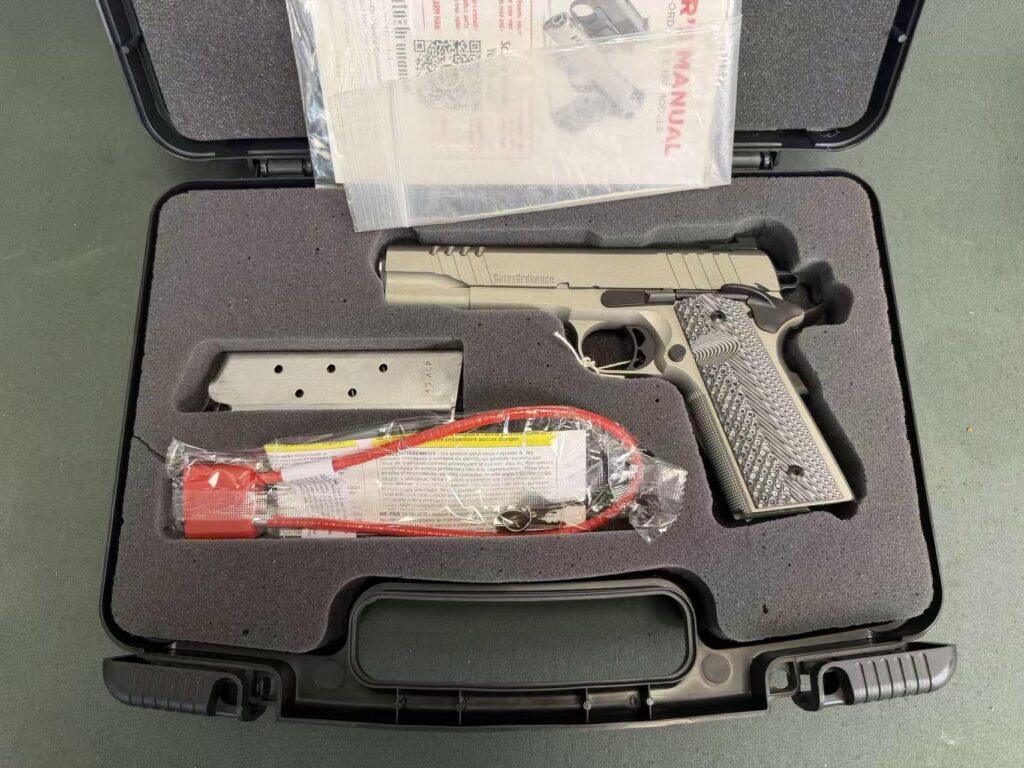 Auto-Ordnance 1911TCAC6 .45 ACP Stainless Cerakote TruGlo Night Sights$649.00
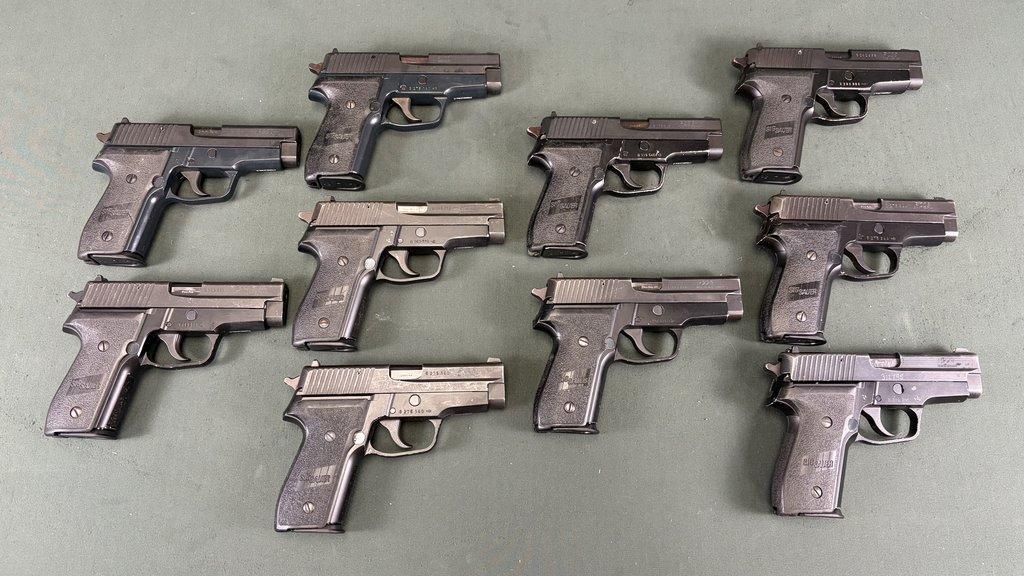 Free ShippingSIG Sauer P228 9mm German Police Israeli IDF Surplus Grade B Mirror Bore Original price was: $629.00.$569.00Current price is: $569.00.
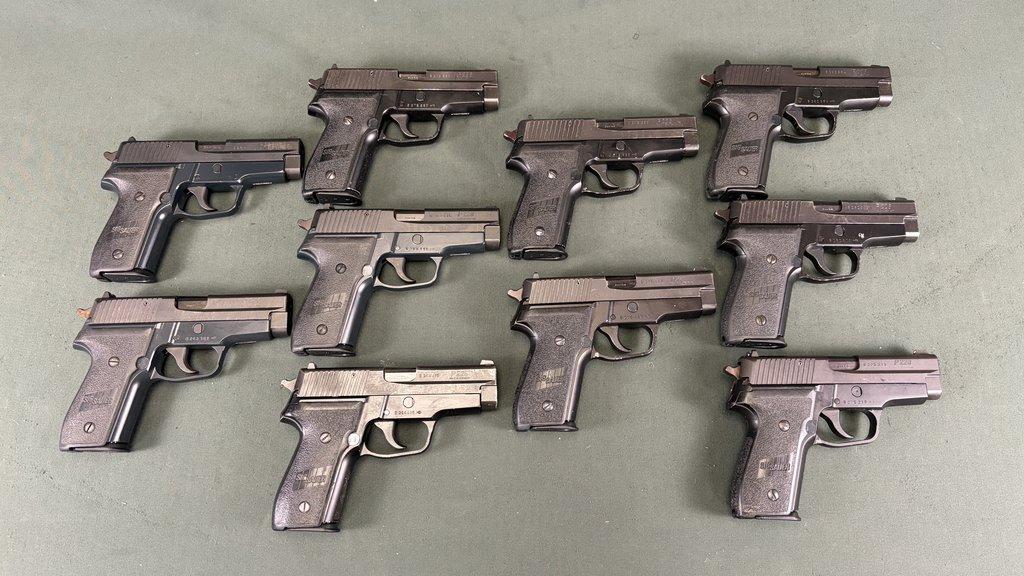 Free ShippingSIG Sauer P228 9mm German Police Israeli IDF Surplus Grade A Mirror Bore Original price was: $679.00.$629.00Current price is: $629.00.
The short version is on our Instagram. Watch it on Instagram.
General information for collectors, not legal advice. Program history and counts come from published sources that do not always agree.
Common Questions
What is the Schwarzkopf M9?
The Schwarzkopf M9 is Beretta M9 General Officer pistol GO-00698. His signed 1989 Army hand receipt lists that serial, and his daughter’s letter lists it again and identifies the pistol as his Gulf War sidearm.What does GO mean on an M9 serial number?
GO stands for General Officer. General officer M9s were essentially standard M9 service pistols with a special serial number carrying a GO prefix, issued to general officers.Who received GO-prefix M9 pistols?
According to a 2008 U.S. Army article, each active-duty general officer may receive a general officer model M9 on loan and must confirm every year that it is still in his or her possession.Why is the magazine release on the right side of Schwarzkopf's M9?
The M9’s magazine release is reversible for left-handed shooters, and on GO-00698 it sits on the right side. General Schwarzkopf was left-handed.Did Schwarzkopf's M9 have laser grips in Desert Storm?
No. The Crimson Trace laser grips on it now were added later; Crimson Trace was founded in 1994, after the Gulf War.When did the Army's general officer pistol program begin?
In early 1944, as a badge of rank, starting with Colt Pocket Model pistols, according to American Rifleman. The M15 .45 followed in the 1970s, standard M1911A1s from 1982 to 1986, then the GO-prefix M9, and now the M18.Sources
- Old Steel Arsenal collection: Beretta M9 GO-00698, DA Form 2062 hand receipt signed 14 April 1989, the daughter’s letter, and the belt, holster and pouch, examined and photographed by us (markings, document text, wear)
- Bruce N. Canfield, American Rifleman, “General Officer’s Pistols” — https://www.americanrifleman.org/content/general-officer-s-pistols/ (practice begun in early 1944 as a badge of rank, Colt .32 and .380 Pocket Models, M15, standard M1911A1s 1982–1986, M9 adopted 1985 to replace the M1911A1, GO M9 for newly promoted Army and Air Force generals, GO-prefix serial, M18 for general officers)
- Rebecca Montgomery, U.S. Army, “General officer pistol program has rich history,” 9 January 2008 — https://www.army.mil/article/6938/general_officer_pistol_program_has_rich_history (loan to each active-duty general officer, annual confirmation of possession, flag, belt buckle, holster, magazine, cleaning rod and brush)
- Wikipedia, “Beretta M9” — https://en.wikipedia.org/wiki/Beretta_M9 (adopted 1985, short recoil DA/SA, 15-round magazine, reversible magazine release for right- or left-handed shooters)
- Crimson Trace, “About Us” — https://www.crimsontrace.com/complete-focus/about-us/ (established 1994)
- Wikipedia, “Norman Schwarzkopf Jr.” — https://en.wikipedia.org/wiki/Norman_Schwarzkopf_Jr (CENTCOM command from November 1988 at MacDill AFB, Desert Storm air campaign and 100-hour ground offensive, Iraqi forces out of Kuwait in early 1991)
- Wikipedia, “SIG Sauer P226” (P228 section) — https://en.wikipedia.org/wiki/SIG_Sauer_P226 (P228 in U.S. Armed Forces service as the M11)