Journal · Collector’s Guide
North Korean Type 63 SKS: Markings and a Doubling
The North Korean Type 63 SKS is North Korea’s copy of the Soviet SKS carbine, and it is a rifle American collectors rarely see; US rules also bar arms imports from North Korea. The one in our video has no import marks. At the range we were hitting a steel plate with it, until one trigger pull produced two shots. On the bench we found the likely reason, a free-floating firing pin gummed up with old grease, which is something every SKS owner should check.
Where the North Korean Type 63 SKS came from
Sergei Simonov designed the SKS in the 1940s, and the Soviet Union made it from 1949 to 1958, about 2.7 million in all, at Tula and, for two years, Izhevsk. Through the 1950s the AK-47 replaced it in Soviet front-line units, and the design was licensed or transferred to allies: China, Yugoslavia, Albania, North Korea, North Vietnam, East Germany and Romania. With Soviet or Chinese technical help, North Korea began making its own.
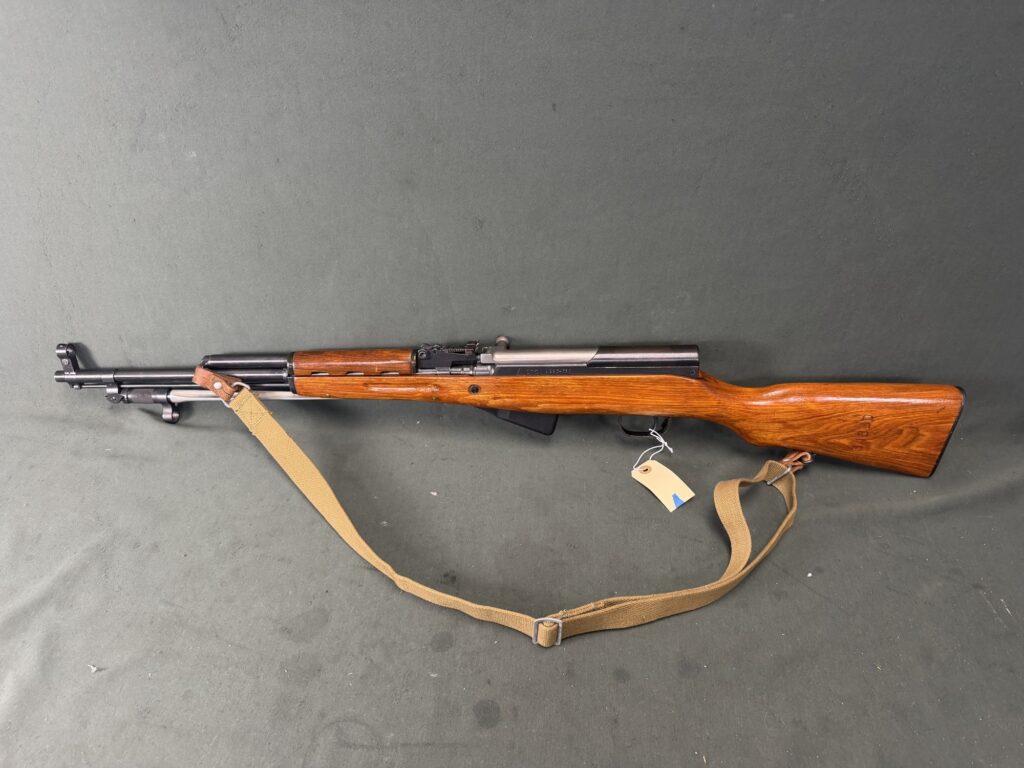
North Korea’s version is the Type 63. It is reported to have been made for the Worker-Peasant Red Guards and other paramilitary forces; Athlon Outdoors, which calls the same militia the Labor-Farming Red Guard, says the SKS went to it once there were enough AK rifles for the army. At least three models are reported: a standard one with a blade bayonet, one with a gas shutoff and a detachable grenade launcher, and one that appears to have a side-swinging bayonet. Ours is the standard pattern, with the blade bayonet folded under the barrel.

Why you almost never see one in America
Federal import rules state a policy of denying licenses and other approvals for defense articles originating in North Korea, so a North Korean rifle cannot come in through the normal import channel. Ours carries no importer’s marks.
Some North Korean SKS rifles reportedly went to North Vietnam, and one possibility is that this one came back from that war. Nothing on the rifle and no paperwork we have says how it arrived, so that stays a possibility, not a history.
How to identify a North Korean Type 63 SKS
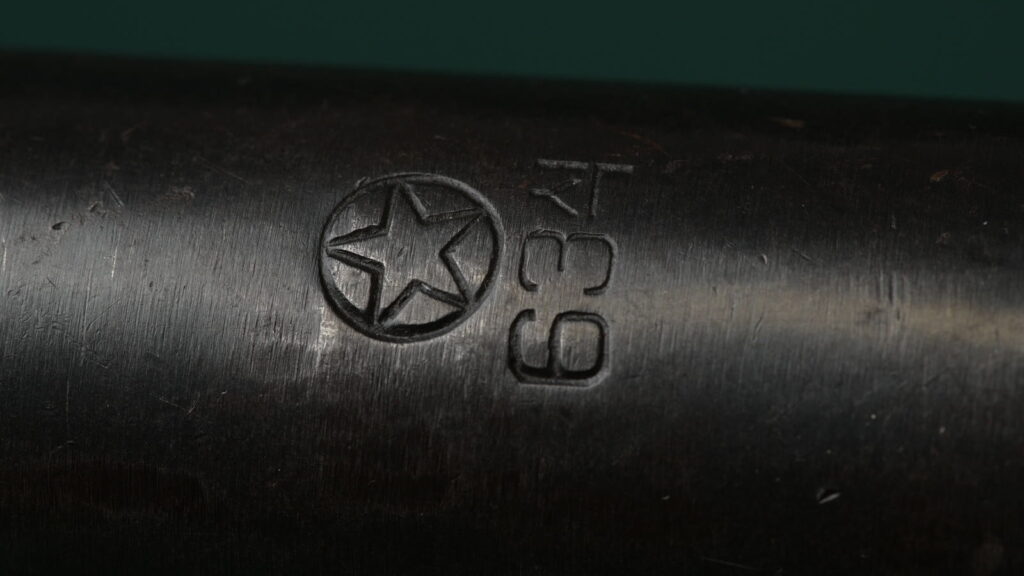
On ours, the receiver cover is stamped with a five-pointed star inside a circle, then 63 and a Hangul character we read as 식 (sik), “type”: Type 63. North Korean AK rifles are marked in a similar way; Athlon Outdoors describes a star inside a circle and the model number, “58 Type,” on the Type 58.
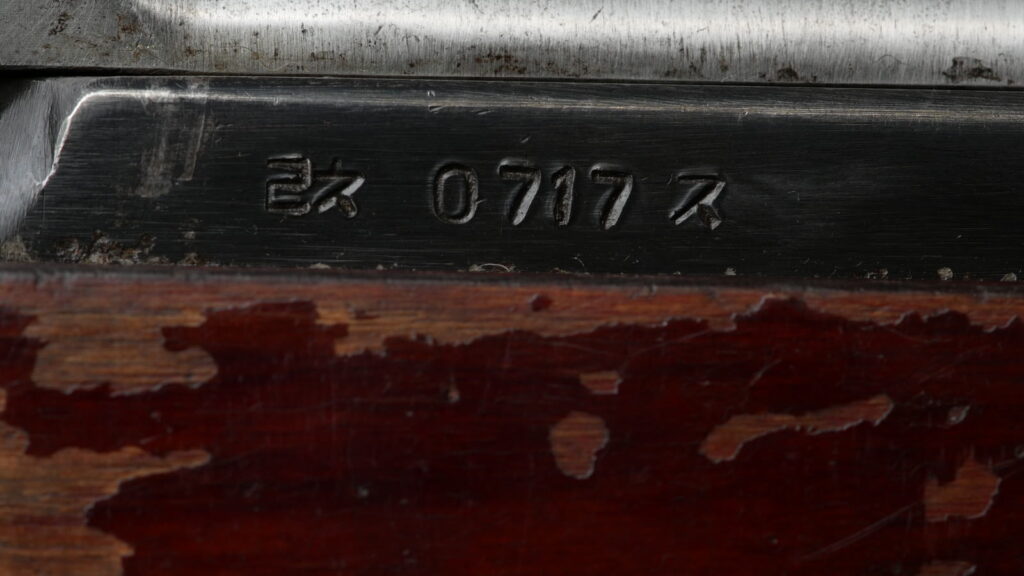
The serial number on the left side of the receiver sits between Korean characters. On ours the numeric portion reads 0717, and those digits appear on every numbered part we checked: the bolt, the bolt carrier, the receiver cover, the trigger group, the magazine floor plate and the stock.
Otherwise a Type 63 keeps the basic SKS system: a gas-operated carbine in 7.62×39mm with a tilting bolt and a ten-round fixed magazine loaded from stripper clips.

What happened at the range: one trigger pull, two shots
At 130 yards, our owner put about ten rounds on a man-size steel plate, and almost every one hit. Then it started doubling: one pull of the trigger, two shots, 61 milliseconds apart.

A semi-auto is supposed to fire once per pull, so he quit shooting it.
What causes an SKS slamfire
On the bench, the rifle was filthy inside. His guess: nobody had cleaned it in fifty years. The sear checked out fine, and his read is that the firing pin had been stuck forward in old grease.
That fits how the SKS is built. The earliest Soviet SKS rifles had a spring-loaded firing pin that held the pin back from the primer until the hammer struck it. Most SKS rifles since have a free-floating pin with no spring. If dirt, old grease or leftover cosmoline holds that pin forward in the bolt, the bolt closing on a fresh round can drive the pin into the primer and fire it without a trigger pull. That is a slamfire, and it can happen before the bolt is fully locked, which is why a rifle doing it should not be fired again until it has been fixed.

Prevention starts with the pin: the firing pin channel has to be clean so the pin moves freely. Primer sensitivity can also play a part. A rifle that has doubled should be stripped and checked by someone who knows the SKS before it is fired again; we have not fired ours since.
Ours is clean and oiled now, and we have not fired it since.
Specifications
| Item | North Korean Type 63 SKS |
|---|---|
| Origin | North Korea, copy of the Soviet SKS |
| Cartridge | 7.62×39mm |
| Action | Gas-operated, tilting bolt, semi-automatic |
| Magazine | 10-round fixed, stripper-clip loaded |
| Sights | Iron, graduated to 1,000 m |
| Bayonet | Folding blade (standard model) |
| Marking on ours | Circled star, 63 and 식 on the receiver cover |
| Ours | 0717 on every numbered part we checked; no import marks |
On the floor at OSA
The North Korean rifle in our video is part of the Old Steel Arsenal collection and is not among the pieces below. These SKS rifles from the same family are in our case:
- A 1950 early Tula SKS, from the first years of Soviet production, the period of the spring-loaded firing pin.
- A 1954 Tula SKS, a later Soviet rifle from the same arsenal.
- A Chinese Type 56 SKS from Factory 206, China’s licensed SKS; China made more than nine million.
- A Yugoslav Zastava M59/66 SKS, the Yugoslav model built with a gas shutoff for rifle grenades; one North Korean configuration reportedly had a shutoff too, of a different design. The rifle linked here has since been fitted with a muzzle brake and a scope mount.
For how the main SKS variants differ, see our guide to common SKS variants. The grid below updates by itself as pieces come and go.
 1978 Chinese Factory 26 Type 56 SKS 7.62×39 All Matching with Bayonet$675.00
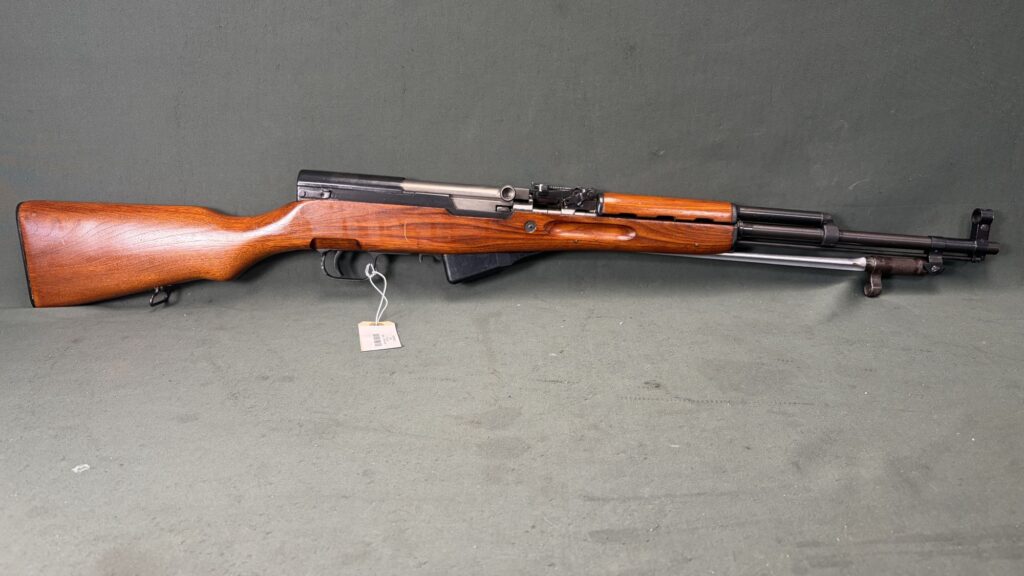 Norinco Type 56 SKS 7.62×39 Factory 0221, All Matching, Near Mint, Bayonet$675.00
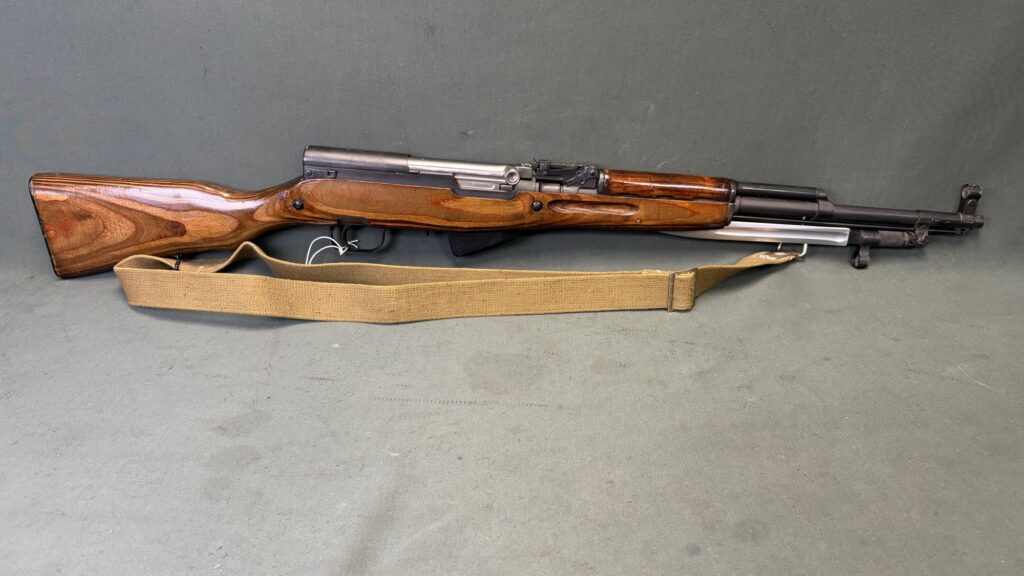 1954 Tula Soviet SKS 7.62×39 All-Matching Like New Mirror Bore with Original Sling$995.00
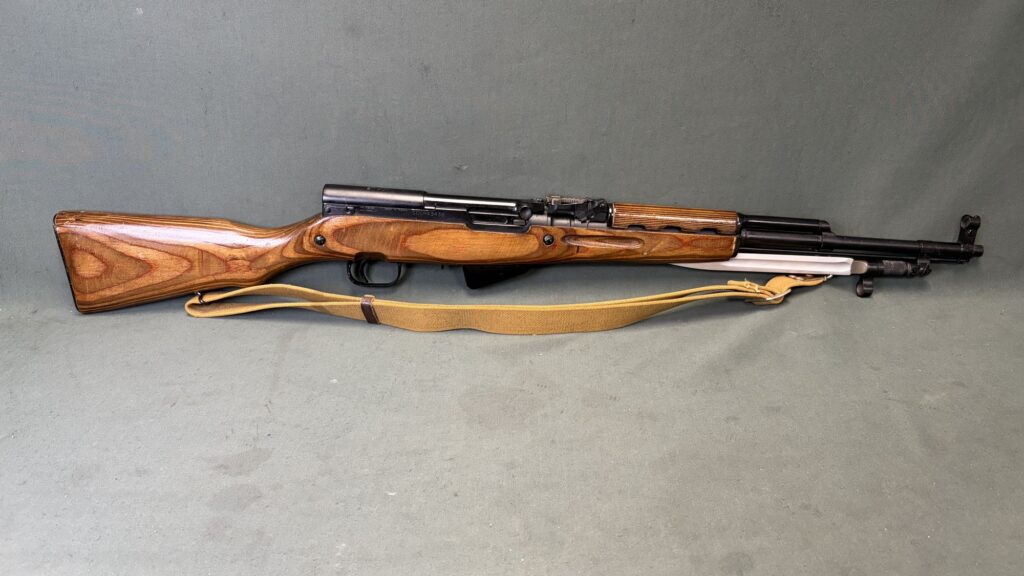 1954 Soviet SKS 7.62×39 All-Matching Mirror Bore Original Sling and Cleaning Kit$999.00
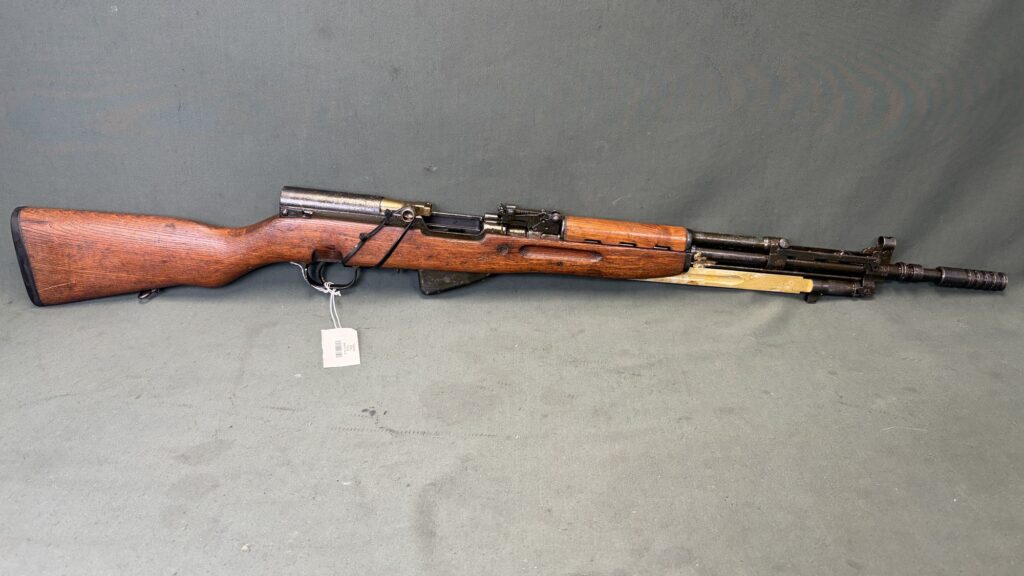 Zastava M59/66 Yugoslav SKS 7.62×39 New Old Stock in Cosmoline All-Matching$785.00
 Zastava M59/66 Yugo SKS 7.62×39 All-Matching Mirror Bore with Manual and Sling$775.00
The short version is on our Instagram. Watch it on Instagram.
General information for collectors, not legal advice. If any semi-automatic rifle fires more than once per trigger pull, stop shooting it and have it inspected.
Common Questions
What is a Type 63 SKS?
The Type 63 is North Korea’s copy of the Soviet SKS, a semi-automatic carbine in 7.62×39mm, reportedly made for the Worker-Peasant Red Guards and other paramilitary forces.How do you identify a North Korean SKS?
On the one in our video, the receiver cover carries a five-pointed star inside a circle with 63 and the Hangul for “type,” and the serial number on the receiver sits between Korean characters.Can North Korean rifles be imported into the United States?
Federal import rules state a policy of denying licenses and other approvals for defense articles originating in North Korea, which is why North Korean rifles are so seldom seen in the US.What is an SKS slamfire?
A slamfire is when the rifle fires as the bolt closes, without a trigger pull. On an SKS it can result from a free-floating firing pin stuck forward in the bolt, and in general it can happen before the bolt is fully locked.How do you prevent an SKS slamfire?
Keep the firing pin channel clean so the pin moves freely. Any SKS that has fired twice on one pull should be stripped and checked by someone who knows the rifle before it is fired again.Do all SKS rifles have a free-floating firing pin?
No. The earliest Soviet SKS rifles had a spring-loaded firing pin; most other SKS rifles have a free-floating one.Sources
- Wikipedia, “SKS” — https://en.wikipedia.org/wiki/SKS (Simonov design, Soviet production 1949 to 1958 and 2.7 million, AK-47 replacing it in the 1950s, over nine million Chinese Type 56, licensing to allies including North Korea, factories set up with Soviet or Chinese help, North Korean Type 63 and its three models, free-floating firing pin, spring-loaded pins on 1949 to 1950 Soviet rifles, slamfire causes including firing without being fully locked, pin orientation and soft primers, gas operation, tilting bolt, 10-round magazine, sights to 1,000 m)
- Athlon Outdoors, “North Korean AK Rifles” — https://www.athlonoutdoors.com/article/north-korean-ak-rifles/ (Type 63 SKS copy, relegated to the home guard, circled star and model number markings on Type 58 and Type 68)
- The Firearm Blog, “SKS Slam Fire Demo (and a fix)” — https://www.thefirearmblog.com/blog/2010/08/17/sks-slam-fire-demo-and-a-fix/ (free-floating firing pin, gummed-up channel holding the pin forward, original Russian design had a spring, spring-loaded replacement pin as the fix)
- 27 CFR 447.52, import restrictions applicable to certain countries — https://www.law.cornell.edu/cfr/text/27/447.52 (policy of denying licenses and approvals for defense articles from listed countries, North Korea among them)