
Journal · Collector’s Guide
Chinese Type 56-1 LMG: China’s RPD, Explained
The Chinese Type 56-1 is China’s improved copy of the Soviet RPD, the belt-fed squad machine gun in 7.62×39mm. Ours is Chinese-made, stamped 56-1 with the triangle 36 factory mark, and its feed cover and feed tray are both stamped 36975, the last five digits of receiver serial 2336975. It is registered as a post-May sample, and it is part of the Old Steel Arsenal collection.
From the Soviet RPD to the Chinese Type 56
The RPD, Ruchnoy Pulemyot Degtyaryova, is Vasily Degtyaryov’s light machine gun for the 7.62×39mm cartridge. It was ready for mass production near the end of the Second World War, was adopted in 1948, and went into large-scale delivery in 1953. When the Kalashnikov RPK and PK arrived in the 1960s, the Soviets began to withdraw it.
China made the RPD as the Type 56 squad machine gun, and the Type 56-1 is its improved variant. Ours is a 56-1, the 1963 improvement. It was the squad automatic of the Chinese army, one in every rifle squad, until the Type 81 light machine gun and the QBB-95 replaced it in PLA service. According to Wikipedia, the 56-1 stores a folding cleaning rod inside the buttstock.
It also followed Chinese aid south. During the Vietnam War, the RPD and its Chinese copy, the Type 56, were the standard light machine gun of the Viet Cong and the People’s Army of Vietnam.
The Type 56 name is shared. China gave the same year designation to its copy of the AK, the Type 56 rifle, and to its copy of the SKS, the Type 56 carbine, all three in 7.62×39mm. For the carbine, see our guide to common SKS variants, including the Chinese Type 56.
How to read Type 56-1 markings
The receiver of ours is stamped with a triangle around the number 36, the factory mark, then the model, 56-1 followed by the Chinese character for “type,” and the serial number, 2336975.

The parts carry the number too. On ours, the feed cover and the feed tray are both stamped 36975, the last five digits of the receiver serial. Those are the two numbered parts shown here. This one is a Chinese factory gun: no parts kit, no rebuild.

Type 56-1 belt segments, drum and feed
The RPD family feeds from the left side, using a metal, open-link, non-disintegrating belt of 7.62×39mm, typically 100 rounds. Many belt-fed guns pull each round out the back of the belt and then push it forward; the RPD uses a simpler push-through design that drives the round forward out of the link into the chamber. The belt is pulled into the gun on the rearward motion of the bolt carrier, through a feed roller.
Belts come in segments. The Soviets and Hungarians made 50-round segments and the Chinese made 25-round ones, copying the Hungarian design, which holds each cartridge with an L-shaped tab at the rear. Segments join with a cartridge that holds the last link of one belt and the first link of the next, and Soviet, Hungarian and Chinese belts all link together. The belt rides in a drum-shaped container under the gun, built for 100 rounds, two 50-round segments. The belt shown here is a single 50-round segment, and every round is pressed into a steel link, one at a time.

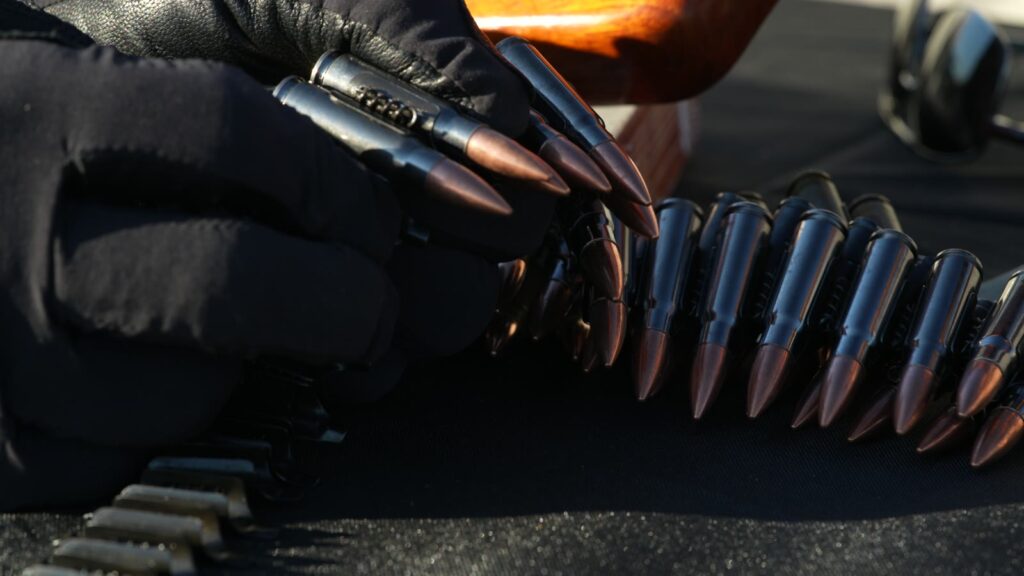
The belt goes in from the left side, and out the right side comes the steel tab at the head of the belt.
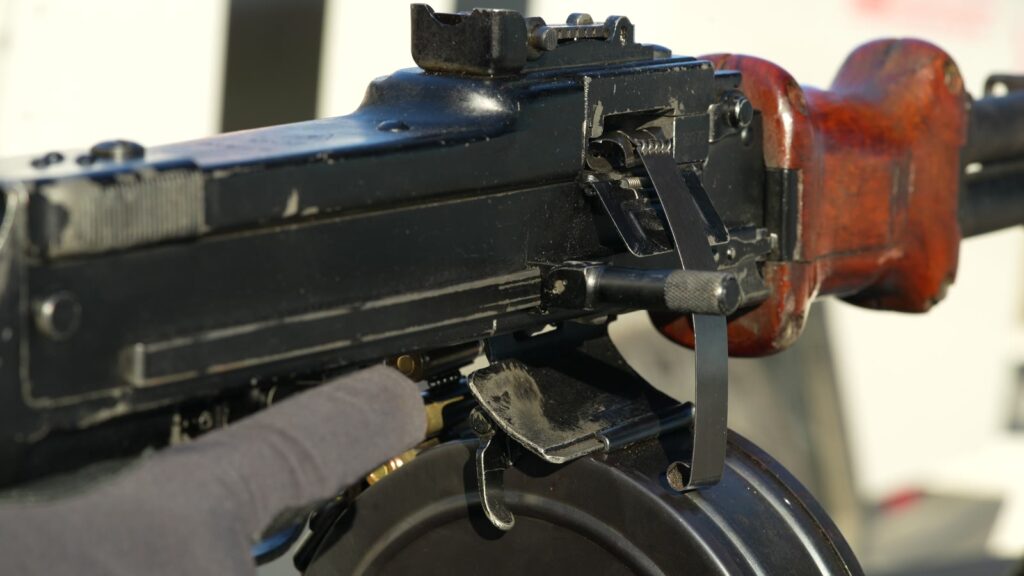
The barrel is fixed rather than quick-change, and a three-position gas valve adjusts the gas system. The action is a long-stroke gas piston with flapper locking, firing from an open bolt.
Sights and furniture
On the RPD pattern, the rear sight is a sliding-notch tangent, graduated in hundreds of meters up to 1,000, paired with a semi-hooded front post. The graduations on ours are filled red.
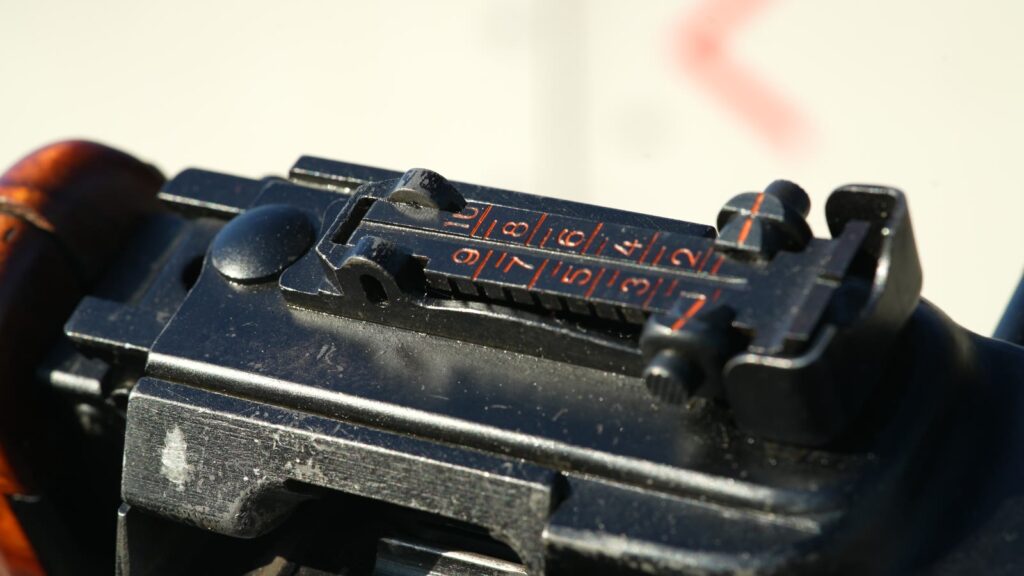
The stock and handguard are wood, with a separate pistol grip, and a folding bipod sits at the muzzle end.
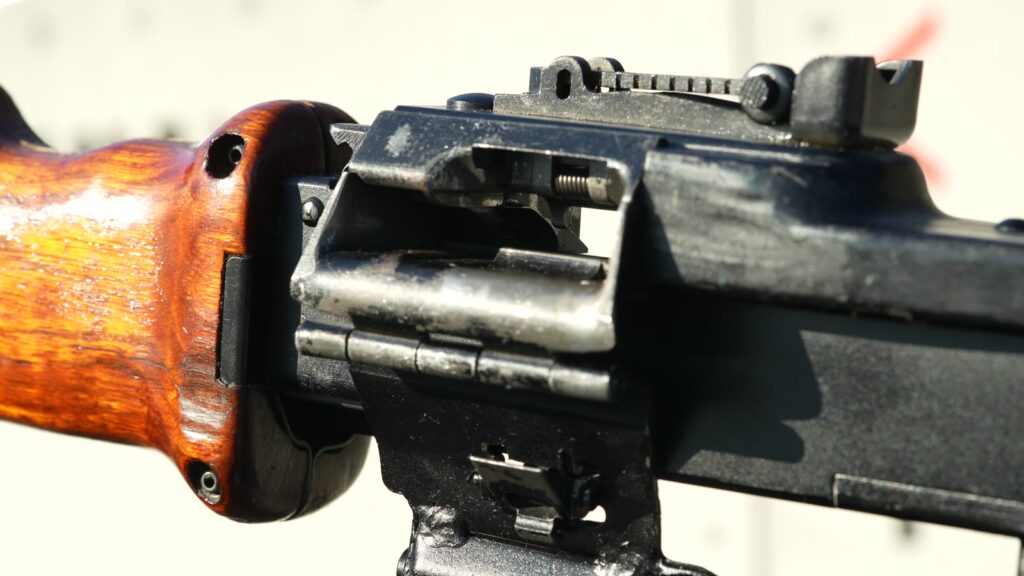
Specifications
| Item | Chinese Type 56-1 (RPD pattern; weight and length are reference RPD figures, not measurements of ours) |
|---|---|
| Origin | China, copy of the Soviet RPD |
| Variant | 56-1, improved Type 56 |
| Cartridge | 7.62×39mm |
| Operation | Gas operated, long-stroke piston, flapper locking, open bolt |
| Weight | 7.4 kg (16.3 lb) empty (RPD) |
| Length | 1,037 mm (40.8 in); barrel 520 mm (20.5 in) (RPD) |
| Feed | Left side, non-disintegrating metal belt, typically 100 rounds in a drum |
| Belt shown | One 50-round segment |
| Rear sight | Sliding-notch tangent, 100 to 1,000 m |
| Ours | Factory triangle 36, serial 2336975, feed cover and tray 36975 |
Post-May samples and the 1994 ban
So how did a Chinese army machine gun end up in Texas? Not as a Vietnam bring-back. Ours is a post-May sample, imported after 1986. Since May 19, 1986, federal law has barred the transfer and possession of machine guns, except those lawfully possessed before that date and those transferred to or possessed by or under the authority of government agencies. Machine guns made or imported on or after that date sit in a restricted category: under 27 CFR 479.105, one can go to an appropriately qualified federal firearms licensee as a sample when the licensee shows the government customers, such as police departments, who would want a demonstration. That is the category this gun is in. It is not transferable to an ordinary private collector.
Then, on May 26, 1994, announcing the renewal of China’s trade status, President Clinton also announced a ban on the import of munitions from China, “principally guns and ammunition.”
On the floor at OSA
The Type 56-1 in these photos is part of the Old Steel Arsenal collection. These pieces in our case connect to it:
- Chinese Type 56 SKS, Factory 26, all matching: the Type 56 carbine, the 56-1’s sibling in 7.62×39mm.
- Chinese Type 56 SKS, Factory 206, non-import marked: another Chinese Type 56 carbine, with matching numbers.
- Romanian PM md. 63 AK in 7.62×39: a Kalashnikov built on a U.S. receiver with Romanian PM md. 63 parts, in the same 7.62×39mm cartridge.
The grid below updates by itself as pieces come and go.
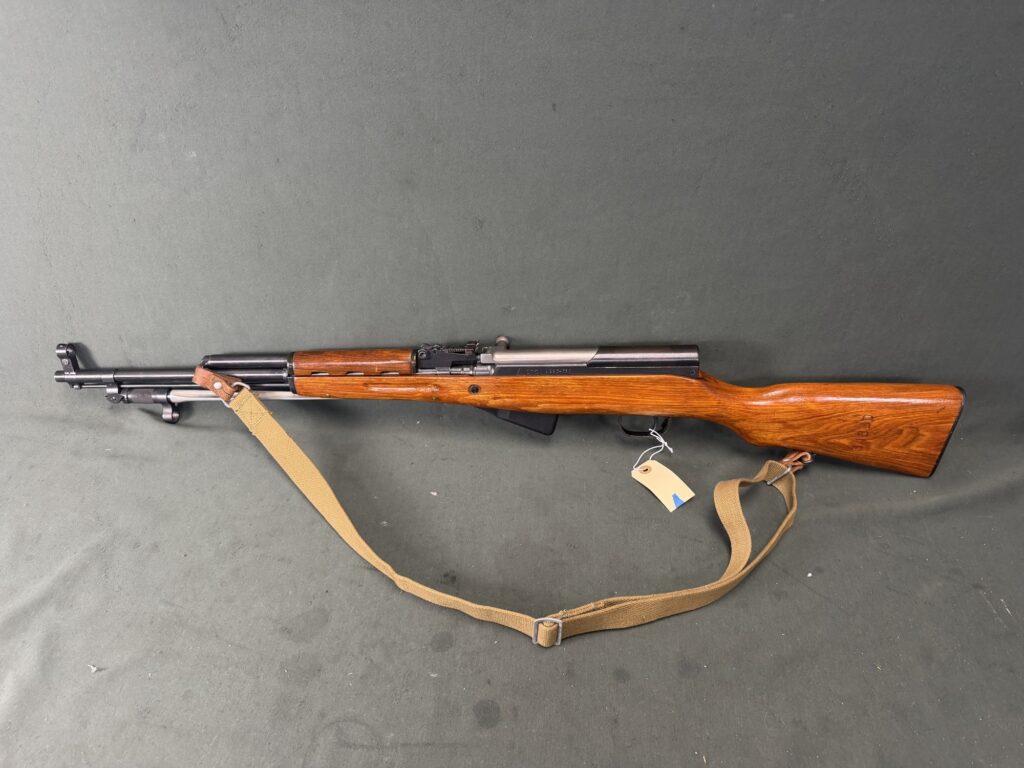 1978 Chinese Factory 26 Type 56 SKS 7.62×39 All Matching with Bayonet$675.00
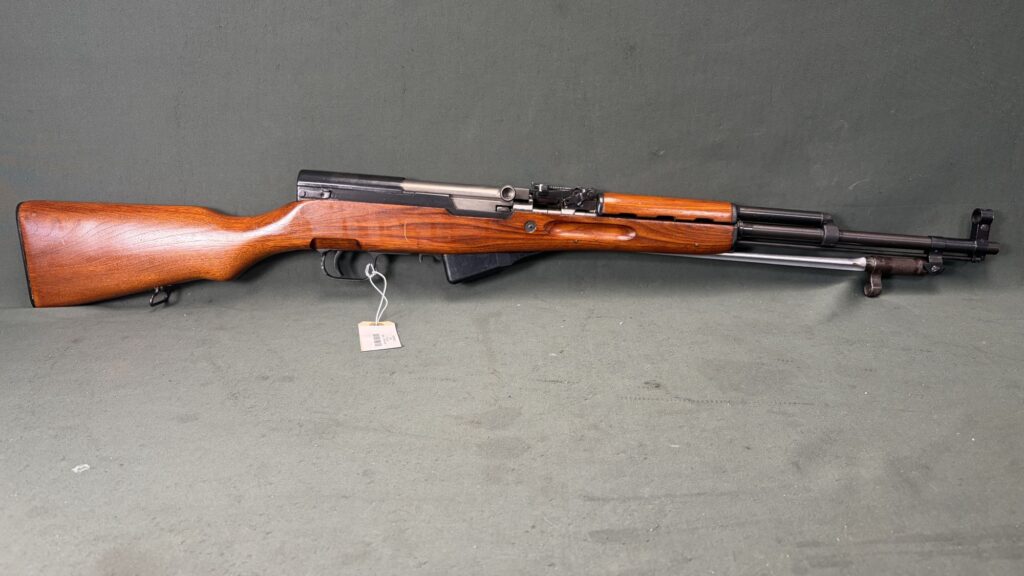 Norinco Type 56 SKS 7.62×39 Factory 0221, All Matching, Near Mint, Bayonet$675.00
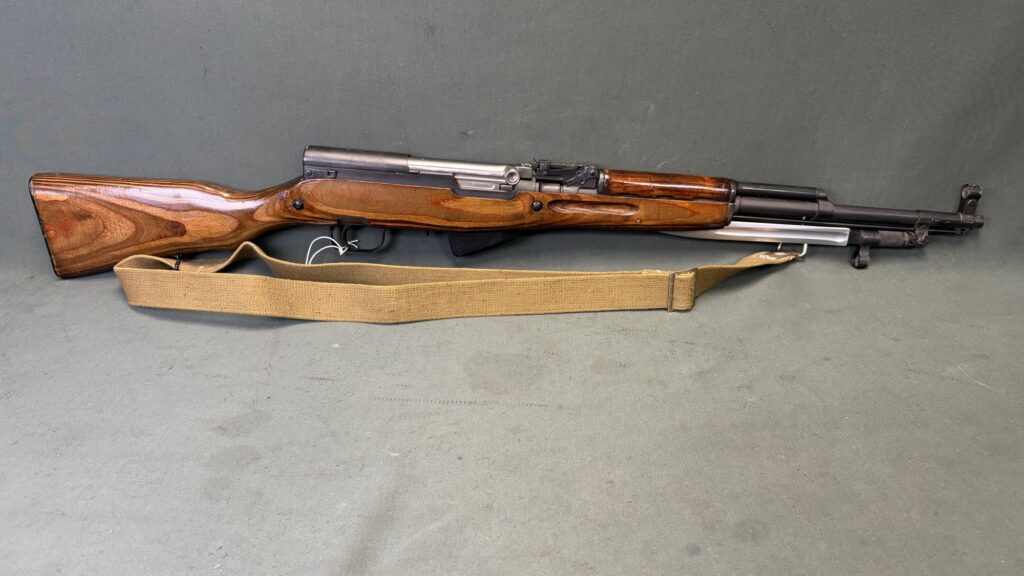 1954 Tula Soviet SKS 7.62×39 All-Matching Like New Mirror Bore with Original Sling$995.00
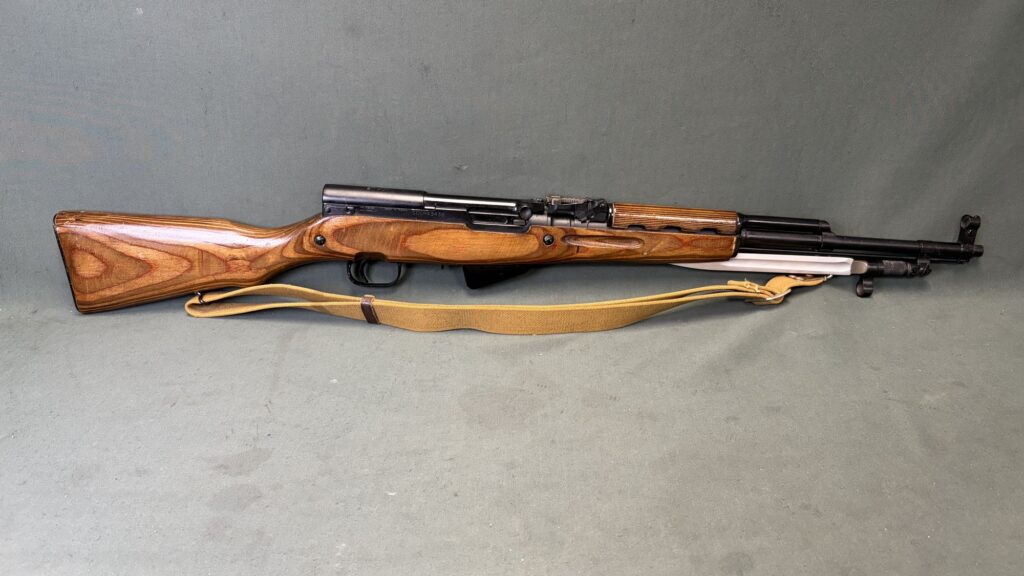 1954 Soviet SKS 7.62×39 All-Matching Mirror Bore Original Sling and Cleaning Kit$999.00
 Norinco Type 56 SKS 7.62×39 Changchun DP Prefix with 20-Round Magazine and Bayonet$685.00
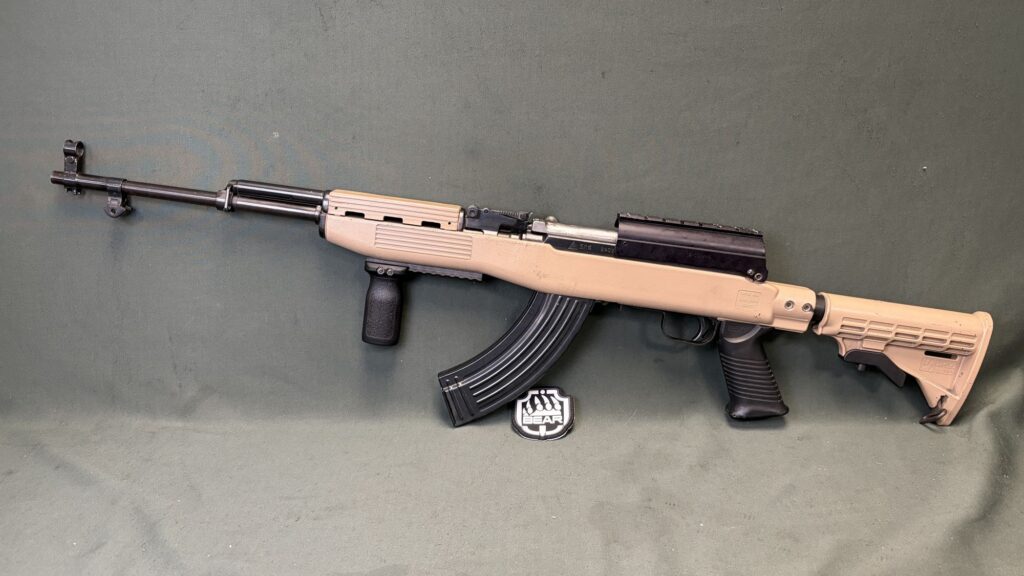 Chinese Type 56 SKS Factory 26 7.62×39 Tapco Stock 35 Round Magazine Optic Mount$589.00
Belt, drum and markings, on our Instagram. Watch it on Instagram.
General information for collectors, not legal advice. Machine guns, including post-May samples, are tightly regulated under federal and state law.
Common Questions
What is the Chinese Type 56 machine gun?
It is China’s copy of the Soviet RPD, a belt-fed squad machine gun in 7.62×39mm. The Type 56-1 is the improved variant. It was later replaced in Chinese service by the Type 81 light machine gun and the QBB-95.Is the Type 56 light machine gun a Chinese RPD?
Yes. The Type 56 light machine gun is a Chinese-made copy of the RPD, with the 56-1 as the improved Chinese variant. It is a different gun from the Type 56 rifle, China’s AK copy, which shares the name.How many rounds does a Type 56 belt hold?
Belts come in segments: Chinese segments are 25 rounds, Soviet and Hungarian ones 50. Segments link together with a cartridge, and the drum-shaped container typically holds 100 rounds.How do you read Type 56-1 markings?
The receiver carries the factory mark in a triangle, the model 56-1, and the serial number. On the example shown here, the feed cover and feed tray repeat the last five digits of the serial.What is a post-May sample machine gun?
A machine gun made or imported on or after May 19, 1986, that an appropriately qualified federal firearms licensee holds as a sample, for demonstration to government customers such as police. It is not transferable to an ordinary private collector.When was the 1994 Chinese arms import ban announced?
On May 26, 1994, when he renewed China’s trade status, President Clinton announced a ban on the import of munitions from China, principally guns and ammunition.Sources
- Wikipedia, “RPD machine gun” — https://en.wikipedia.org/wiki/RPD_machine_gun (Degtyaryov design, weight, length and barrel, three-position gas valve, flapper locking, 1948 adoption, 1953 delivery, replaced by RPK and PK, Vietnam use of the RPD and Type 56, Chinese Type 56 and 56-1, replaced by Type 81 and QBB-95, left-side push-through feed, non-disintegrating belt, 50- and 25-round segments, Hungarian L-tab design, interchangeable belts, feed roller, fixed non-quick-change barrel, 56-1 folding cleaning rod in the buttstock, open bolt, long-stroke piston, sights)
- 27 CFR 479.105, via Cornell LII — https://www.law.cornell.edu/cfr/text/27/479.105 (machine guns made or imported on or after May 19, 1986; samples for qualified licensees and demonstration to governmental customers)
- The American Presidency Project, “The President’s News Conference,” May 26, 1994 — https://www.presidency.ucsb.edu/documents/the-presidents-news-conference-1085 (ban on the import of munitions, principally guns and ammunition, from China)
- 18 U.S.C. 922(o), via Cornell LII — https://www.law.cornell.edu/uscode/text/18/922 (ban on transfer and possession of machine guns, exceptions for government use and those lawfully possessed before the effective date)
- Wikipedia, “Firearm Owners Protection Act” — https://en.wikipedia.org/wiki/Firearm_Owners_Protection_Act (effective May 19, 1986)
- Wikipedia, “Norinco” — https://en.wikipedia.org/wiki/Norinco (Type 56 assault rifle among Chinese small arms)