
Journal · Collector’s Guide
B&T Station SIX: A Modern Welrod, Explained
The B&T Station SIX is a pistol you work by hand. There is no slide. You fire, twist the knob at the back, pull the bolt to extract the empty case, push it forward and lock it again. B&T, the Swiss maker, built it as a modern take on the Welrod, the bolt-action silenced pistol Britain developed for its secret agents in the Second World War. We have two of them, a 9mm SIX9 and a .45 ACP SIX45, and we took both to the range. Here is where the idea came from, what the markings say, and why a pistol with no moving parts at the shot is built that way on purpose.
Where the Station SIX comes from: the Welrod
The original came out of Station IX, one of the research workshops of Britain’s Special Operations Executive, the SOE. Shooting Illustrated and American Rifleman both credit its design to Major Hugh Reeves, an engineer and inventor there, and both explain the name: devices from Station IX got code names starting with “Wel-“, after the nearby town of Welwyn. Shooting Illustrated gives its original name as the Mark I Hand Firing Device.
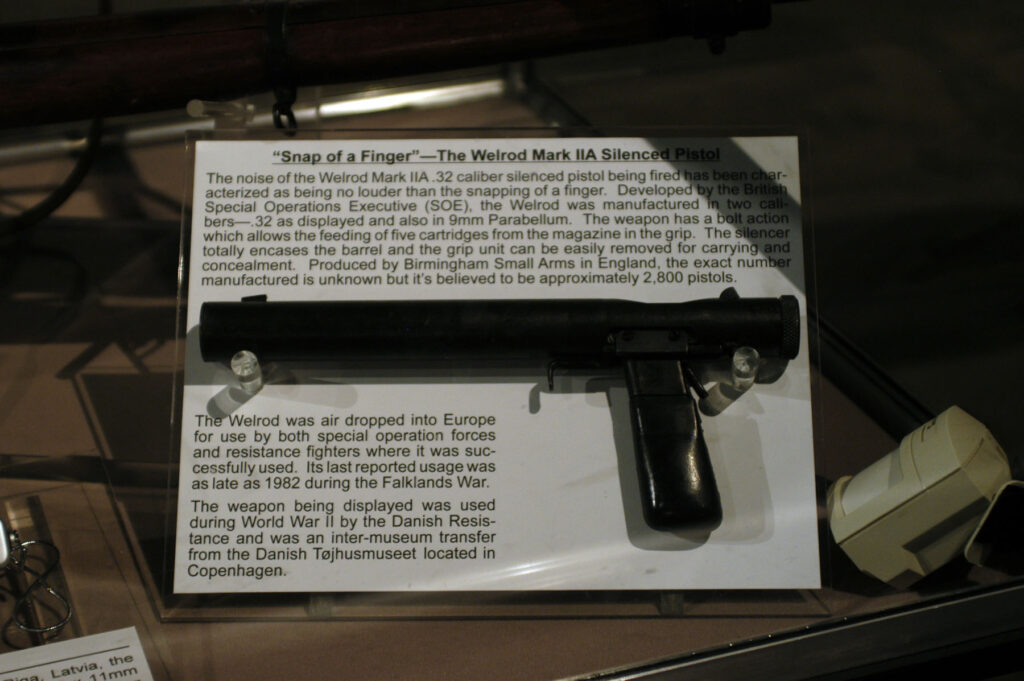
The Welrod was a tube. It was a manually operated, magazine-fed bolt action with a perforated barrel inside a built-in suppressor of metal discs and rubber wipes, as Shooting Illustrated describes it. The magazine doubled as the grip, so with the magazine pulled out, operatives said it looked like a bicycle pump. The model numbers are confusing: the .32 ACP production guns were the Mark II and IIA, and a later 9mm version was called the Mark I. How many were made is not settled. American Rifleman says the exact number remains a mystery, although some historians believe as many as 14,000 were made.
American Rifleman also writes that the American OSS used the Welrod in the Second World War, and Wikipedia adds that it was later used by the Studies and Observations Group in Vietnam.
Berlin: kept ready until 1990
The American chapter we put in the video is Berlin. During the Cold War the U.S. Army kept a classified Special Forces unit inside the divided city. American Rifleman identifies it as the 39th Special Forces Detachment, later known as the 410th, and puts it plainly: until 1990 this unit kept the Welrod and the High Standard, a suppressed .22 pistol, ready for a wartime mission behind Warsaw Pact lines, should the Cold War turn hot. A second American Rifleman article, adapted from James Stejskal’s book on Special Forces Berlin, says the unit was known to the outside world only as Detachment A Berlin, that some 800 men served there from 1956 until 1990, and that it issued 9mm Welrods.
In other words, a pistol designed in wartime England was still sitting in an American arms room, waiting for a war, as late as 1990.
From the Welrod to the B&T Station SIX
Shooting Illustrated tells the modern part through B&T USA’s marketing vice president, Chris Mudgett: after 9/11, B&T’s owner was approached by a European intelligence service whose operatives were still carrying wartime Welrods, and it wanted something like it, only smaller and modernized. The first result was B&T’s VP9, publicly released in 2014. The Station SIX is its redesigned successor. According to The Firearm Blog, B&T USA announced it in January 2021, in 9mm (SIX9) and .45 ACP (SIX45).
It keeps the Welrod’s manual bolt and its quiet purpose, and changes much of what surrounds them: a full-size polymer grip with a separate magazine, a push-button magazine release, a grip safety, a trigger guard and pistol sights. The Firearm Blog says the Station SIX is modeled on the Welrod Mk I. The biggest change is the suppressor. B&T’s own product copy uses the phrase “integrally suppressed,” but Shooting Illustrated points out that, unlike the Welrod, the Station SIX is not integrally suppressed, and on our two pistols the suppressor is a separate tube that screws onto a threaded barrel. B&T lists the thread as 1/2×28 on the SIX9 and .578×28 on the SIX45.
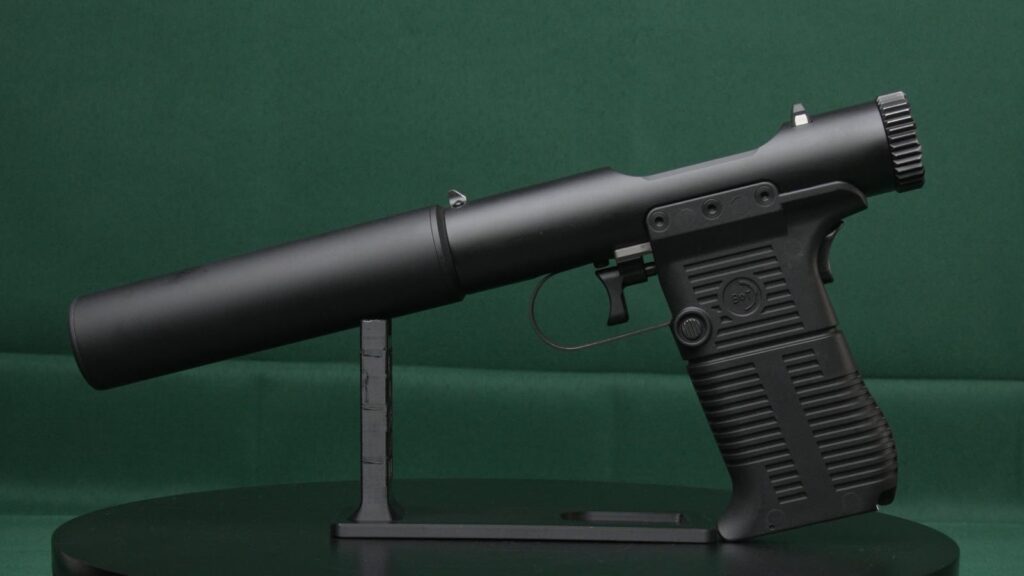
How to read the B&T Station SIX markings
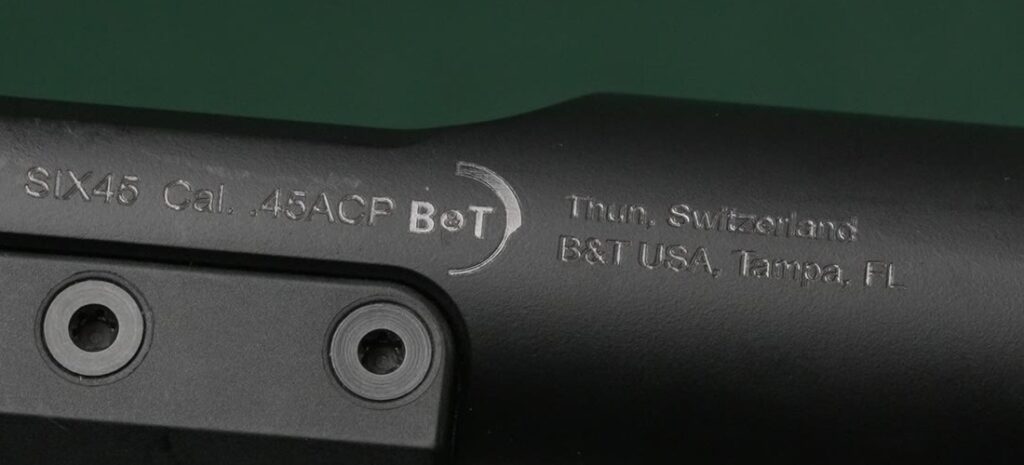
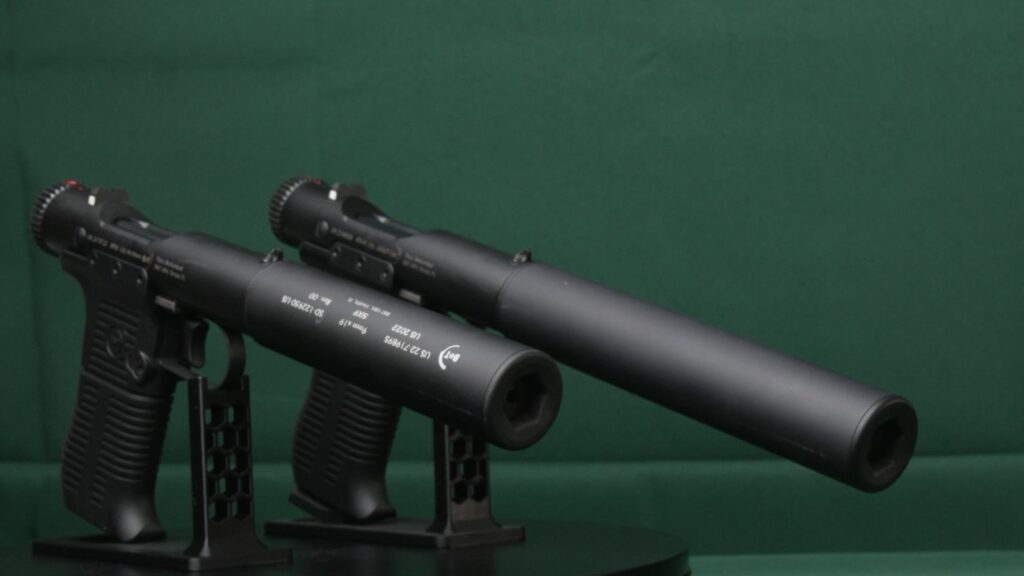
The receiver and the suppressor are marked separately.
On the left side of the receiver of our .45, after the serial number, the marking reads SIX45, Cal. .45ACP, the B&T logo, then Thun, Switzerland and B&T USA, Tampa, FL. SIX45 is the model; Thun is B&T’s home town in Switzerland, and Tampa is its American arm.
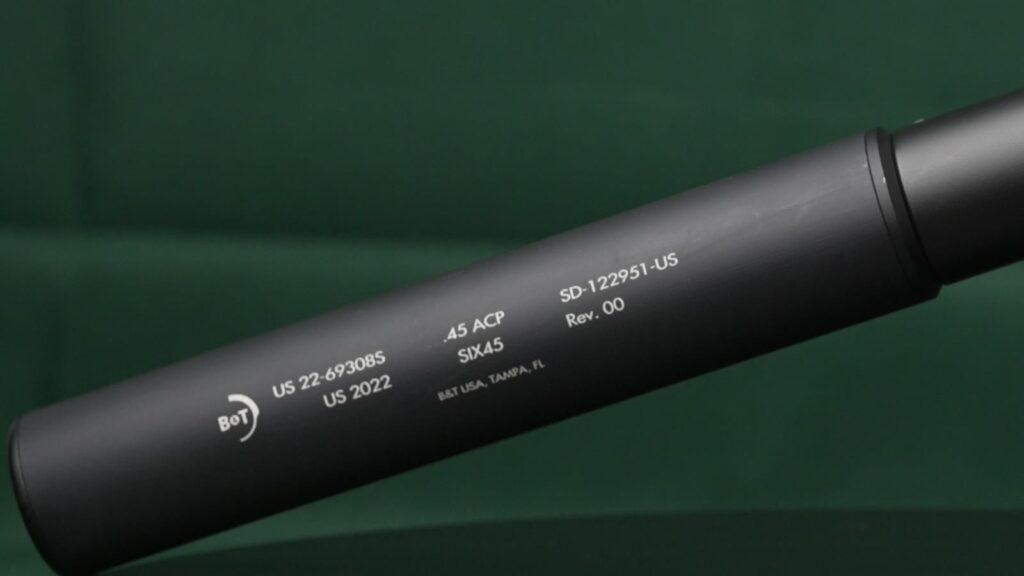
The .45 suppressor tube carries its own number ending in S, the line US 2022, the caliber and model (.45 ACP, SIX45), B&T USA, Tampa, FL, and one more code: SD-122951-US, Rev. 00. That SD code is not a serial number. In B&T’s operator manual, SD-122951 is the article number for the .45 suppressor, and SD-122950 is the article number for the 9mm suppressor with wipes, which is what our 9mm’s tube is marked.
How the B&T Station SIX works
B&T’s manual and Shooting Illustrated describe the same cycle. Twist the rear knob 90 degrees counterclockwise to unlock, and pull the bolt back to extract the empty case; the manual says to tilt the pistol at least 90 degrees to one side so the case falls out, because nothing throws it clear. Push the bolt forward to strip a round from the magazine into the chamber, then twist the knob 90 degrees clockwise until the red marks line up. Now it can fire. The grip safety matters here too: the manual warns that the bolt can jam if the grip safety is not held down by a proper grip, and the pistol will not fire without it.
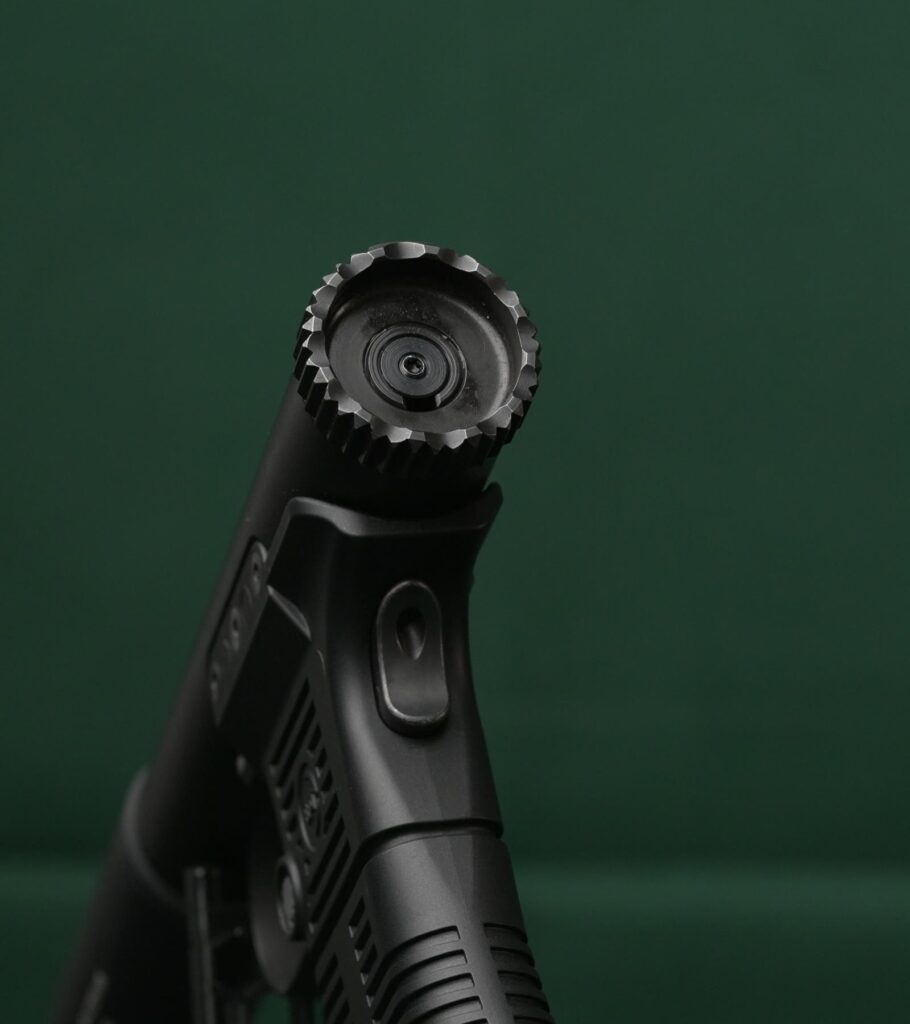
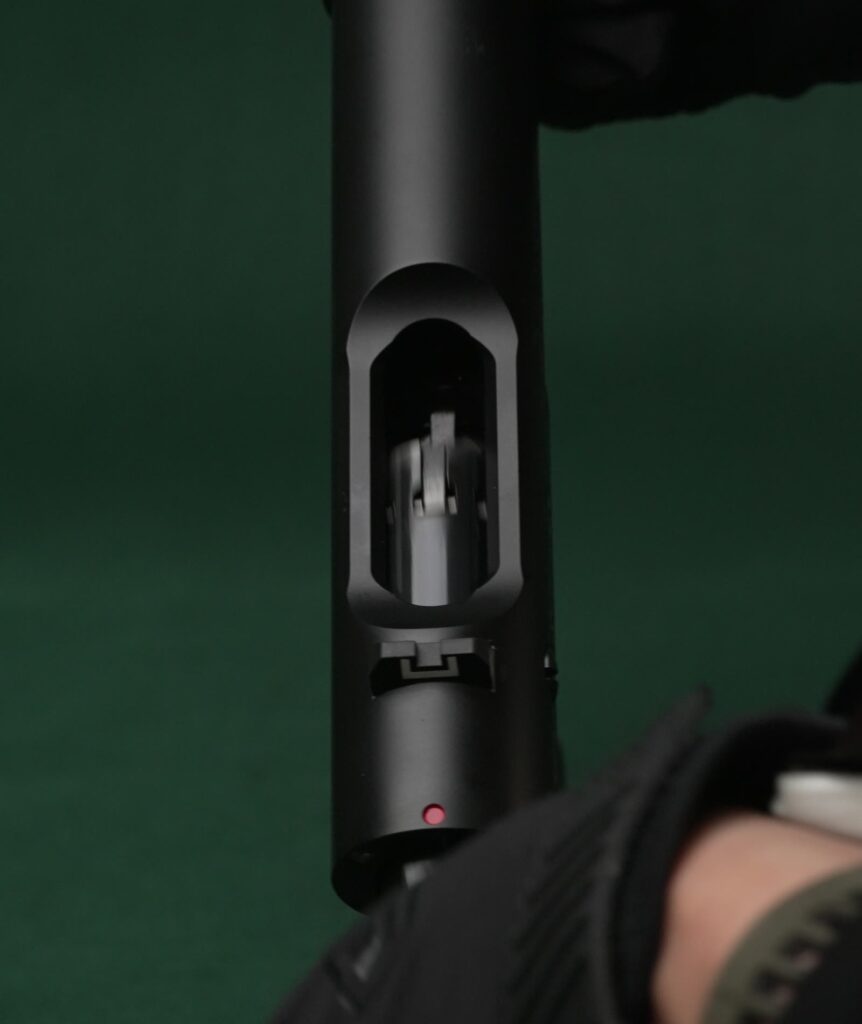
In the video we said a gunshot is really three noises: the muzzle blast, the crack of the bullet, and the slide slamming back. A suppressor on an ordinary semi-automatic only works on the first. The slide still cycles, and as Shooting Illustrated notes, a conventionally suppressed semi-auto also has a port pop when the action opens. On the Welrod and on the Station SIX, the bolt is locked and does not move when the gun fires, so that noise never happens. The action only opens when you open it.
The bullet’s crack depends on speed: a bullet faster than sound cracks on its way downrange. We shot ordinary commercial ammunition that day. Our .45 loads were subsonic; our 9mm loads were not, and on our recording the 9mm strings carry noticeably more high-frequency noise. That is why we said in the video that the .45 version is the one that kills all three.
The rubber wipes
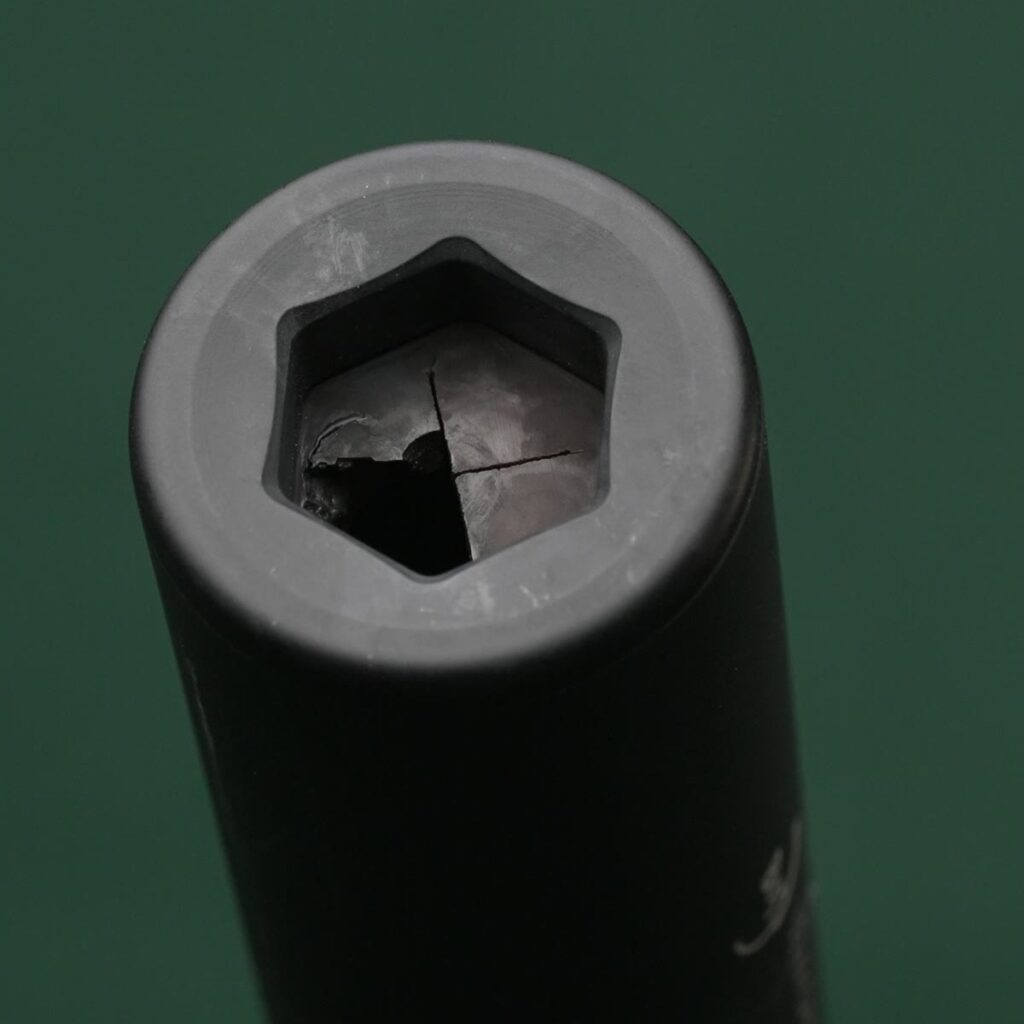
The Welrod used rubber wipes, and so do our Station SIX suppressors. According to The Firearm Blog, the SIX9 wipe suppressor holds four rubber wipes, six spacers and an end cap. Shooting Illustrated explains the idea: the bullet passes through the rubber, and the rubber seals up behind it. B&T USA told the magazine that this self-sealing design makes the suppressor much quieter than most suppressors with a conventional baffle stack. For the SIX9, B&T also offers a training suppressor with ordinary baffles and no wipes.
The catch is that wipes wear out. The Firearm Blog says the owner’s manual warns of a drop in performance as they wear, and its reviewer posted a photo of a used wipe. One of ours is torn: look into the end of the suppressor and the cross cut in the rubber has been torn open.
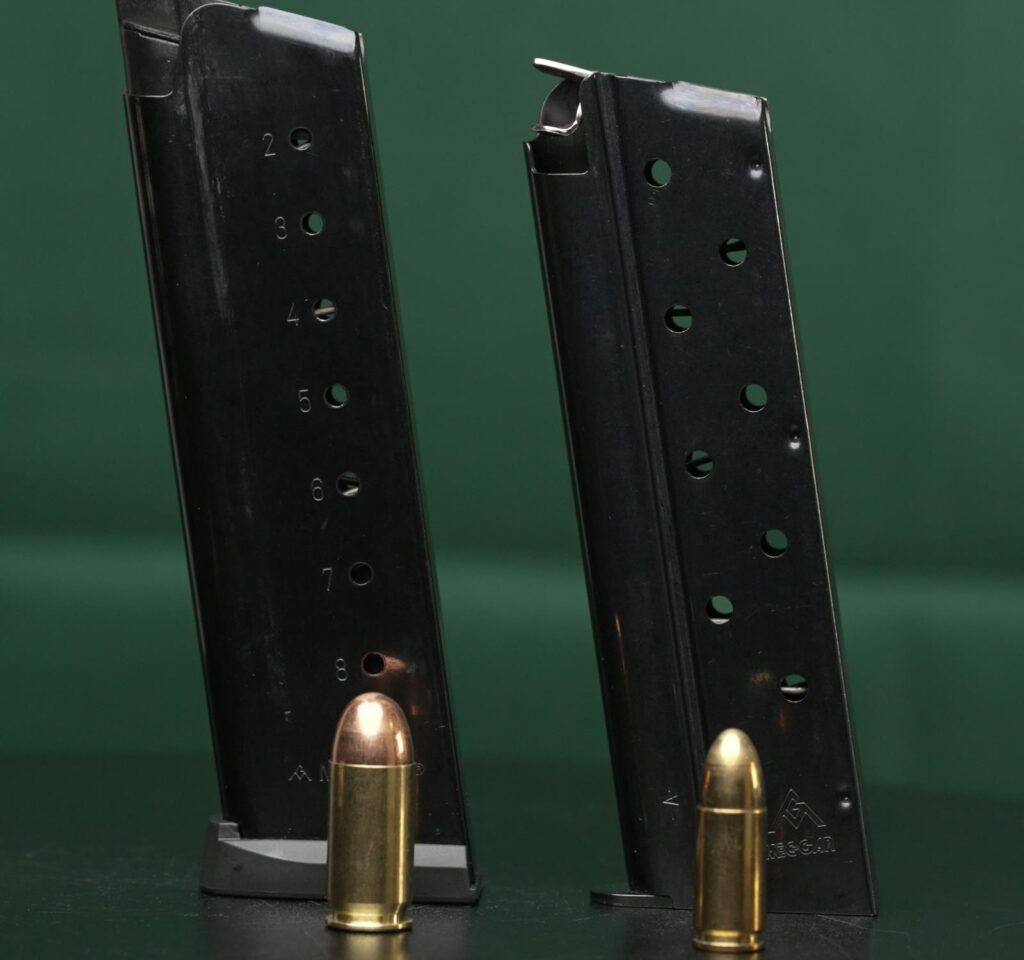
The magazines are a familiar shape. The Firearm Blog’s reviewer, by his own description making an educated guess, identified the SIX9’s magazine as a single-stack, full-size 9mm 1911 type made by Mec-Gar. Sources disagree on capacity, so we leave it out of the table below.
What it is like to shoot
We shot both at the range. Our verdict on the trigger: it is brutal. Shoot it long enough and it can cramp your hand. Shooting Illustrated’s spec box lists the SIX9’s trigger pull at 11 pounds, 8 ounces, and its reviewer wrote of stacking and a wall in the pull that left a large and painful blister on his finger. Not every reviewer agrees: The Firearm Blog found the trigger short and fairly smooth.
Then there is the pace. Every shot means twist, pull, push, twist, then the trigger. Nobody picks this pistol to shoot fast. Our own summary after the range day: not very practical, but it looks great. Of the suppressed pistols we have filmed, we still prefer the slide-lock Beretta 92F with its KAC suppressor, which tackles the same slide noise from the other direction: a semi-automatic you can lock shut.
Specifications
Figures from B&T USA’s product pages unless noted.
| Item | SIX9 | SIX45 |
|---|---|---|
| Maker | B&T, Thun, Switzerland; marked B&T USA, Tampa, FL | Same |
| Caliber | 9x19mm | .45 ACP |
| Action | Manually operated bolt, locked by a rear knob turned 90 degrees | Same |
| Barrel | 76 mm (3 in) | 88 mm (3.5 in) |
| Muzzle thread | 1/2×28 | .578×28 |
| Overall length | 175 mm (6.9 in) | 175 mm (6.9 in) |
| Weight | 0.9 kg (2.1 lb) | 1 kg (2.3 lb) |
| Trigger pull | 11 lb 8 oz, per Shooting Illustrated’s spec box | Not published in our sources |
| Suppressor | Wipe suppressor SD-122950; baffle training suppressor offered | Suppressor SD-122951 |
| Inspiration | SOE Welrod, Second World War | Same |
On the floor at OSA
The two pistols in this article are shop pieces, not part of our own collection, and both are on the floor:
- B&T Station SIX45 .45 ACP: the .45 in most of these photos, and the one we said kills all three noises.
- B&T Station SIX9 9mm: its 9mm twin from the same range day.
- B&T SPC9 9mm rifle: another 9mm from the same Swiss maker.
- 1942 Kongsberg M/1914 .45 ACP: a wartime 1911-pattern pistol in .45 ACP, the cartridge the SIX45 fires. We wrote it up in Kongsberg M/1914: Norway’s 1911 Under Occupation.
- Auto-Ordnance 1911A1 .45 ACP: a 1911A1-pattern .45 for the same cartridge.
The grid below updates by itself as pieces come and go.
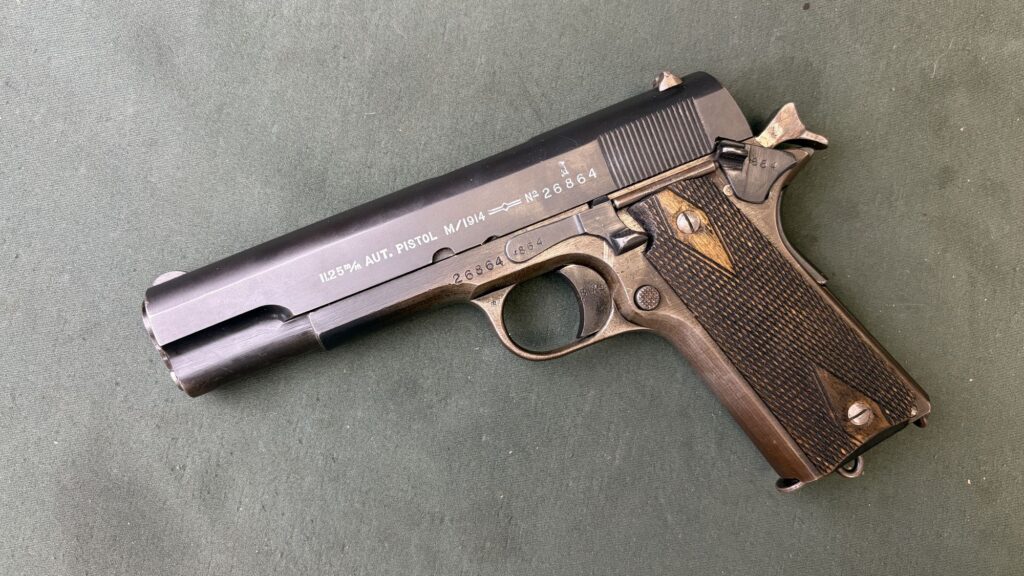 Black Friday1942 Kongsberg M/1914 .45 ACP Matching with Signed Factory Archive Letter Original price was: $4,950.00.$4,450.00Current price is: $4,450.00.
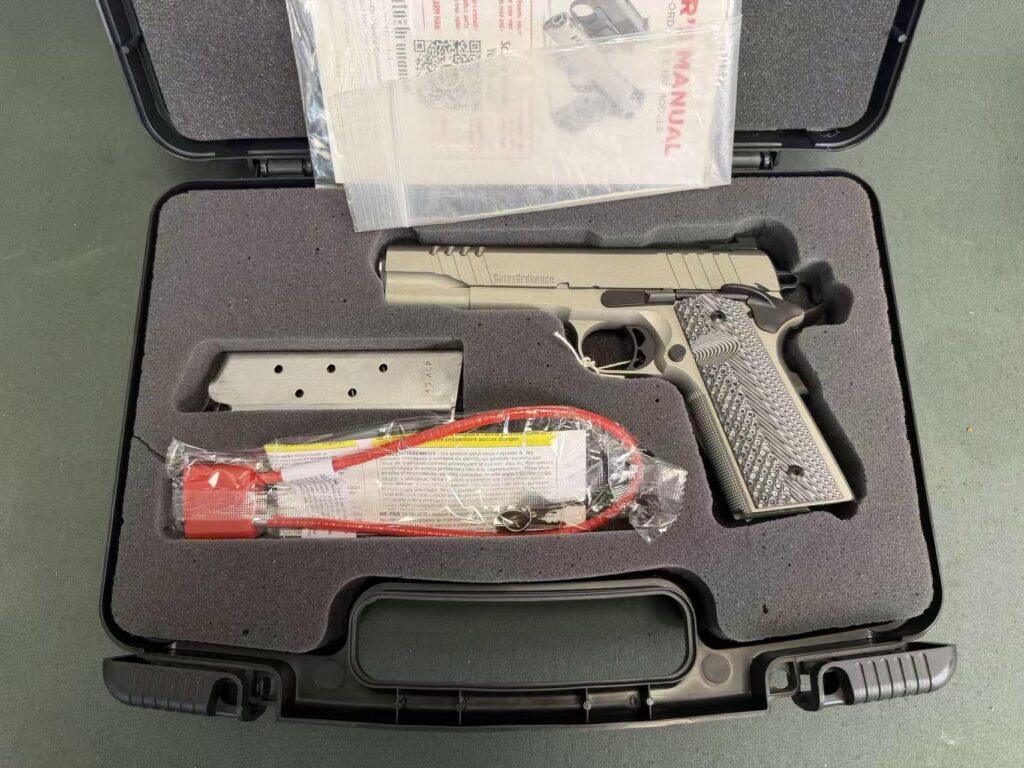 Black FridayAuto-Ordnance 1911TCAC6 .45 ACP Stainless Cerakote TruGlo Night Sights Original price was: $649.00.$639.00Current price is: $639.00.
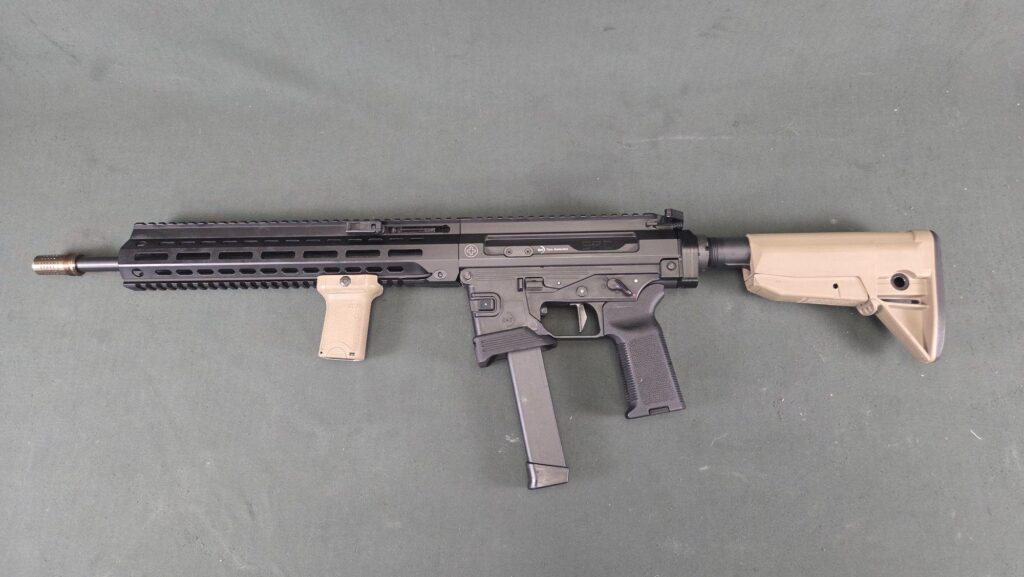 Black FridayB&T SPC9 9mm Rifle 16 Inch Glock Magazine Geissele Trigger Like New Original price was: $2,495.00.$2,395.00Current price is: $2,395.00.
For another suppressed pistol from the same range day, see our SilencerCo Maxim 9 article.
The short version is on our Instagram. Watch it on Instagram.
General information for collectors, not legal advice. History and specifications come from the published sources listed below; details can vary between individual pistols and suppressors.
Common Questions
What is the B&T Station SIX?
The B&T Station SIX is a bolt-action, magazine-fed pistol made by B&T of Thun, Switzerland, and marked for B&T USA of Tampa, Florida. It is a modern take on the Second World War Welrod, offered in 9mm (SIX9) and .45 ACP (SIX45), and used with a dedicated B&T suppressor.Is the B&T Station SIX a copy of the Welrod?
No. It follows the Welrod’s idea of a hand-worked bolt that stays shut at the shot, but it has a full-size polymer grip with a separate magazine, a modern trigger and sights, and a suppressor that screws on instead of the Welrod’s built-in one.Is the Station SIX integrally suppressed?
B&T’s own product copy uses that phrase, but the suppressor on the Station SIX is a separate tube that screws onto a threaded barrel: 1/2×28 on the SIX9 and .578×28 on the SIX45, according to B&T USA. Shooting Illustrated also notes it is not integrally suppressed, unlike the Welrod.Why does the Station SIX use a manual bolt?
Because the bolt stays locked and nothing moves when it fires. A suppressed semi-automatic still makes noise as its slide cycles; on the Station SIX the action only opens when the shooter opens it.What are rubber wipes in a suppressor?
Wipes are rubber discs inside a suppressor that the bullet passes through. The rubber seals up behind the bullet, which helps keep the gas in. They wear out with use, and a worn or torn wipe makes the suppressor less effective.How heavy is the Station SIX trigger?
Shooting Illustrated’s spec box lists 11 pounds, 8 ounces for the SIX9. In our experience the trigger is brutal, and long sessions can cramp your hand, though The Firearm Blog found it short and fairly smooth.Who used the original Welrod?
Britain’s SOE developed it, and the American OSS also used it in the Second World War. Wikipedia records later use by the Studies and Observations Group in Vietnam, and according to American Rifleman, the U.S. Army’s Special Forces unit in Berlin kept Welrods ready until 1990.Sources
- American Rifleman, “The ‘Welrod’ Pistol: A Silent Arm For The SOE” — https://www.americanrifleman.org/articles/2020/2/22/the-welrod-pistol-a-silent-arm-for-the-soe (Reeves, Station IX, the name, OSS use, how many were made, 39th/410th SF Detachment kept the Welrod ready until 1990)
- American Rifleman, “Cold War Warriors: The Men And Guns Of Special Forces Berlin” — https://www.americanrifleman.org/articles/2017/11/27/cold-war-warriors-the-men-and-guns-of-special-forces-berlin/ (Detachment A Berlin, 800 men, 1956 to 1990, 9mm Welrods)
- Wikipedia, “Welrod” — https://en.wikipedia.org/wiki/Welrod (use by MACV-SOG)
- Shooting Illustrated, “Review: B&T Station SIX-9” — https://www.shootingillustrated.com/content/review-b-t-station-six-9-pistol/ (Welrod design and model names, VP9 origin story, bolt cycle, not integrally suppressed, port pop, self-sealing wipes, trigger)
- The Firearm Blog, “History, Stealthy And Sexy: B&T Station SIX” (2021) — https://www.thefirearmblog.com/blog/2021/01/14/station-six/ (announcement, SIX9 and SIX45)
- The Firearm Blog, “Silencer Saturday #216: The B&T USA Station SIX Pistol And Suppressors” (2022) — https://www.thefirearmblog.com/blog/2022/02/19/bt-usa-station-six-pistol/ (modeled on Welrod Mk I, magazine, wipes and spacers, manual warning, SIX9 training suppressor, trigger impression)
- B&T, Station SIX operator manual — https://bt-usa.com/wp-content/uploads/2025/03/SIX945-B-Operator-Manual.pdf (cycle, tilting to drop the case, red marks, grip safety, suppressor article numbers)
- B&T USA, “Station SIX 9” — https://bt-usa.com/products/station-six-9/ (SIX9 specifications)
- B&T USA, “Station SIX 45” — https://bt-usa.com/products/station-six-45/ (SIX45 specifications)
- Wikimedia Commons, “Welrod silenced pistol AF museum” (U.S. Air Force photo, public domain) — https://commons.wikimedia.org/wiki/File:Welrod_silenced_pistol_AF_museum.jpg (photo)