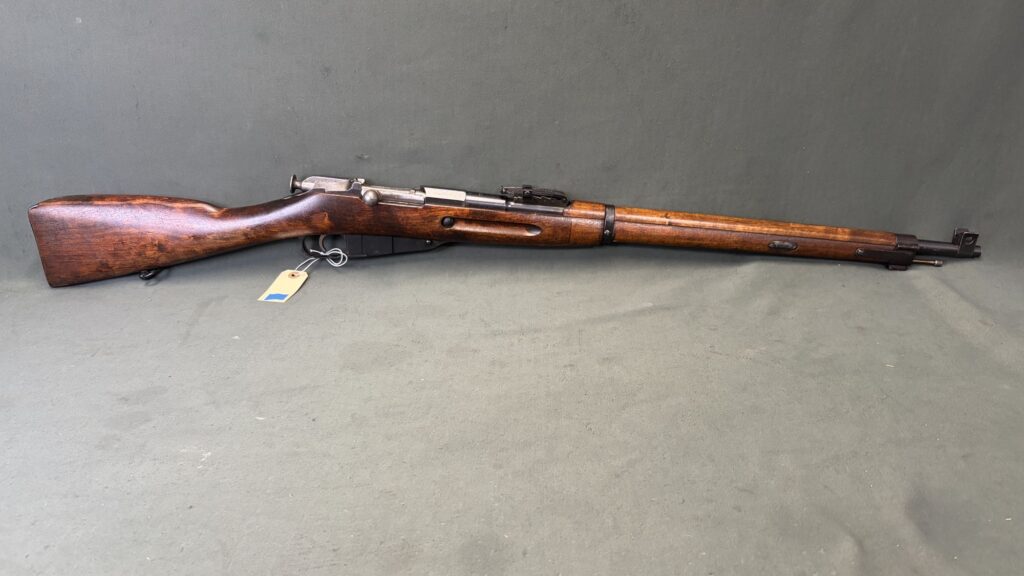
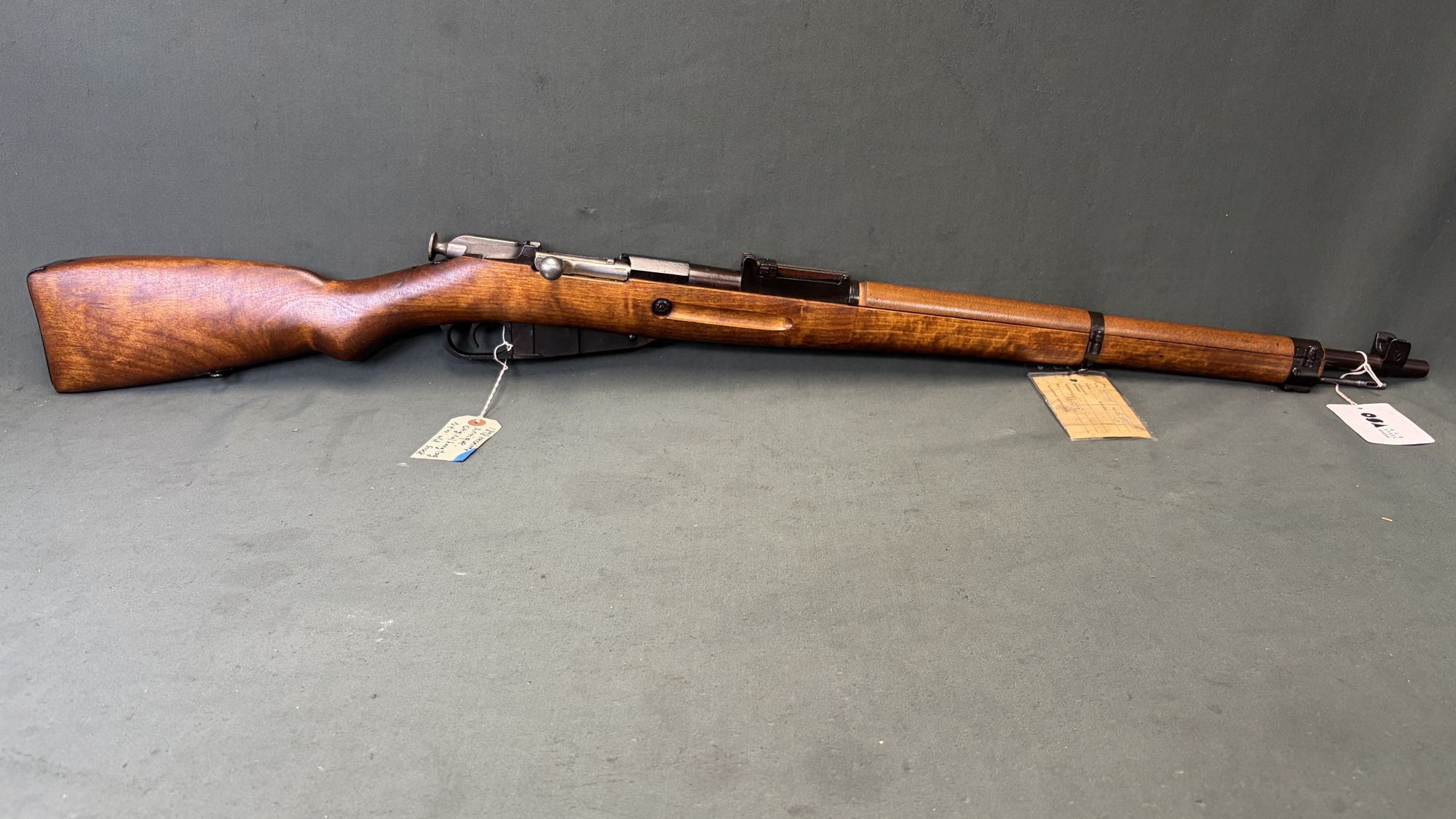
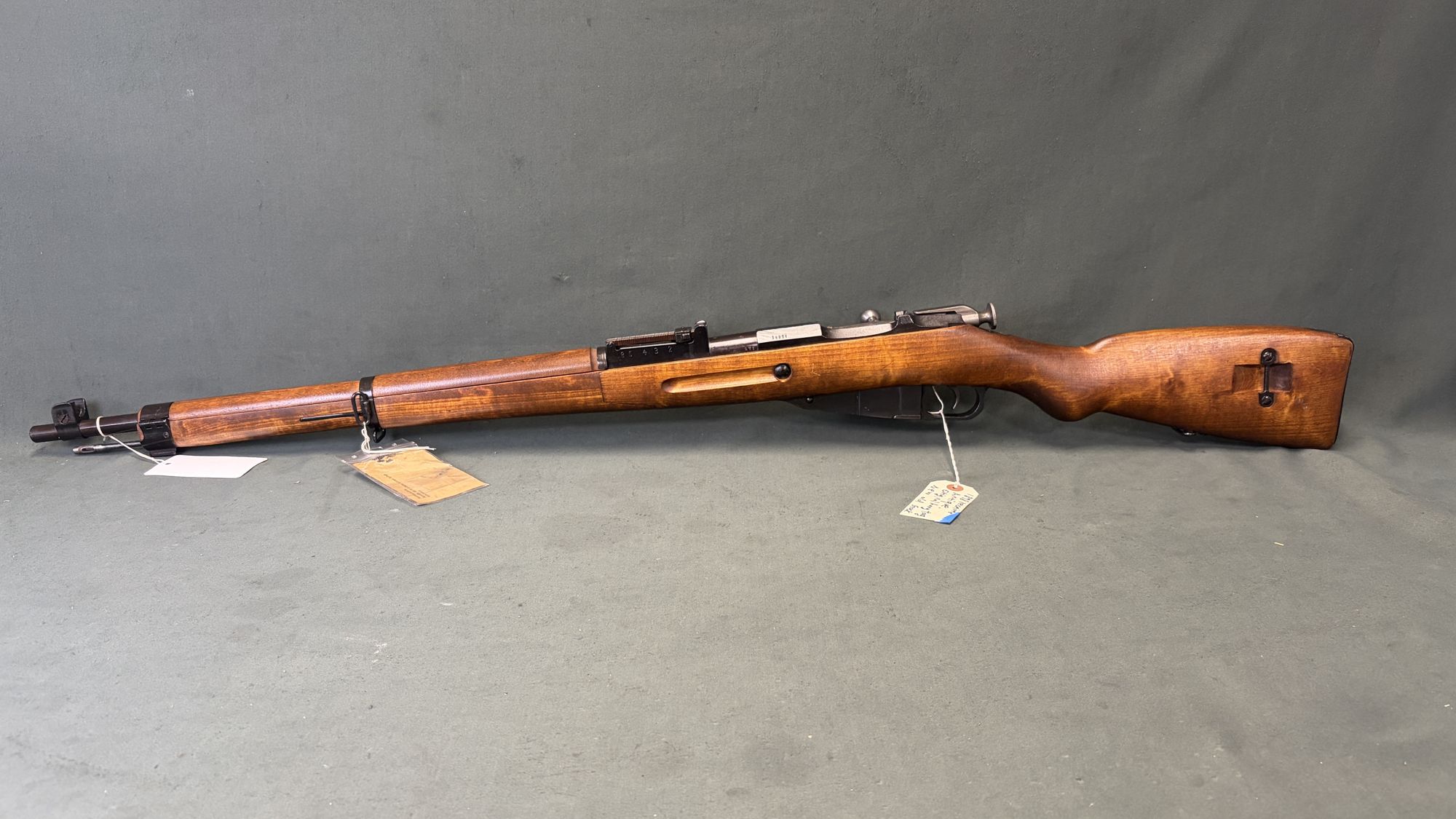
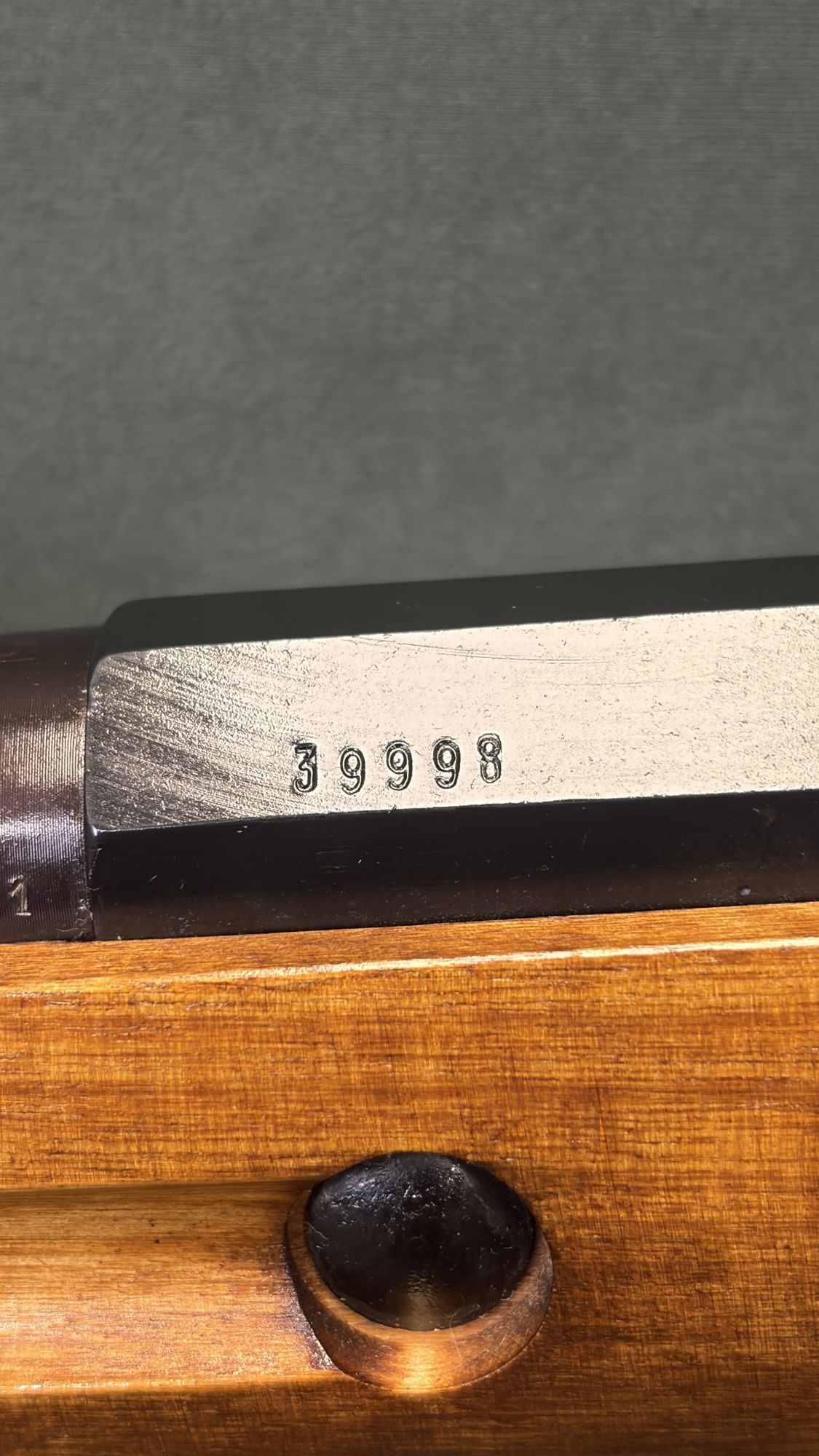
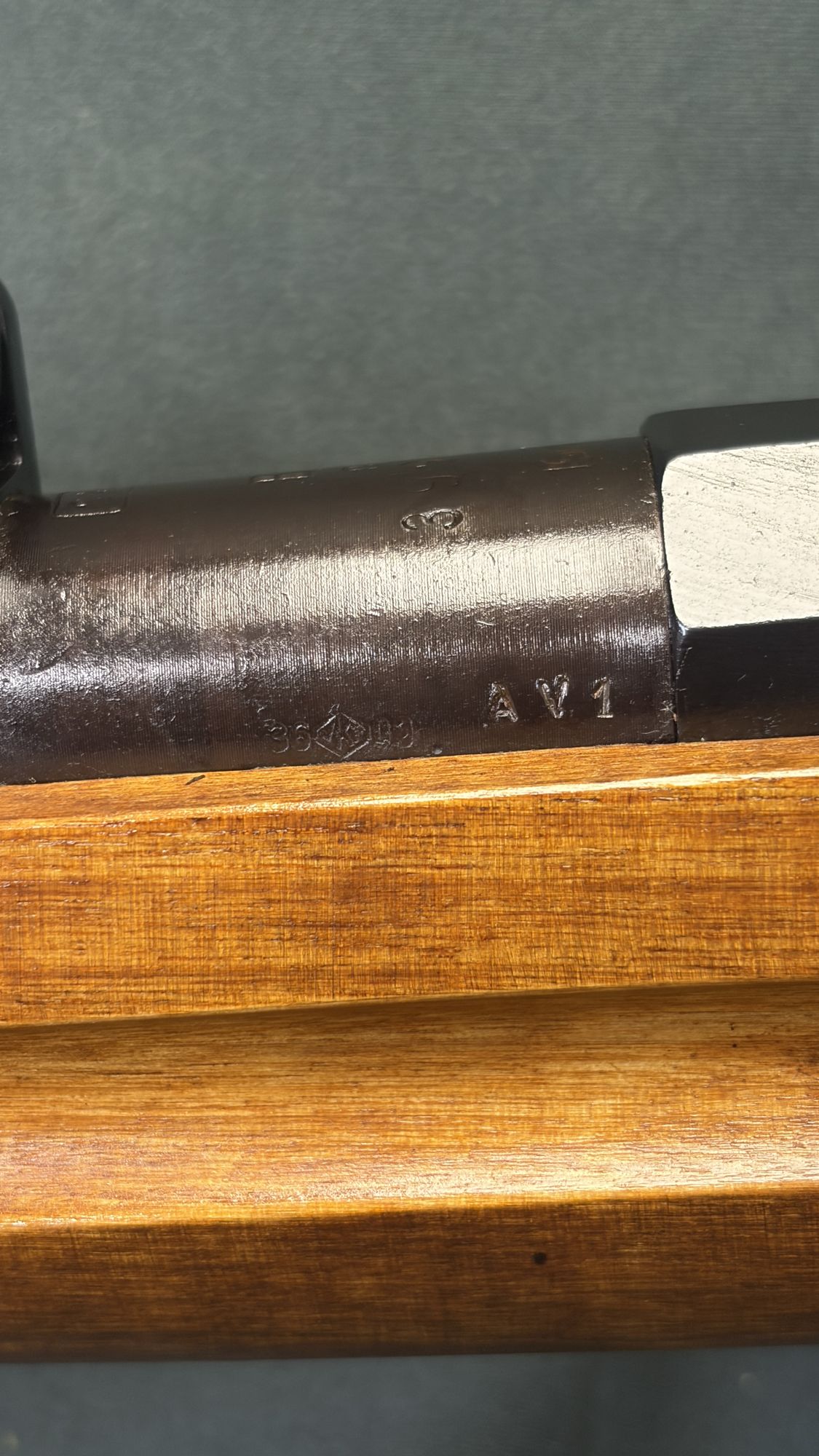
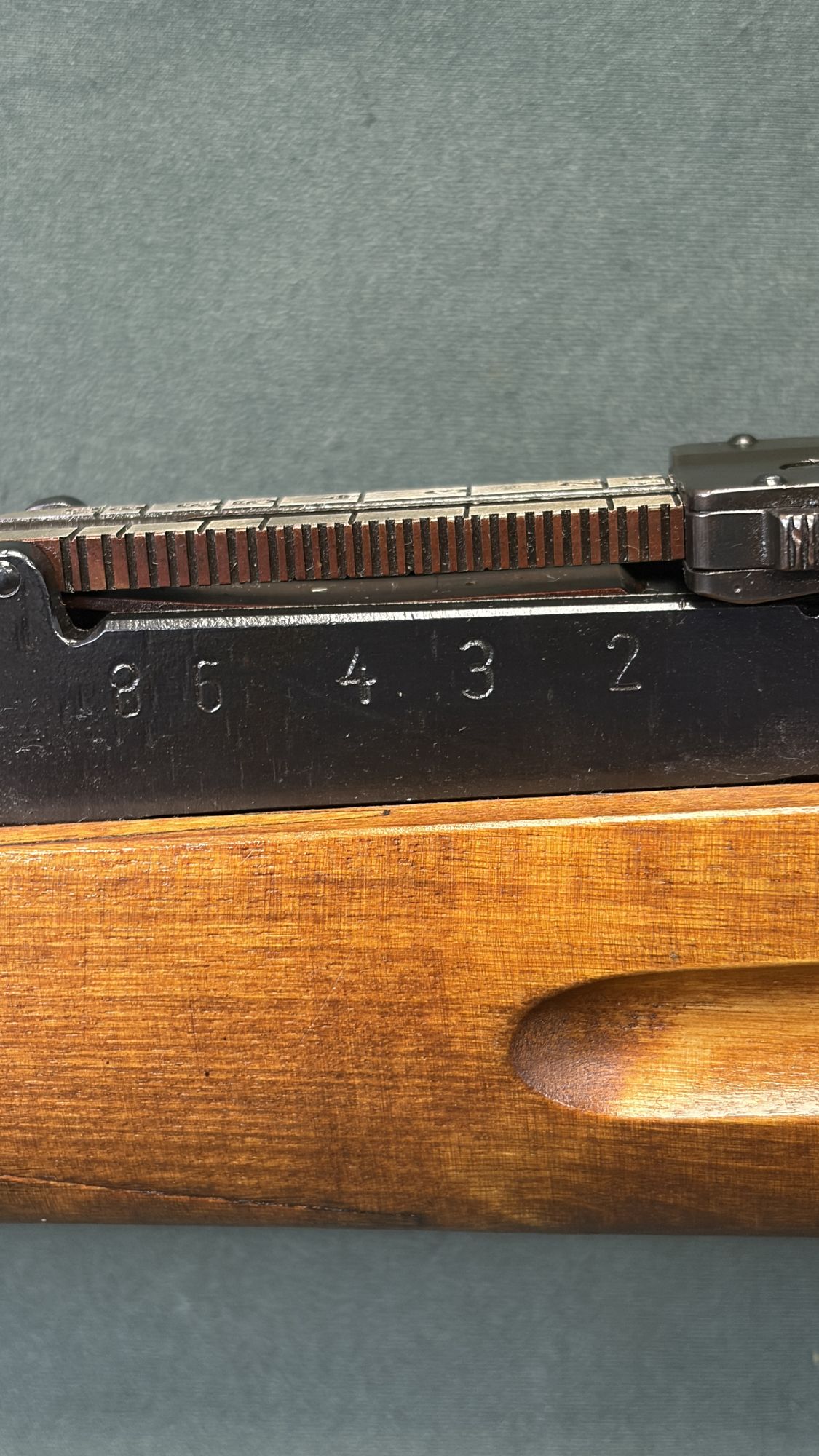
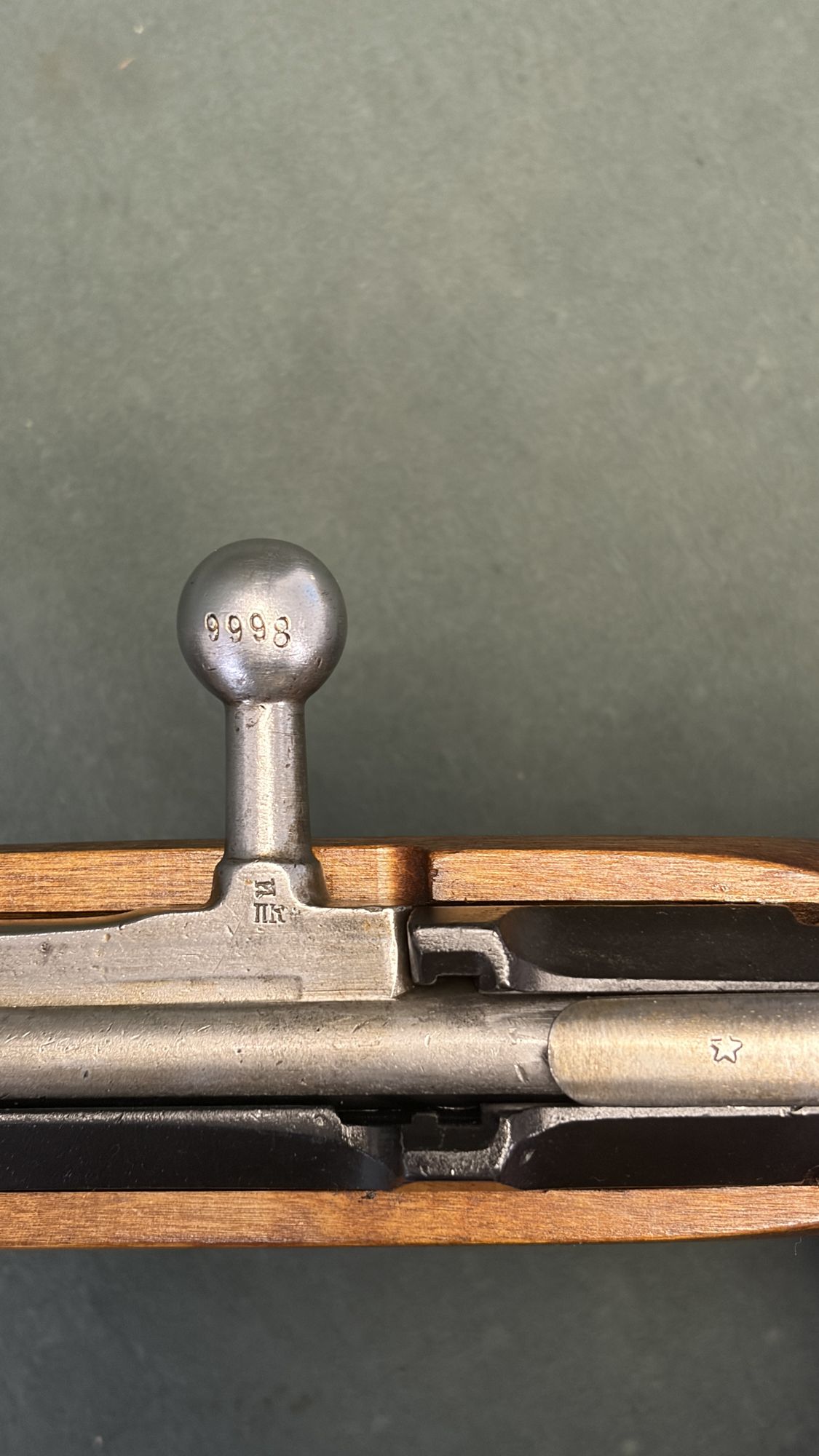
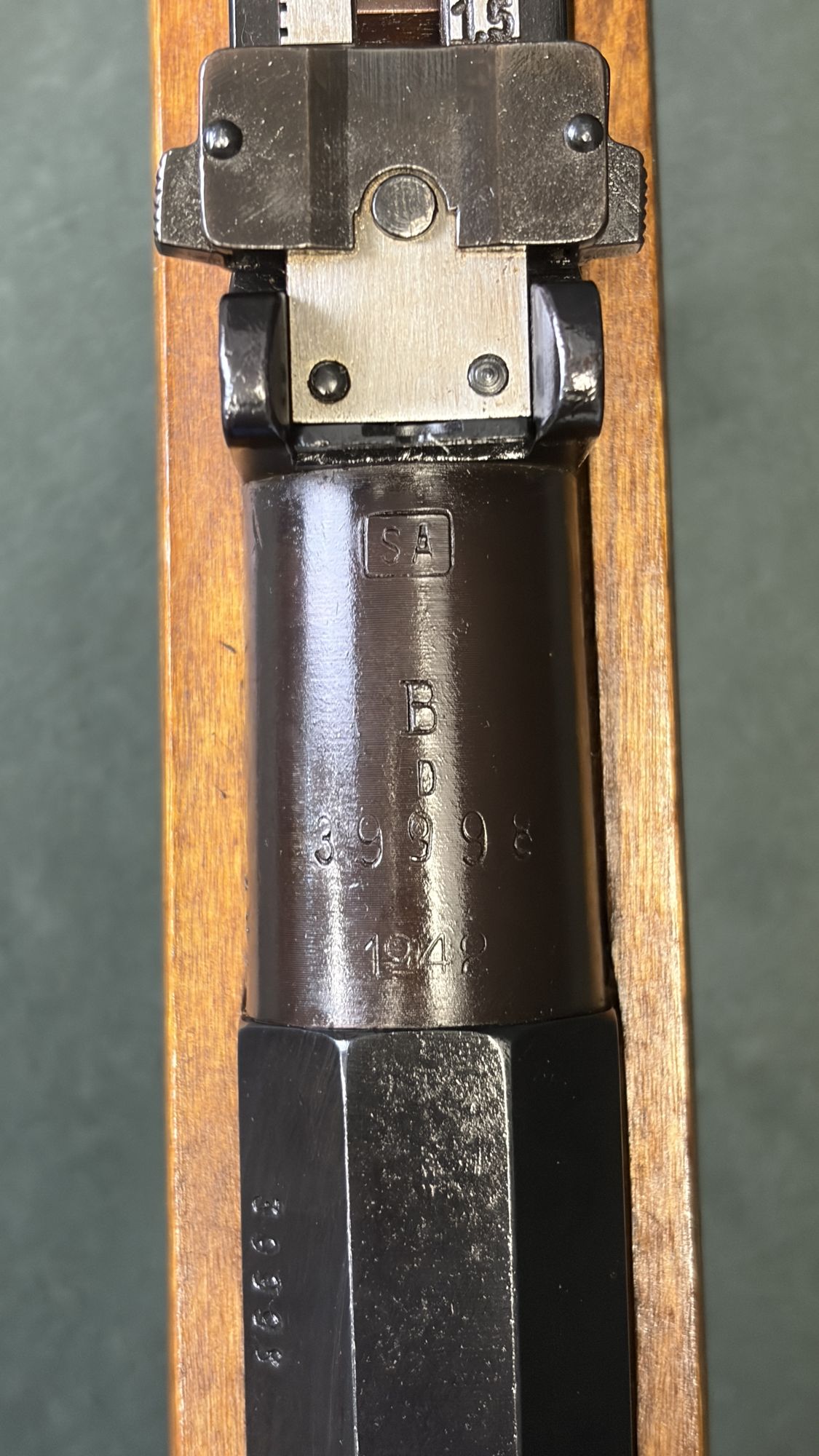
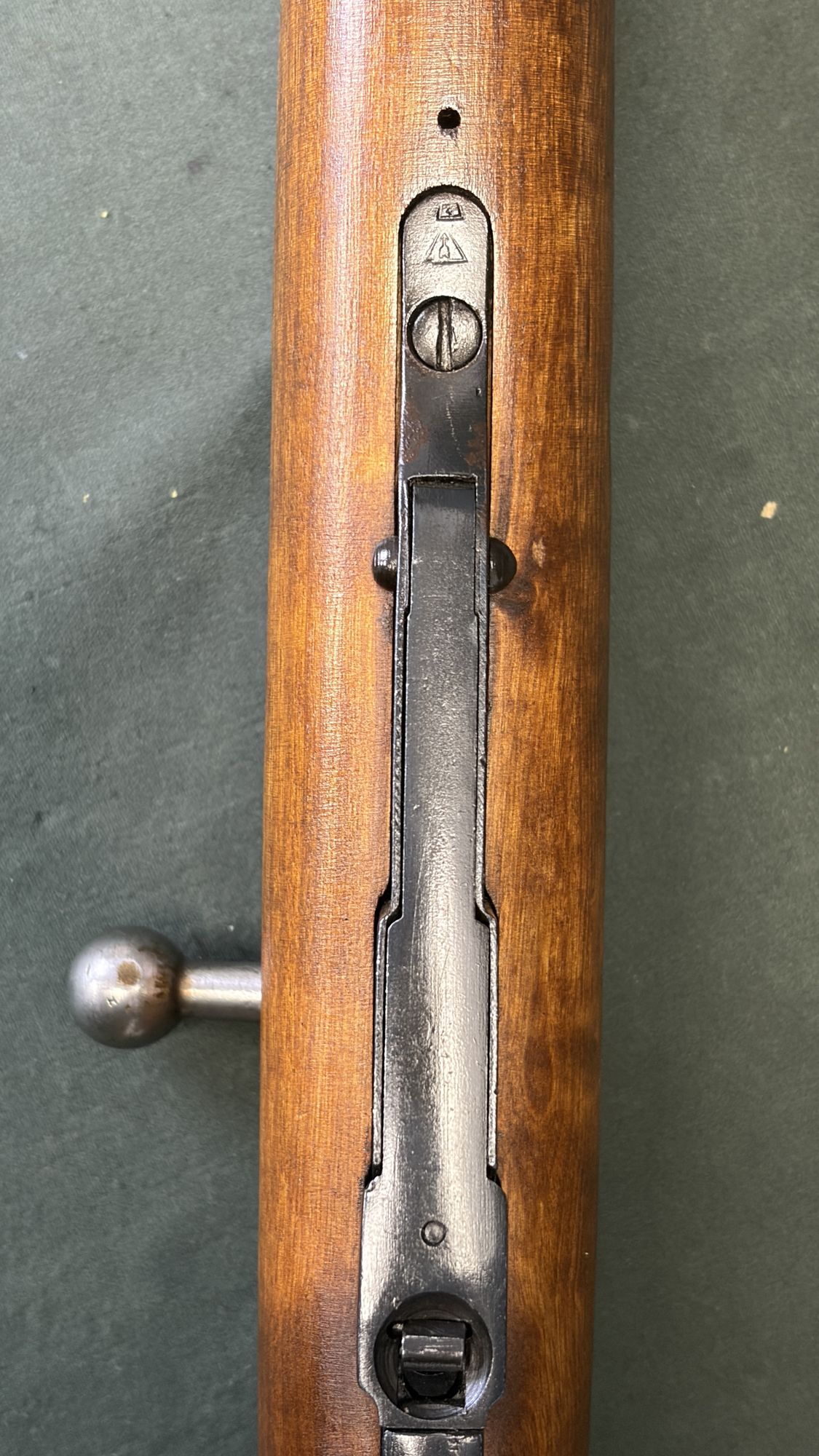
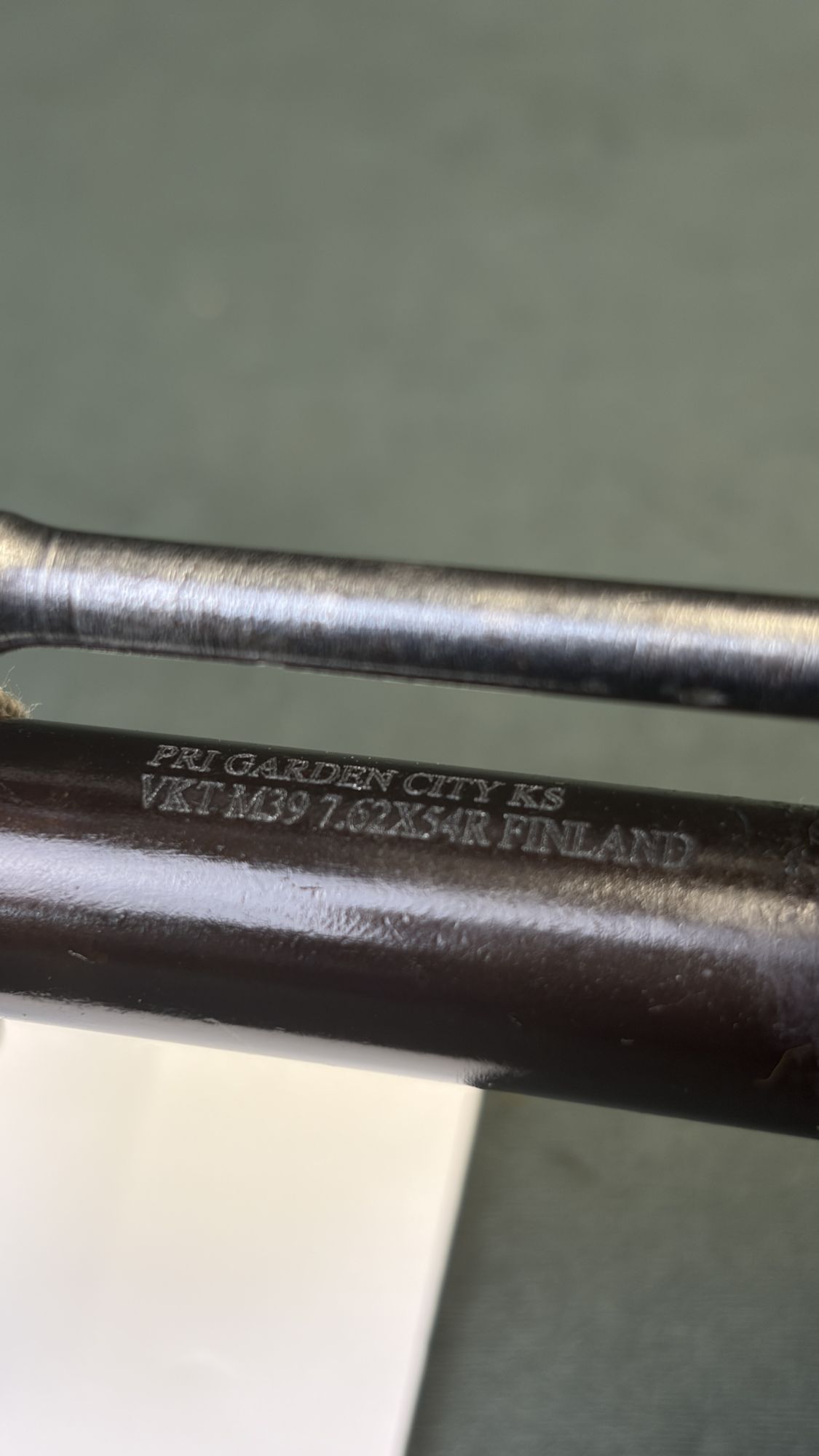
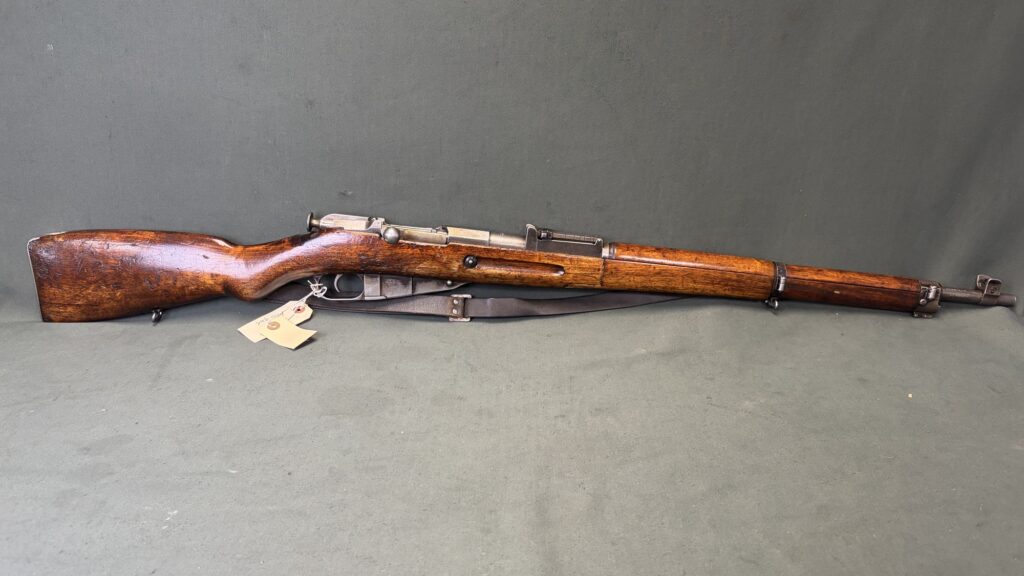
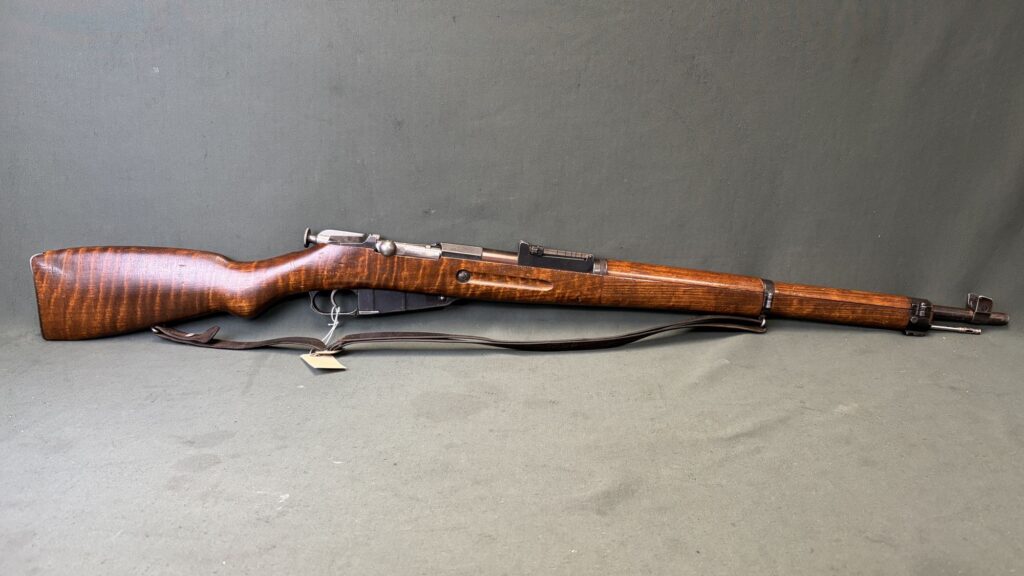
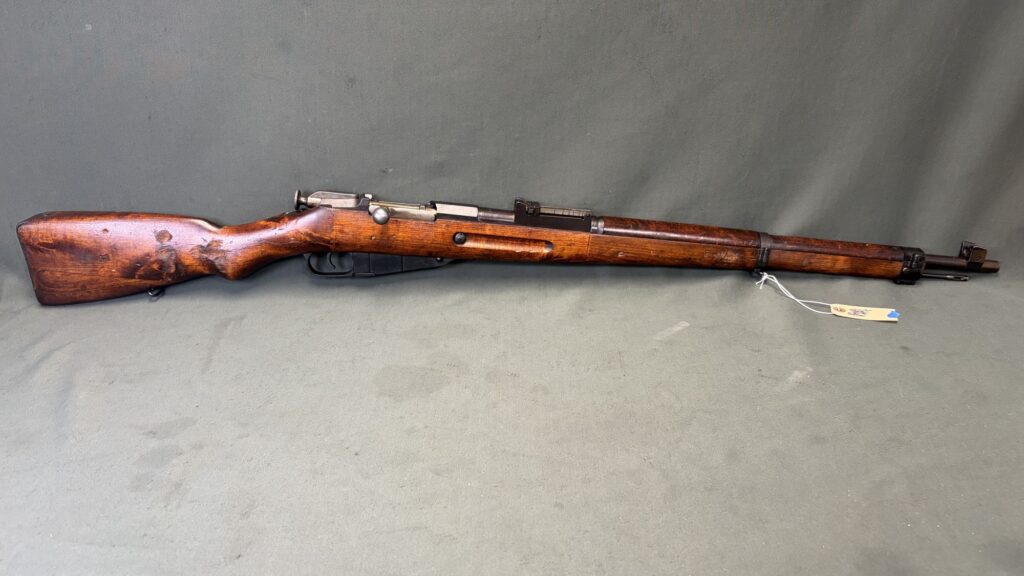
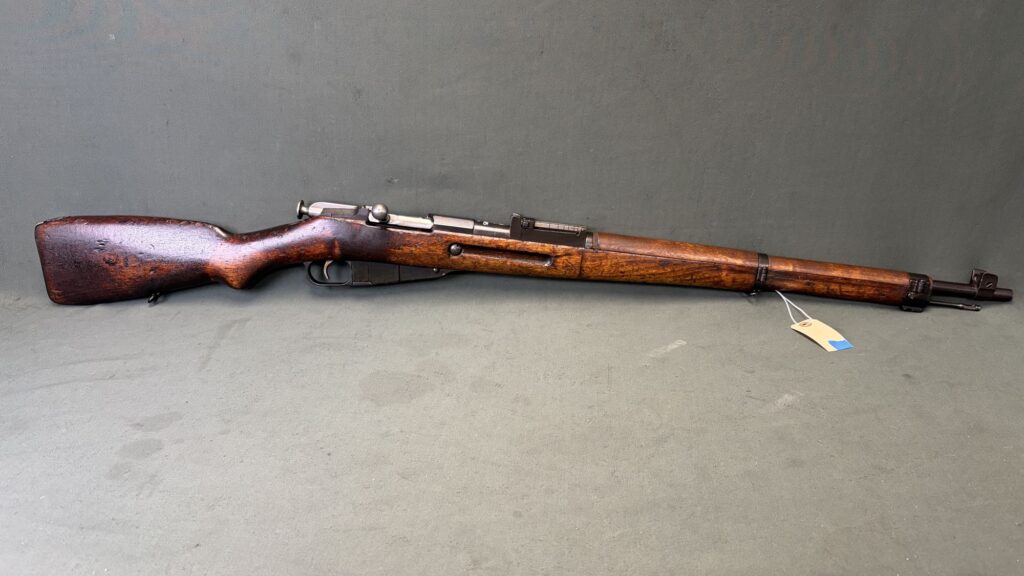
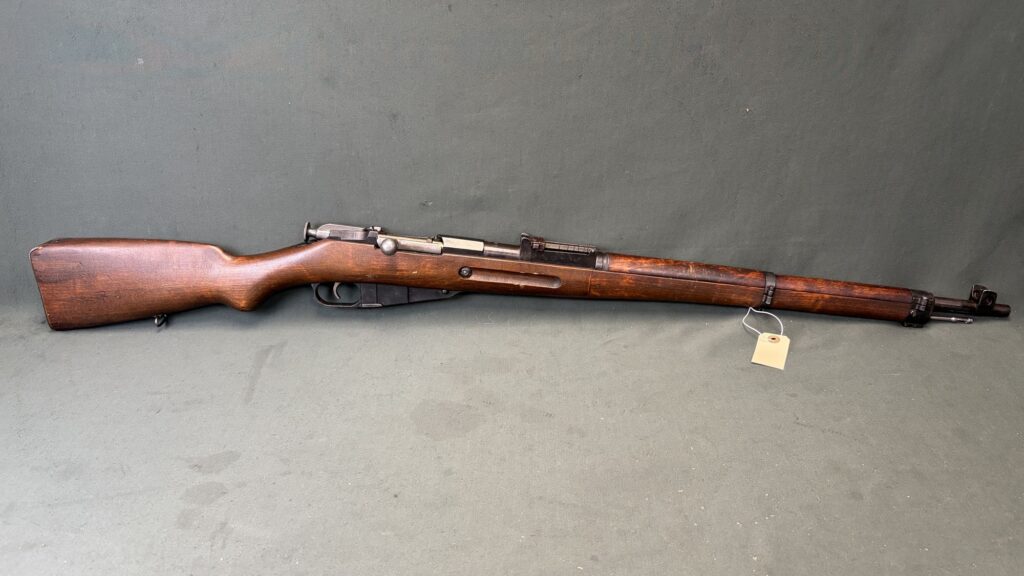
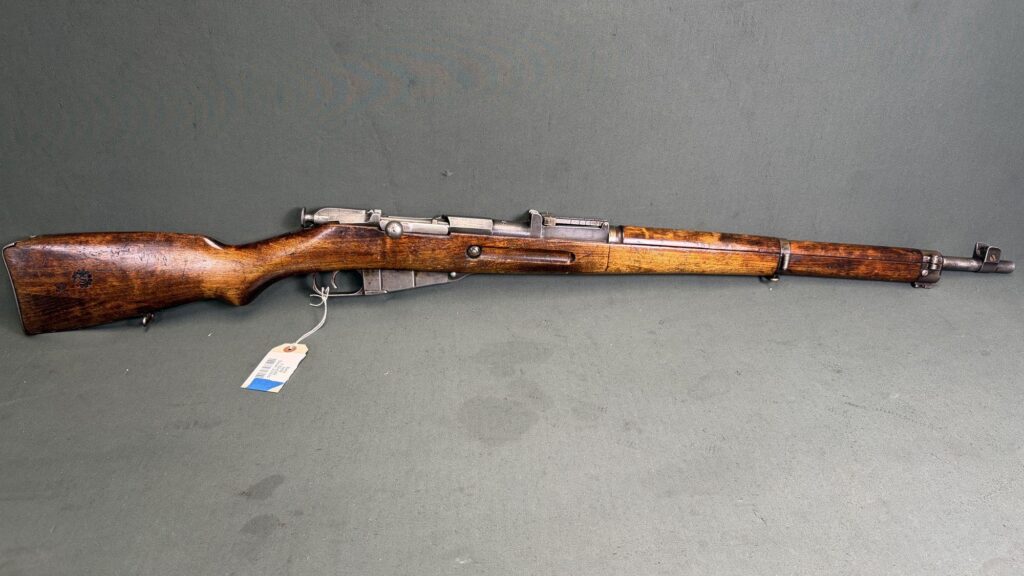
This Finnish M/39 is chambered in 7.62x53R, serial 399xx, and every numbered component matches. It is in near new, excellent condition with a mirror bore. The receiver beneath is of 1898 manufacture, antique by date, and still carries its Imperial Russian Tsarist eagle, faint but visible, where a great many Finnish rifles had the crest ground away. The barrel is dated 1942 and carries the B mark of a Belgian made barrel and the D mark of a chamber throat reamed for the Finnish D166 cartridge. Alongside those is a mark most of these rifles never received: 36 VKT 00, the Finnish pressure proof, stamped with the VKT letters set between the digits of 3600. It records a test at 3,600 atmospheres, somewhere around 52,000 pounds per square inch, well above any service load. The great majority of Finnish rifles were never re-proofed at all. This one was tested and passed. The side of the receiver is stamped AV1 for Asevarikko 1, the Finnish Army weapons depot that assembled it.
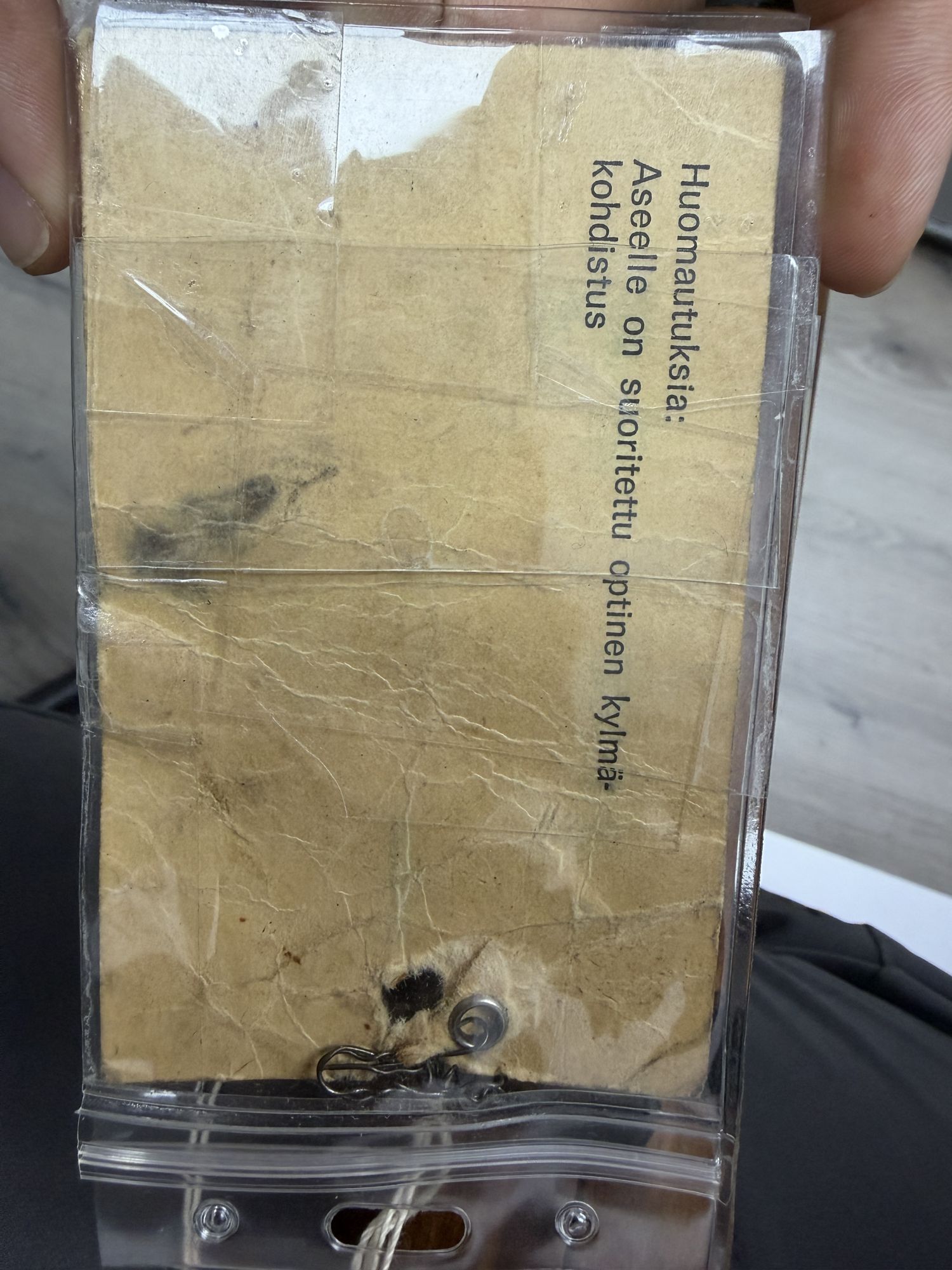
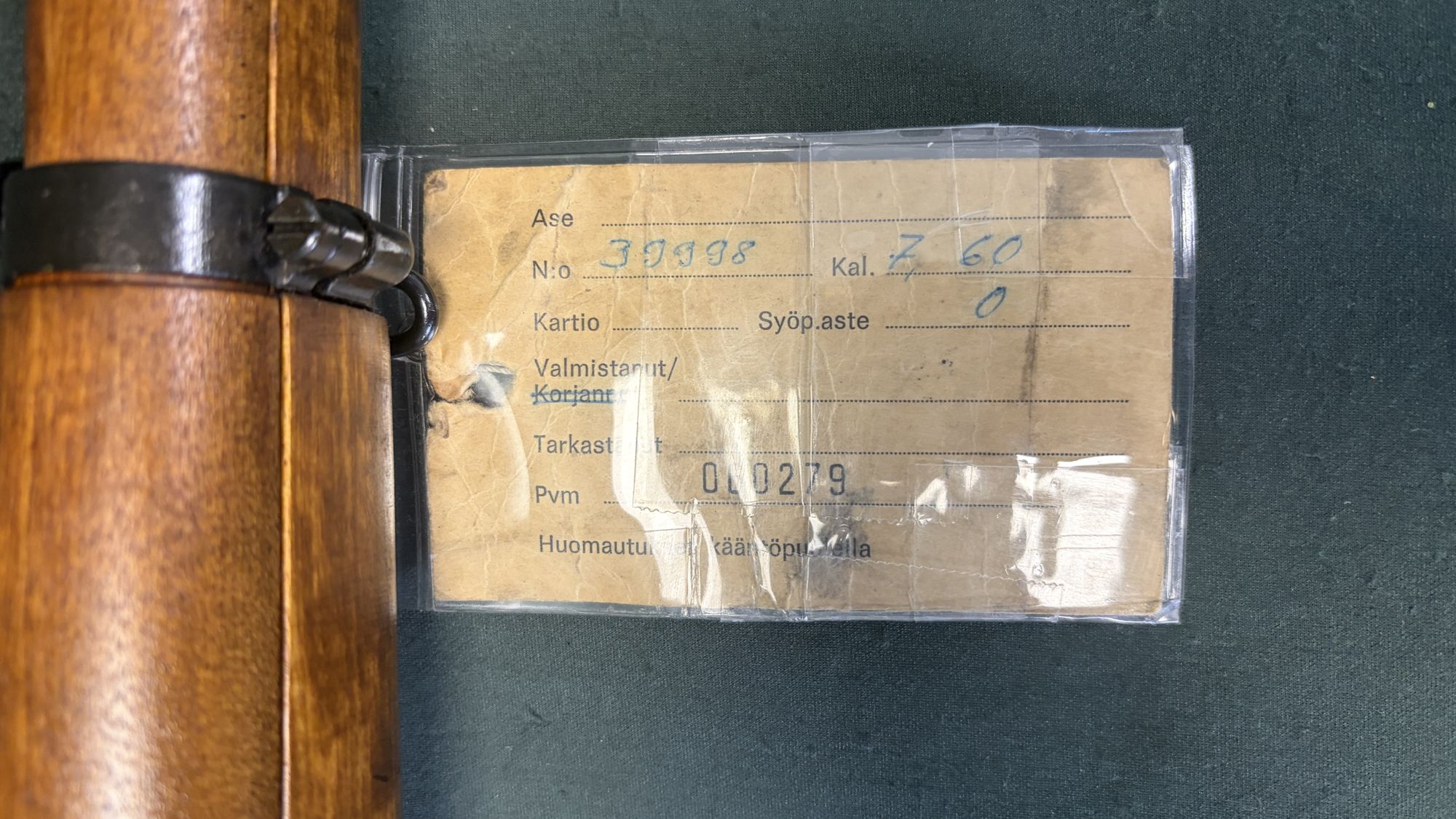
It still carries its original Finnish armoury tag, numbered to the rifle. The tag is not a bare inventory slip but a record of inspection, and it is still legible. Ase is the weapon type and N:o the number. Kal., the calibre, is written as 7,60, the bore as the inspector measured it, against a nominal land diameter of about 7.59mm. Kartio is the chamber cone. Syop.aste is syopymisaste, the degree of corrosion found in the bore, and the inspector has entered 0, the clean end of the scale. Valmistanut and Korjannut record who built or repaired the rifle, Tarkastanut who inspected it, and Pvm the date, here 01.02.79. The reverse carries a printed remark, Aseelle on suoritettu optinen kylmakohdistus: the weapon has been given an optical cold zeroing, its sights aligned to the bore by eye down the barrel rather than by firing, which is how a depot squared a rifle away before putting it into store. These tags were paper and were never meant to outlive the rifle’s time in store. One that survived, on the rifle it was written for, with its number still agreeing and its figures still readable, is the closest thing to a documentary record these rifles ever had, and it cannot be put back once it is gone. The rifle is offered as it is shown, tag included.
The M/39 was the last of the Finnish Mosin-Nagants, approved in April 1939 as a joint design of the Finnish Armed Forces and the Civil Guard, built around a heavier stock with a semi-pistol grip cut so the barrel floats free of the wood, which is where the type’s accuracy reputation comes from. Finland never manufactured a Mosin-Nagant receiver of its own and never needed to: something on the order of 190,000 rifles were left behind in Imperial Russian depots when the country became independent in 1917 and 1918, and those actions were drawn on for decades afterward. That is how a receiver made in 1898, under Nicholas II, came to carry a Belgian barrel dated to the middle of the Continuation War.
Specifications
Model: Jalkavaenkivaari m/39, M39
Caliber: 7.62x53R
Serial: 399xx
Receiver: 1898 manufacture, antique by date, Tsarist eagle present though faint
Barrel: Dated 1942, B stamped for a Belgian barrel, D stamped for the Finnish D166 cartridge
Proof: 36 VKT 00, Finnish 3,600 atmosphere pressure proof
Depot mark: AV1, Asevarikko 1
Capacity: 5 rounds
Matching: All numbered components matching
Bore: Mirror
Condition: Near new, excellent
Mechanical condition: Excellent
Included: Original Finnish armoury inspection tag, numbered to the rifle, dated 01.02.79,
recording bore 7,60 and corrosion grade 0, reverse noting an optical cold zeroing