
Journal · Collector’s Guide
Luger P08 Buyer’s Guide — 9mm, .30 Luger, Artillery & Swiss
The Luger is the most recognizable pistol of the twentieth century — that toggle action, the raked grip, the unmistakable silhouette of two world wars. But “a Luger” covers enormous ground: German military 9mm, .30-caliber commercial and export guns, the long-barreled Artillery model, and the Swiss originals that started it all. The value lives in the details — maker, chamber date, and above all whether the numbers match. Here’s how to read one, from a Plano shop that handles surplus every week.
9mm or .30 Luger — start with the caliber
The first fork in the road is chambering. German military P08s are 9×19mm Parabellum — the cartridge the Luger invented. Commercial, export, and early guns are frequently .30 Luger (7.65×21mm), the original Luger caliber and the one Switzerland, Finland, and many commercial buyers used. Neither is “better”; they’re different collecting lanes. Just know before you buy that .30 Luger ammunition is still made but costs more and turns up less often than 9mm — a shooting consideration, not a collecting one.
Matching numbers — the Luger’s make-or-break
No other pistol lives and dies by matching numbers the way a Luger does. Every major part — frame, toggle, breechblock, sideplate, takedown lever, even the grip screws — was serialized at the factory with the last two digits of the pistol’s serial. An all-matching Luger, especially one whose magazine also matches, commands a large premium over a “mixmaster” assembled from parts. A mismatched gun is still a fine shooter and a legitimate piece of history — just priced as one. When you inspect a Luger, you’re really counting numbers.
Reading the toggle — maker & date
The top of a Luger tells you who built it and when. The toggle carries the maker’s mark — DWM (Deutsche Waffen- und Munitionsfabriken, the most common), Erfurt, Mauser, Simson, or Krieghoff — while the chamber is stamped with the production year (e.g. 1915, 1917) on military guns, or left blank on commercial ones. Those two marks place the pistol in history and, with the proofs, separate a wartime service gun from a commercial or export piece. Our DWM guns read exactly this way.
The Artillery Luger (LP.08)
The Lange Pistole 08 — the “Artillery” Luger — is the grail of the family. It pairs a long 8-inch barrel with a tangent rear sight graduated to 800 meters and a lug for a detachable shoulder stock, turning the pistol into a light carbine for WWI artillery and machine-gun crews. Paired with the 32-round “snail drum,” it’s one of the most iconic small arms of the Great War. Our 1915 DWM Artillery Luger in 9mm is exactly the piece serious Luger collectors build toward.
The Swiss Lugers
Switzerland adopted the Luger first — the Model 1900 in 7.65mm, years before Germany — and Swiss craftsmanship shows. The Waffenfabrik Bern 06/29 was the final and finest Swiss Luger: chambered in .30 Luger, fitted with the distinctive grip safety and a flat front grip strap, and built to the exacting standards that make Swiss martial arms so collectible. It’s the cornerstone of any serious Luger or Swiss collection, and a very different animal from a wartime German service gun.
Straw, finish & proofs — the condition tells
Original Lugers show straw-colored small parts — the safety lever, takedown lever, trigger, and ejector took a golden-straw heat treatment that contrasts with the blued frame. Bright, honest straw is a strong sign the gun hasn’t been refinished; a uniformly reblued Luger has usually lost it. Study the proof and inspection stamps, look for military acceptance marks or unit stamps, and note any import marking. Finish, straw, and proofs together tell you whether a Luger is original or restored — and that gap is most of the price.
What to inspect before you buy
- Count the numbers — frame, toggle, breechblock, sideplate, takedown lever, and grip screws should share the serial’s last two digits; a matching magazine is a real bonus.
- Toggle & lockup — work the action; the toggle should lock crisply with no cracks at the pivot, the highest-stress point on a Luger.
- Bore — .30 and 9mm bores both should be bright with strong rifling; these are worth shooting when the bore is right.
- Straw & finish — original straw and honest bluing versus a refinish; it’s most of the value gap.
- Grip safety (Swiss and early guns) — confirm it functions; it’s part of what makes those variants distinct.
C&R eligible — and the FFL part is easy
Every Luger here is well over fifty years old and Curio & Relic eligible — with a C&R license these can ship straight to your door. Otherwise it’s the normal, painless routine: we ship fully insured to your local FFL, who runs the background check at pickup. In the Dallas area? Pick up in store in Plano and handle the pistol before you commit. Every Luger is inspected in-house — browse the full case of surplus & collectible pistols, or email sales@oldsteelarsenal.com for detailed photos of the numbers, toggle, and straw.
In the Case Right Now
Live inventory — every Luger currently on the floor. Each is one of one; when it sells, it is gone.
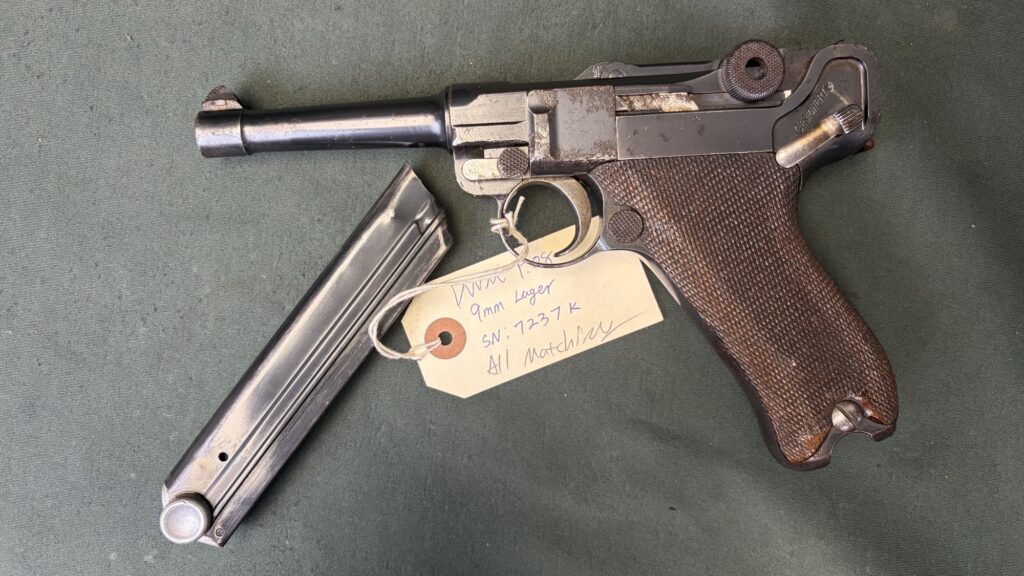 1911 DWM Luger P08 9mm German Army Accepted, Matching$1,525.00
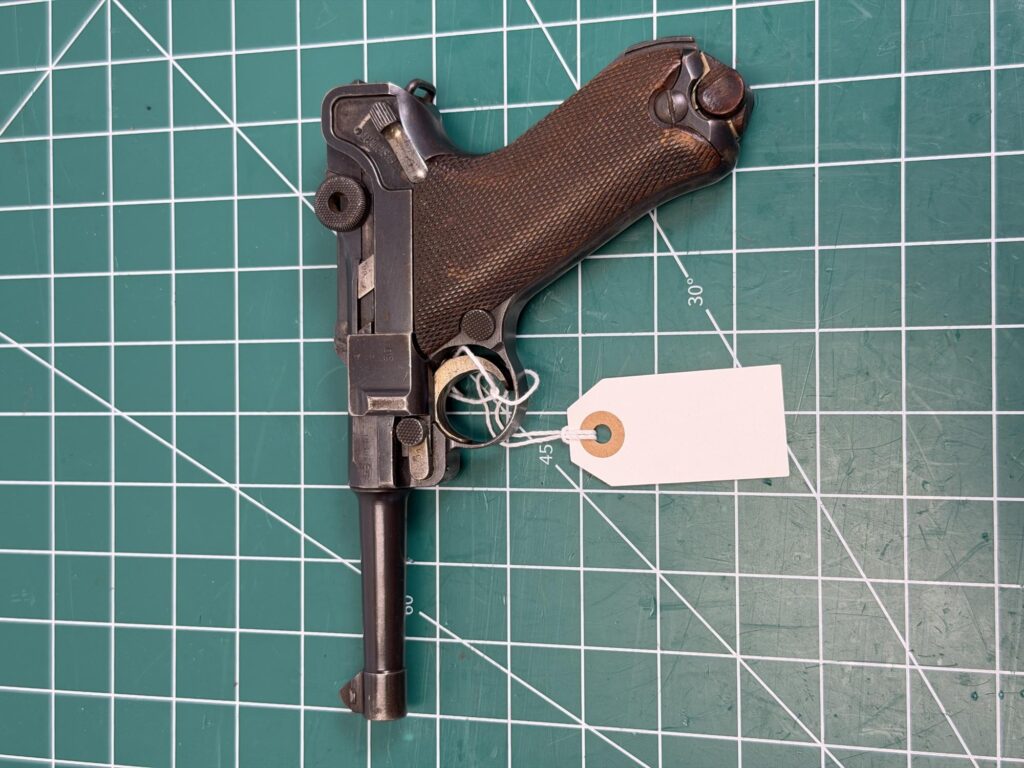 DWM commercial Luger P08 pistol$1,549.00
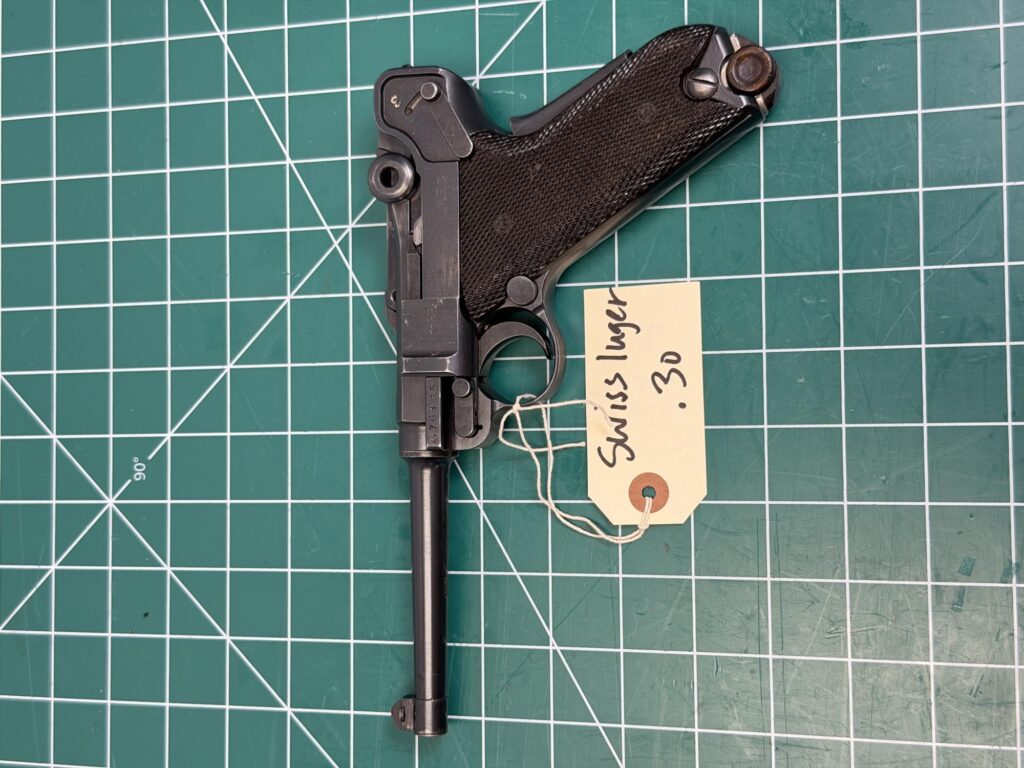 Waffenfabrik Bern Swiss Luger 06/29 pistol chambered in .30 Luger$2,379.00
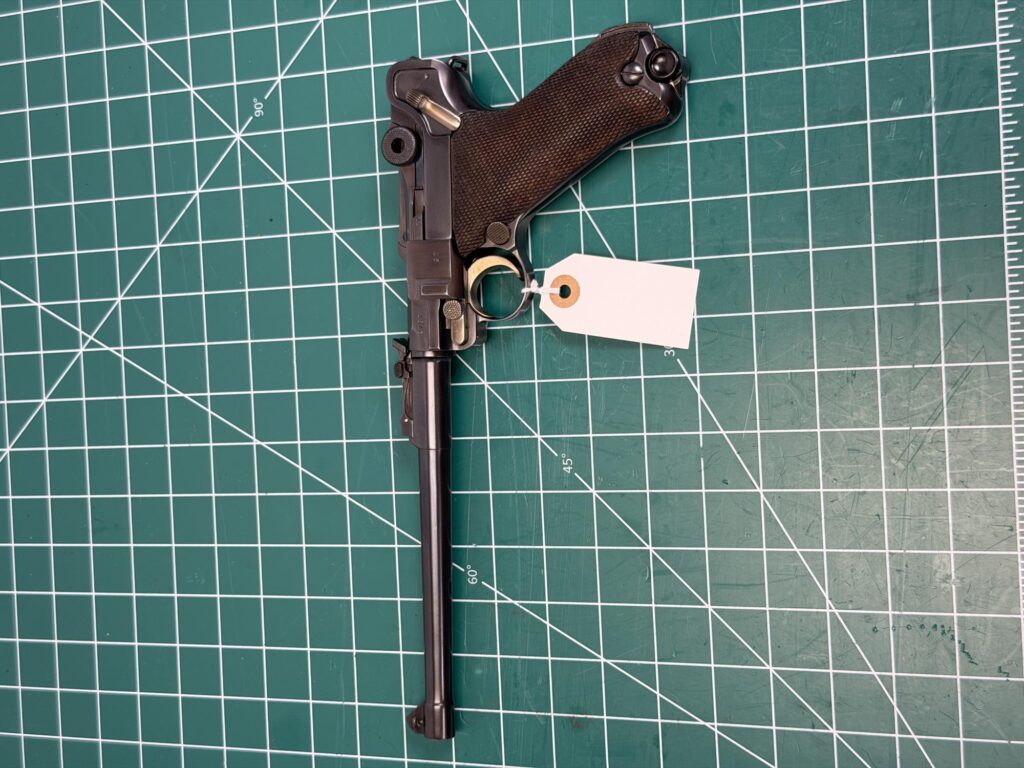 DWM 1915 LP.08 Artillery Luger pistol chambered in 9x19mm$2,799.00
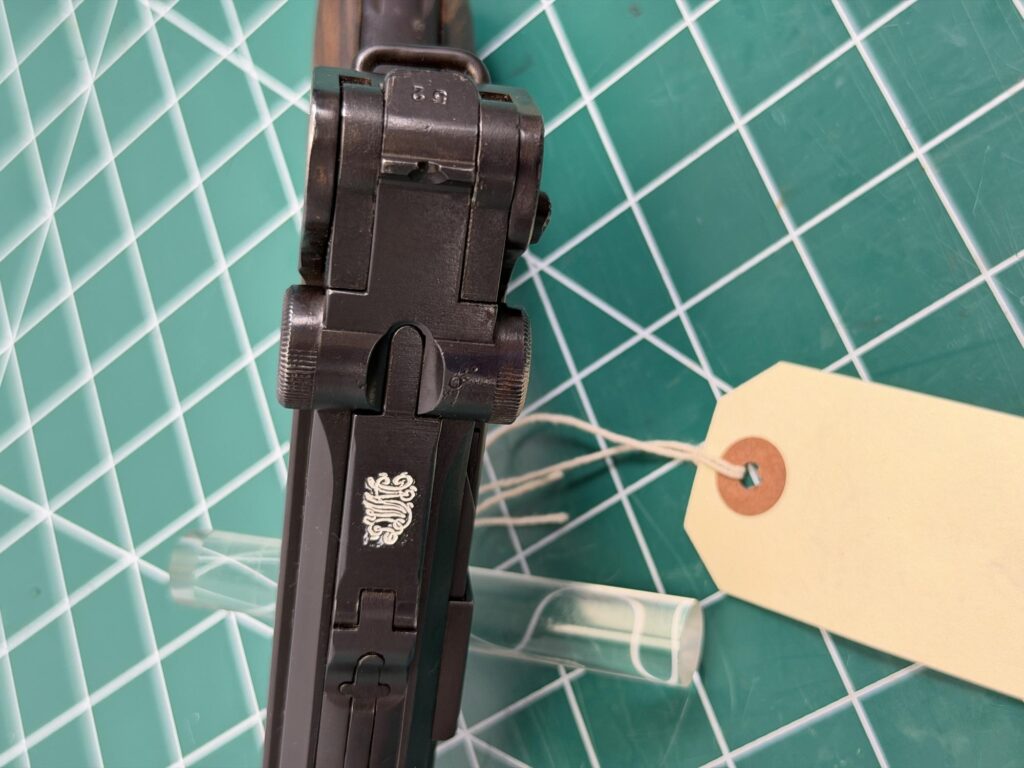 DWM Luger P08 .30 Luger Finnish Army Service 95% Blue Mirror Bore$1,199.00
Shop Luger P08 pistols in stock now →