
Journal · Collector’s Guide
Finnish & Russian Mosin-Nagant rifles buyer’s guide
The Mosin-Nagant is a Russian bolt-action family adopted in 1891 and chambered for the rimmed 7.62×54R cartridge. The useful buyer question is almost always the same: who built or rebuilt this example? Finnish rebuild vs Soviet mass production changes what you should expect from barrels, stocks, sights, and dates. This guide shows how to read marks, dates, matching, and bore/stock tells — then choose a specific rifle on the Mosin-Nagant hub. Finnish M39s are prized by many collectors for build quality and sights; on our shelf you buy the individual rifle, not a grade.
Committee work combined Mosin’s receiver and bolt (two large front locking lugs) with Nagant’s clip-loaded magazine. Early Russian manufacture included Izhevsk, Sestroretsk, and Tula, with a supplemental Chatellerault contract in France. Soviet rifles you will meet most often are the 91/30 and the M44 carbine — Tula commonly marked with a five-pointed star, Izhevsk with an arrow inside a triangle. Finland rebuilt captured Russian receivers into the Civil Guard M28/30 and then the M39, with Finnish barrels, two-piece stocks, and a small boxed SA property stamp. On a Finnish rifle a receiver dated decades before the barrel is correct, not a warning sign.
At a glance
- Caliber — 7.62×54R on every variant; not interchangeable with 7.62×39 or .308
- Action — bolt-action, 5-round non-removable magazine (pattern-typical)
- Main producers & marks — Tula (five-pointed star) and Izhevsk (arrow in a triangle) in Russia; SAKO, VKT, Tikkakoski and the Civil Guard (B / Sk.Y) in Finland
- Finnish property stamp — a small boxed SA (Suomen Armeija), a fast confirmation that a Mosin passed through Finnish service
- Matching numbers — bolt, magazine floorplate and stock share the receiver serial or a correct arsenal-applied number; on Finnish rifles the receiver and barrel dates routinely differ by decades, and that is correct
- C&R — many wartime and early Cold War examples qualify by age; each listing notes status — confirm current ATF rules
- Most often confused with — the M91/59 (a 91/30 cut down to carbine length, no bayonet) and the Chinese Type 53 (91/44-pattern carbine)
Russian vs Finnish — what actually differs
Nearly every Mosin on the market is one of two things: a mass-produced Russian/Soviet service rifle, or a Finnish rebuild on a captured receiver. The bolt-action and magazine system are shared. What differs is barrel, stock, sights, and rebuild practice. A Finnish rifle often started as a Russian receiver, then received a new heavy barrel, a two-piece stock (commonly with a semi-pistol grip on M39s), and upgraded sights, fitted at shops such as Sako, VKT, or Civil Guard facilities. Look for the small boxed SA property stamp as a Finnish-service mark — it tells you the rifle passed through Finnish hands; it does not by itself grade the bore or matching. Browse live Mosin-Nagant listings →
Variants compared — 91/30, M44, M39, M28/30, Type 53
| Feature | M91/30 | M44 carbine | Finnish M39 | Finnish M28/30 | Chinese Type 53 |
|---|---|---|---|---|---|
| Caliber | 7.62×54R | 7.62×54R | 7.62×54R | 7.62×54R | 7.62×54R |
| Barrel length | 28.7 in (730 mm) | 20.2 in (514 mm) | 27.0 in (685 mm) | 27.0 in (685 mm) | 20.2 in (514 mm) |
| Overall length | ≈48.5 in (1,232 mm) | ≈40.2 in (1,020 mm) | ≈46.7 in (1,187 mm) | ≈46.5 in (1,180 mm) | ≈40.2 in (1,020 mm) |
| Weight, unloaded | ≈8.8 lb (4.0 kg) | ≈8.9 lb (4.1 kg) | ≈10.0 lb (4.5 kg) | ≈10.4 lb (4.7 kg) | ≈8.9 lb (4.1 kg) |
| Production years | 1930–1945 (pattern) | From 1944; licensed/pattern production elsewhere into the 1950s | Introduced 1939; wartime mass production with smaller postwar assembly | 1930s Civil Guard lineage | From the 1950s |
| Origin & arsenals | USSR — Tula and Izhevsk | USSR — Izhevsk; also Poland (Radom), Romania (Cugir), Hungary, others | Finland — Sako, VKT, Tikkakoski, Civil Guard (B / Sk.Y) | Finland — often Sako; Civil Guard marks | China — state arsenals |
| Arsenal mark | Tula: five-pointed star. Izhevsk: arrow inside a triangle | Mark of the producing arsenal; Radom uses a circled 11 | Finnish makers spell the name out; boxed SA property stamp | SkY Civil Guard mark; boxed SA | Chinese arsenal markings |
| Identifying features | Full-length rifle; hex receiver early, round later; detachable socket bayonet | Permanently attached side-folding bayonet | Heavy stepped barrel; two-piece stock with semi-pistol grip (typical); rear sight in metres; Russian receiver often decades older than barrel | Finnish barrel on a Russian receiver; distinctive rear sight; M39 ancestor | 91/44-pattern carbine; permanently attached folding bayonet |
| Matching numbers | Bolt, magazine floorplate and stock share the receiver serial; refurbished rifles are commonly force-matched | As M91/30 | Finn-matched practice; receiver and barrel dates routinely differ by decades | As M39 | As M44 |
| C&R note | Often age-eligible — confirm listing + ATF | Often age-eligible — confirm listing + ATF | Often age-eligible; late assembly ran into later decades — check the date | Often age-eligible — confirm listing + ATF | Often age-eligible — confirm listing + ATF |
Nominal pattern specs only. Dimensions above are pattern-typical service figures (M39 length/barrel/weight aligned to Jaeger Platoon published figures where used). Individual rifles vary with arsenal, production year, and refurbishment. Published M28/30 figures differ slightly between sources. The M91/59 (91/30 shortened in the late 1950s) and earlier Finnish M91 are not shown in the table. Curio & Relic status is determined by an individual rifle’s year of manufacture — confirm current ATF requirements. Browse live Mosin-Nagant listings →
Finnish M39 — what to look for
The M/39 was introduced at Finland’s Ministry of Defence on 15 September 1939. Production began immediately but was slowed by mobilization; the first batch was completed after the Winter War. Finnish museum and specialist references describe wartime mass production with smaller postwar assembly from parts; they differ on exact end dates and totals — we do not treat a round number as a marketing claim. Pattern-typical specs often cited for the M39 include 7.62×54R, about 1187 mm overall, 685 mm barrel, about 4.5 kg, and a 5-round non-removable magazine. Nickname “Ukko-Pekka” is linked to President Pehr Evind Svinhufvud in Finnish sources.
Look for the maker on the barrel shank: SAKO, VKT (Valtion Kivääritehdas), B / Sk.Y (Civil Guard), or Tikkakoski / Tikka. The receiver underneath is usually an older Russian hex or round. Semi-pistol-grip stock is typical; a small early straight-stock run is noted in specialist references. Two dates are normal — Russian receiver date and Finnish barrel date. Finnish M39s on the shelf → · Browse live Mosin-Nagant listings →
M28/30 and earlier Finnish
Per Finnish Infantry Museum notes on Civil Guard weaponry: the Civil Guard developed the M28 then the M28/30 (rear-sight improvements). Army models had earlier problems; disputes delayed a unified rifle until, at the outbreak of the Winter War, Army and Guards cooperated on the M39. Most M28/30 examples wear the SkY Civil Guard mark. Earlier still is Finnish use of the M91 1891 pattern. On Finnish-service rifles expect the small boxed SA (Suomen Armeija) property mark. SkY marks Civil Guard procurement, run separately from the army — which is why Civil Guard and army rifles carry different marks. The M28/30’s rear sight is its own design and not interchangeable with the M39’s. Browse live Mosin-Nagant listings →
Soviet 91/30, M44, M91/59
The 91/30 is the 1930 refinement of the Model 1891 — sights in meters, move toward round receivers, extensively used in WWII. Principal arsenal marks: Tula (five-pointed star) and Izhevsk (arrow in a triangle). The M44 is the carbine form with a permanently attached folding bayonet introduced in 1944. Type 53 is China’s designation for that 91/44 carbine pattern. The M91/59 is a 91/30 cut down to carbine length in the late 1950s — no folding bayonet. Watch also for ex-sniper 91/30s: selected, scope-mounted, later returned to service with filled mounting holes. Browse live Mosin-Nagant listings →
Reading markings and dates
- Arsenal stamp — Tula is a five-pointed star; Izhevsk is an arrow in a triangle; Finnish makers spell it out (SAKO, VKT, B, Tikka).
- Boxed “SA” — Finnish Army property mark. Fast confirmation of Finnish service.
- Receiver date vs. barrel date — on Finnish rifles these routinely disagree by decades. Correct; the receiver is the older donor.
- Matching numbers — bolt, magazine floorplate, and stock should carry the same serial (or a correct arsenal-applied number) when matching is claimed. We state what matches on each listing.
- Importer stamp — a small importer mark is normal on U.S.-market rifles imported since 1968.
Browse live Mosin-Nagant listings →
What to inspect before you buy
Check the bore first — look for usable rifling. A counterbore at the muzzle is arsenal practice on many Soviet and Finnish barrels, not romantic “damage theater.” Confirm bolt and receiver agreement as stated on the listing, work the action for clean lockup, and look the stock over for arsenal repairs — Finnish stocks are often finger-spliced, which can be correct factory work. Read the rollmarks: maker, receiver origin, and dates tell the story. Then buy the specific rifle, not a grade. Browse live Mosin-Nagant listings →
Caliber & shooting — 7.62×54R
These rifles are chambered in 7.62×54R, the rimmed cartridge adopted with the 1891 rifle family. It is not interchangeable with 7.62×39 or .308. Commercial ammunition remains available. Much surplus 7.62×54R still uses corrosive primers, which leave salts that draw moisture — clean with a water-based solvent or hot water the same day you shoot, then oil the bore. Current commercial loads are typically non-corrosive. Short carbines such as the M44 produce more muzzle blast from the shorter barrel; that is geometry, not a personality trait. Browse live Mosin-Nagant listings →
C&R and FFL
Many Mosin-Nagants qualify as Curio & Relic by age — each listing notes status when applicable; confirm current ATF / C&R rules with your dealer. Without a C&R license, the normal path is shipment to your local FFL for the background check at pickup. See FFL & Shipping. Dallas–Plano area buyers can arrange in-store pickup in Plano when the listing supports it — handle the rifle before you commit. Questions on a specific bore or set of markings: sales@oldsteelarsenal.com. Browse live Mosin-Nagant listings →
In the case right now
Same live shelf as the hub — each card is one rifle. When it sells, it is gone.
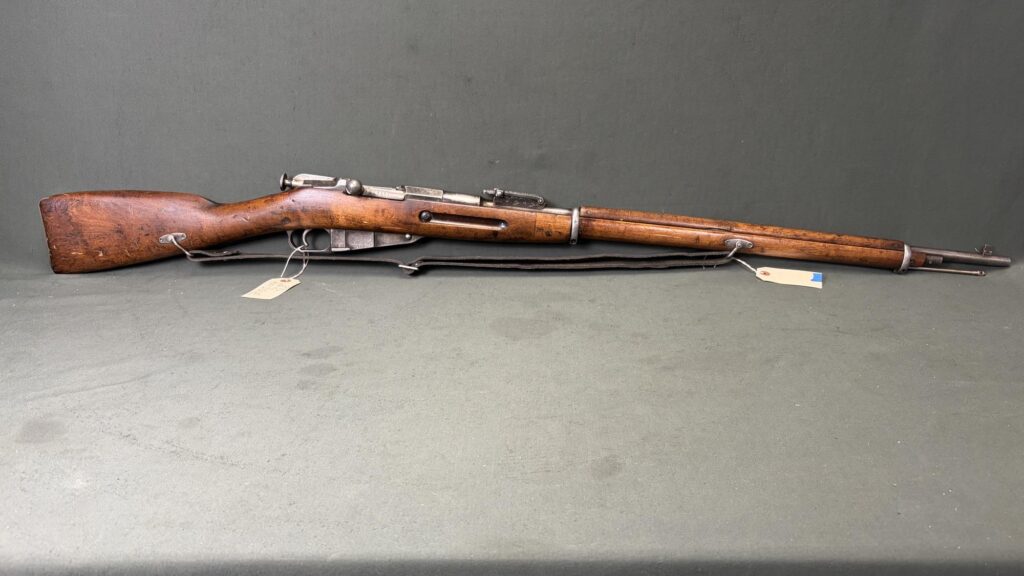 Finnish M91 Mosin Nagant 7.62x54R Antique 1895 Tsar Crest 1941 Tikka Barrel$875.00
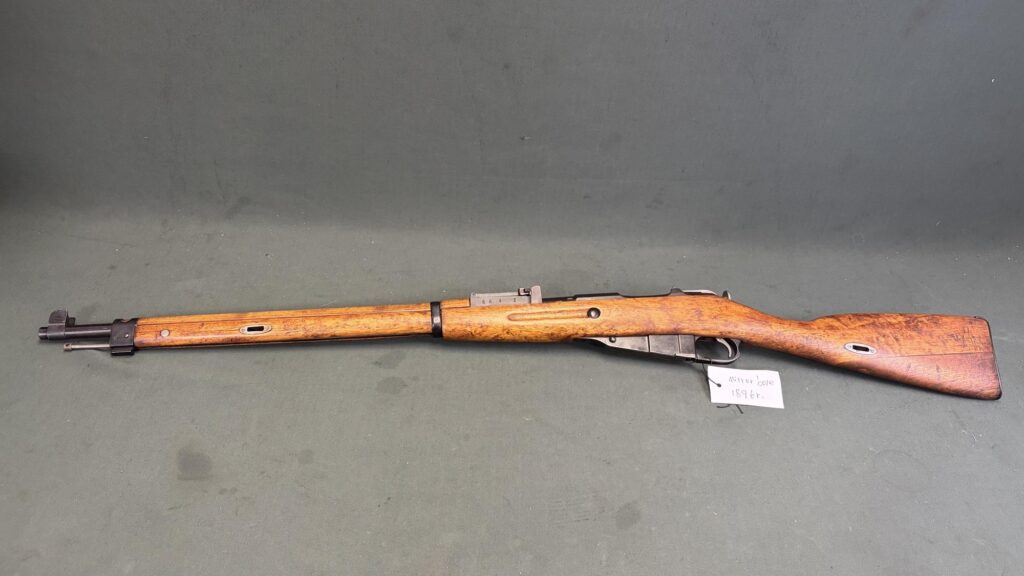 Antique 1896 Izhevsk Finnish M28-30 Mosin Nagant 7.62x54R SKY 1939 Barrel No FFL$1,249.00
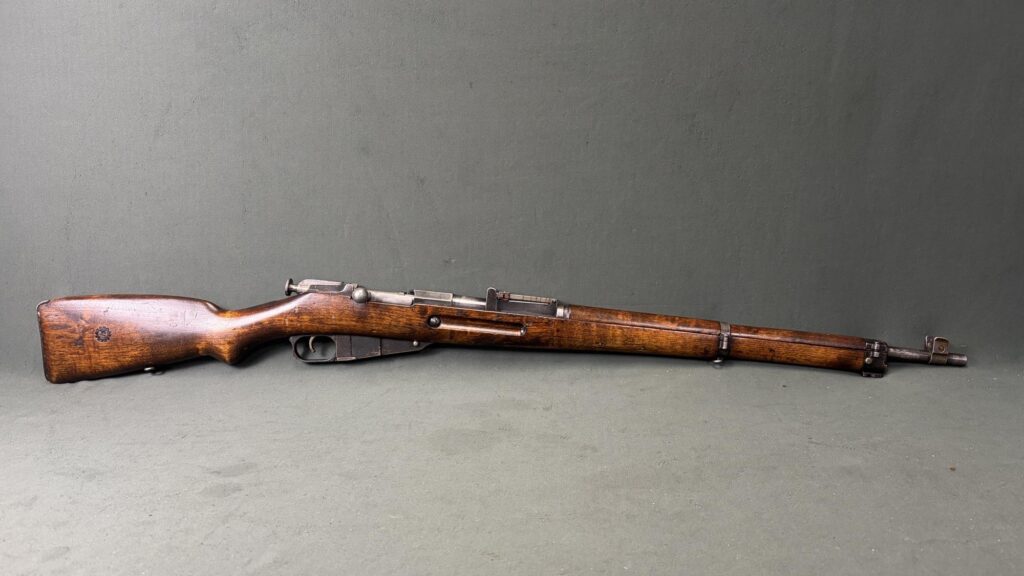 1942 SAKO Finnish M39 Mosin Nagant 7.62x54R Gear Cartouche Bright Bore$889.00
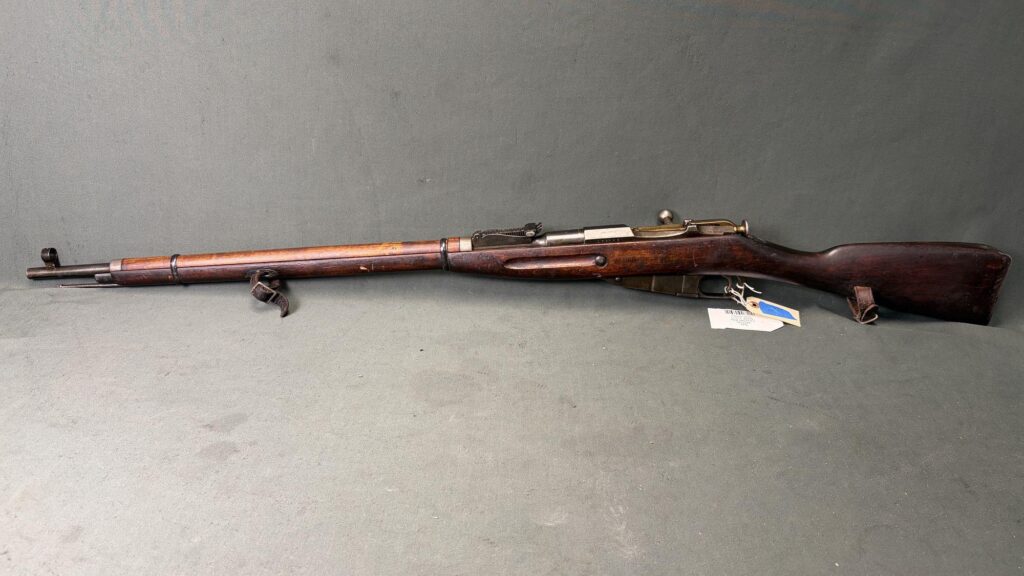 Soviet Mosin M91/30 7.62×54R — 1932 Tula Hex, Non-Refurbished$575.00
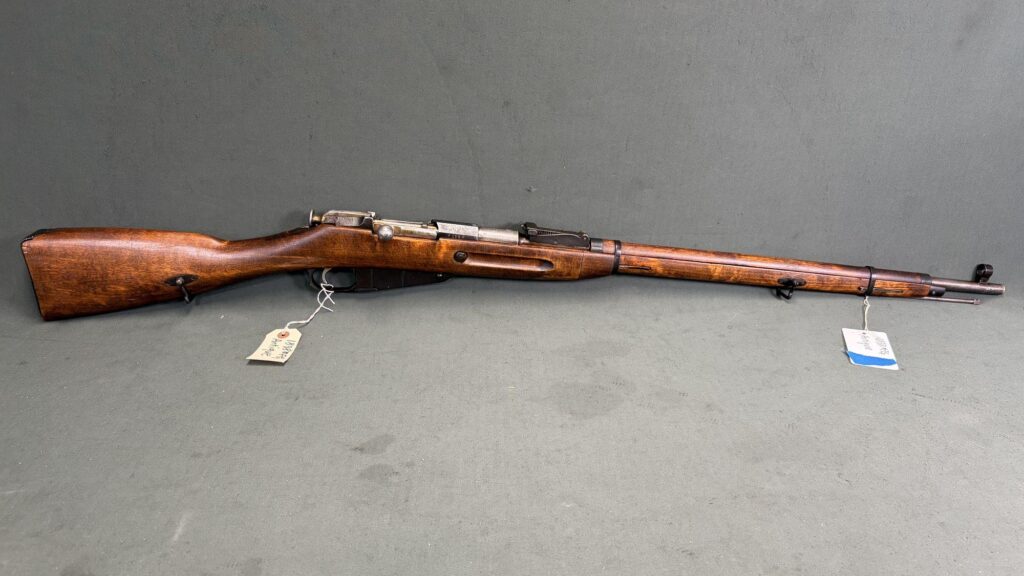 Antique (1898 Izhevsk receiver) Finnish Tikka M91/30 7.62×54R Tsar Crest$989.00
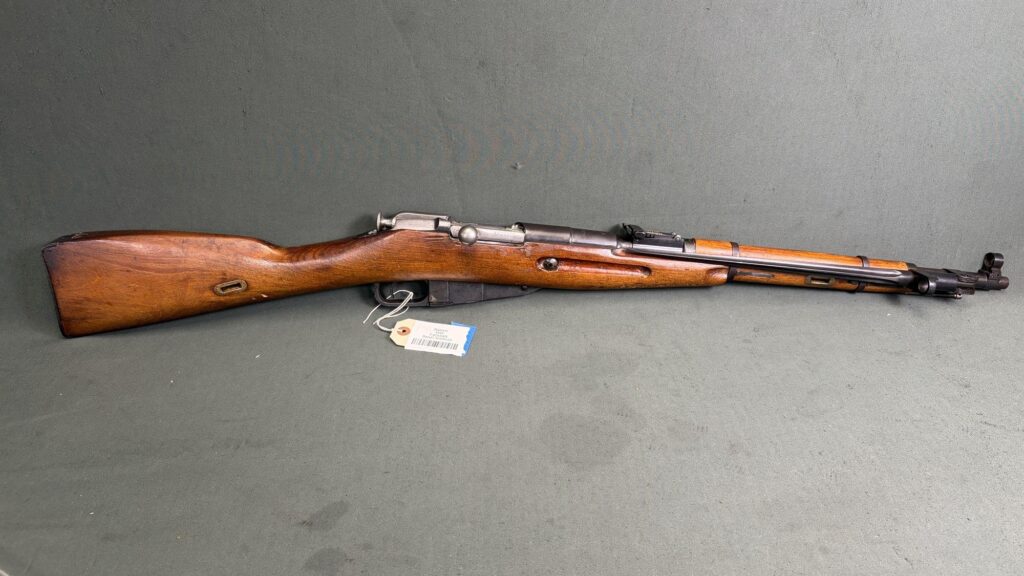 Polish M44 Mosin-Nagant Carbine 7.62×54R — Radom (Circle 11)$695.00
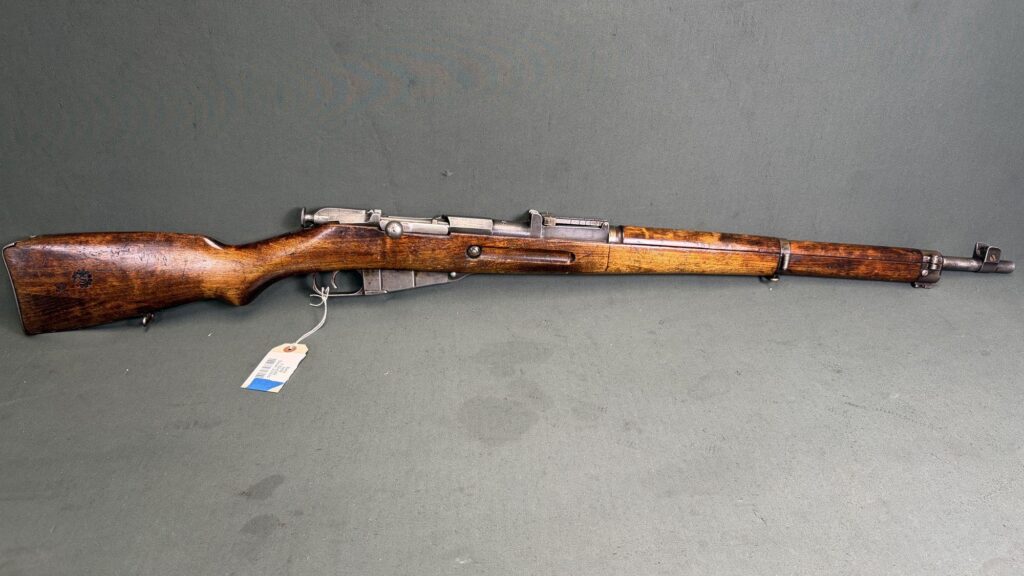 Finnish M39 Mosin-Nagant rifle chambered in 7.62×54R$949.00
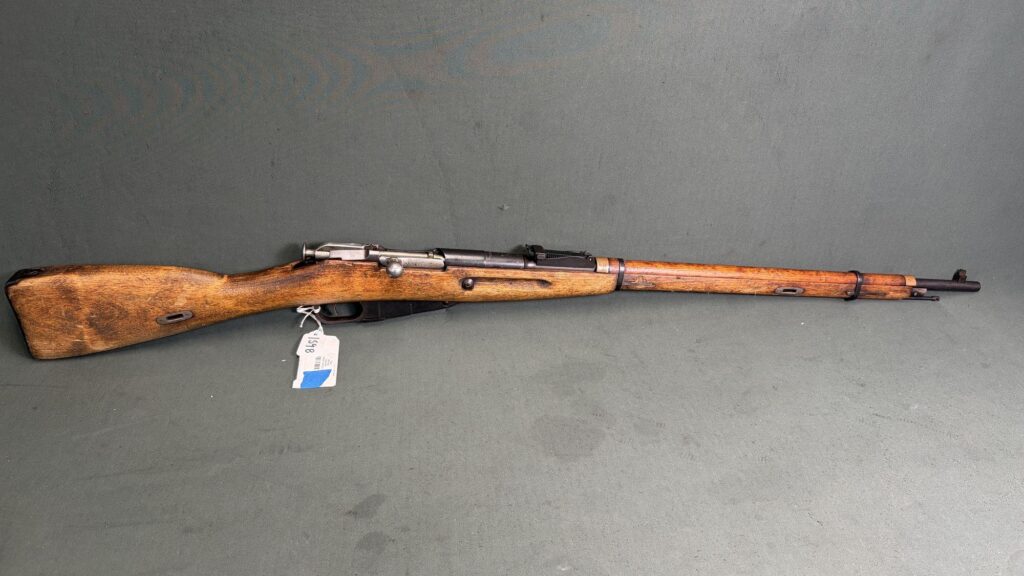 Finn captured Mosin-Nagant M91/30 7.62×54R — 1937 Tula, SA-Marked, Non-Refurbished$589.00
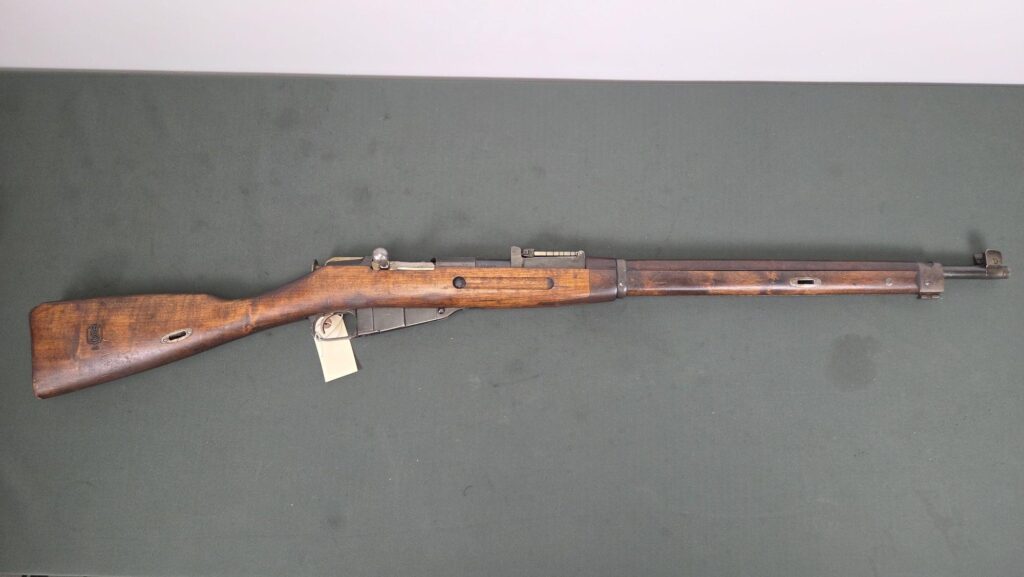 1940 chamber-dated SKY-marked Finnish M28/30$1,135.00
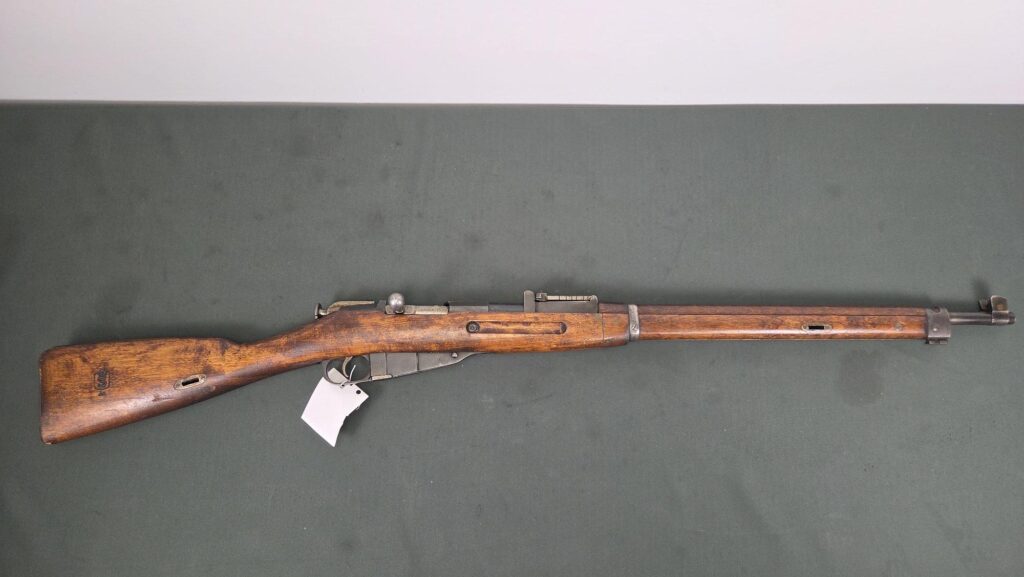 SKY-marked 1940-manufactured Finnish M28/30 rifle$1,100.00
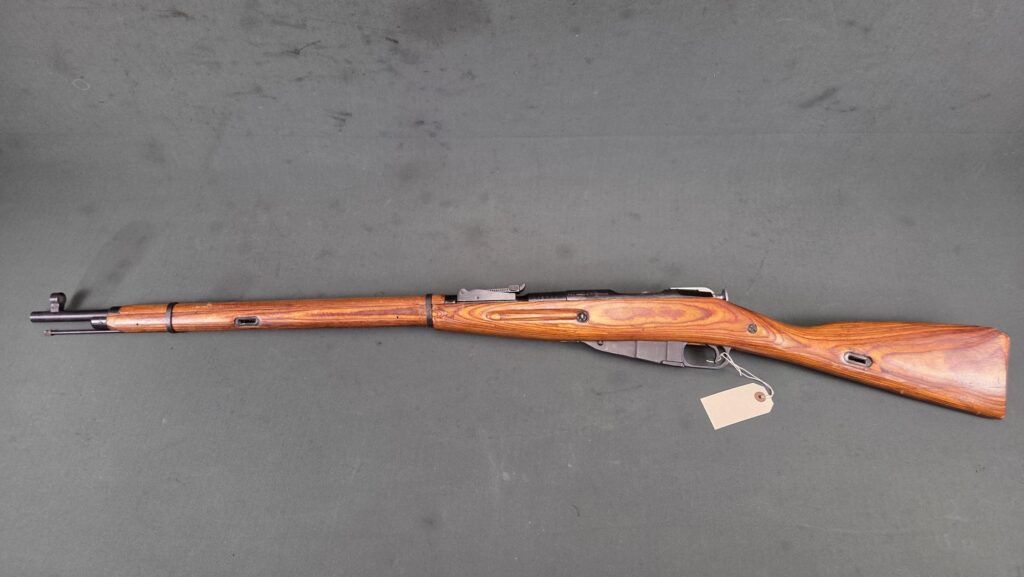 1943 Izhevsk-manufactured EX-sniper Mosin-Nagant 91/30 rifle$695.00
 Finnish SA-marked M91 Mosin-Nagant 1915 Tula-manufactured$1,125.00
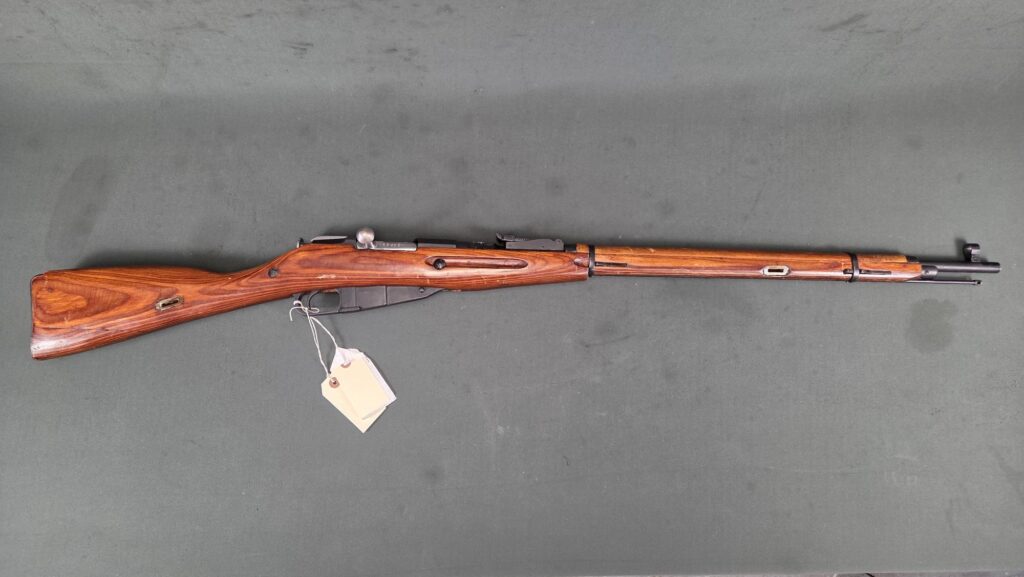 1926 Tula-manufactured Mosin-Nagant$595.00
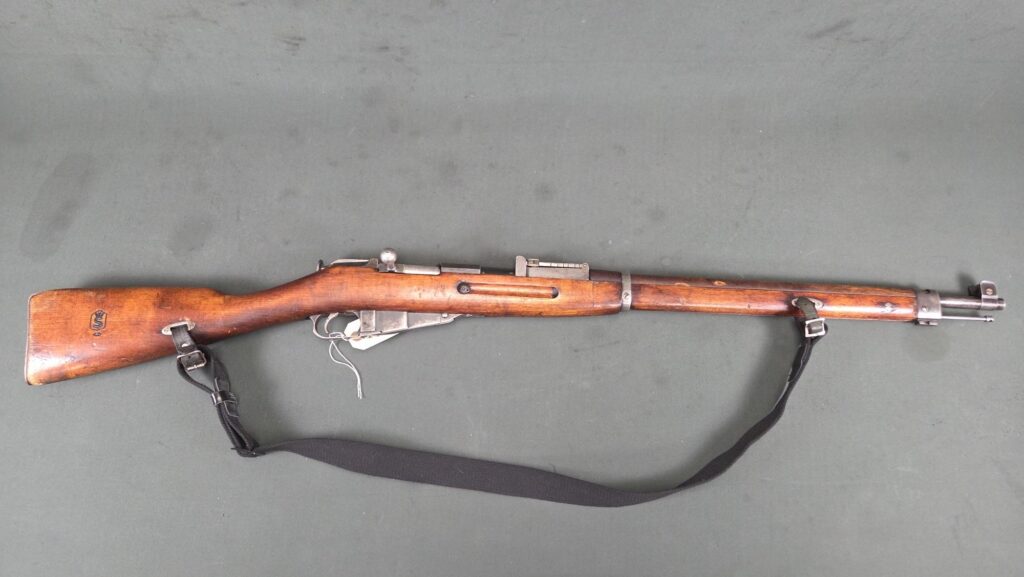 Finnish M28/30 rifle with a 1906-manufactured receiver$999.00
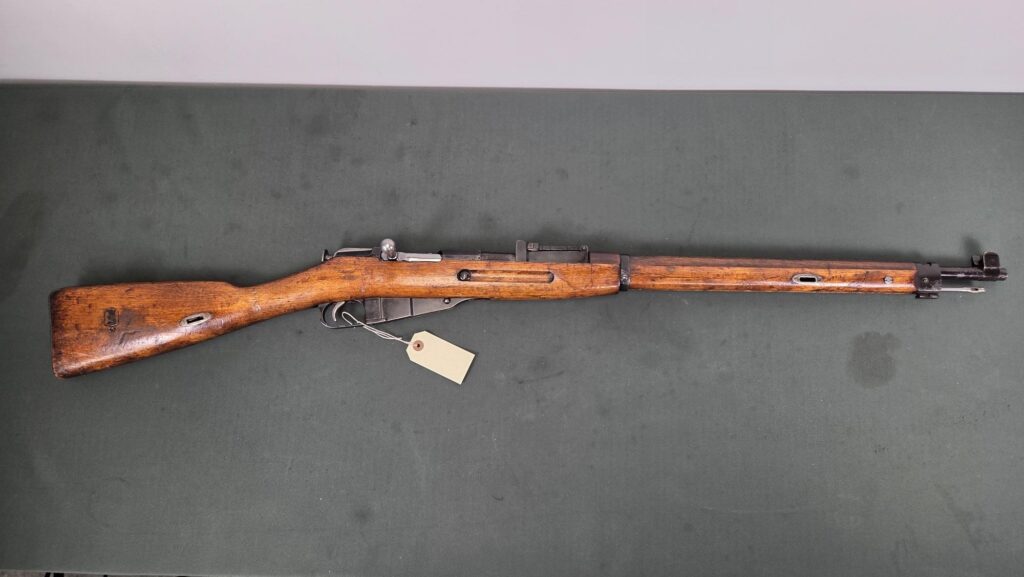 sky Finnish M28/30 rifle, 1935 dated$899.00
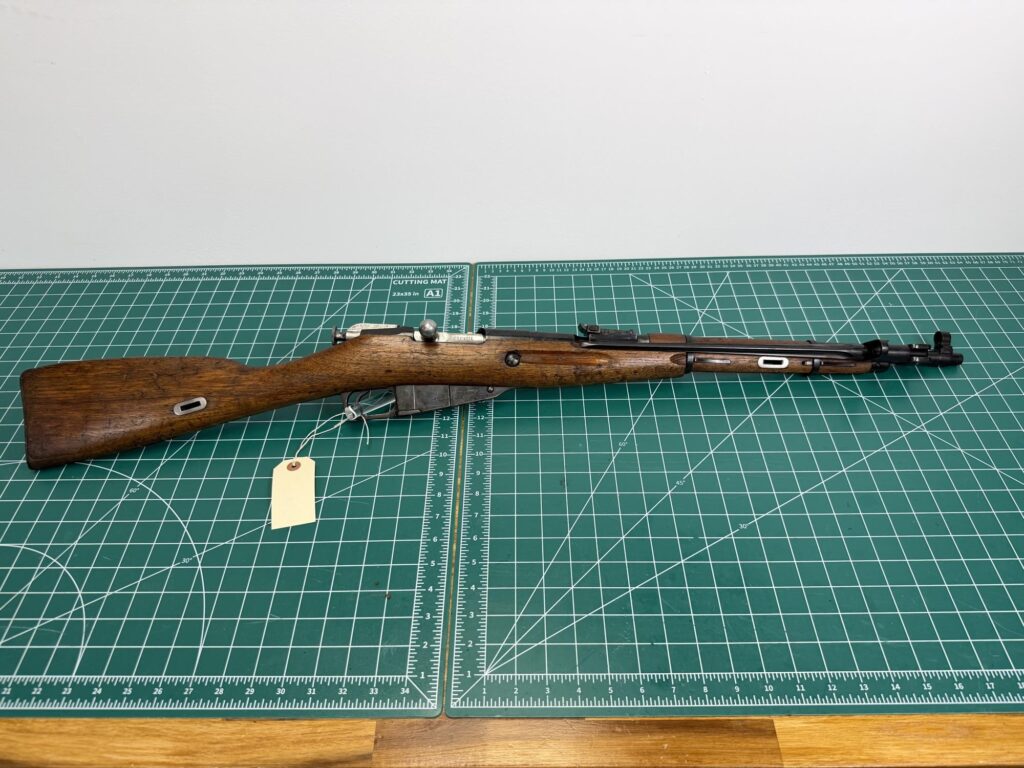 Type 53$545.00
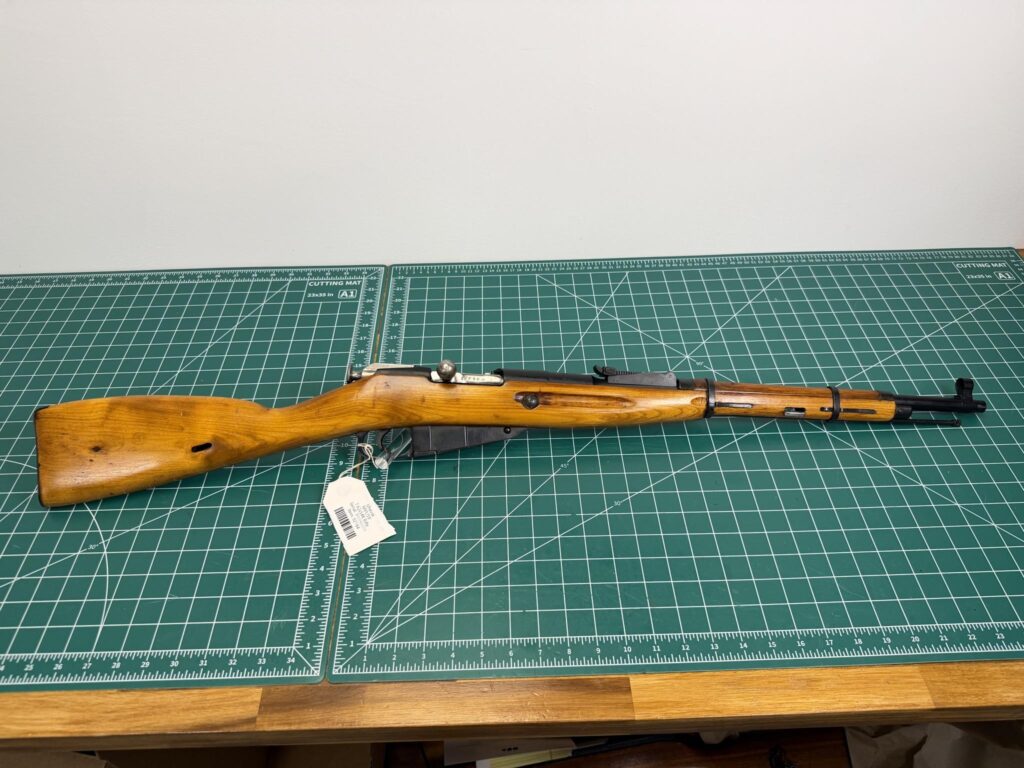 Izhevsk M1891/59 Mosin rifle$589.00
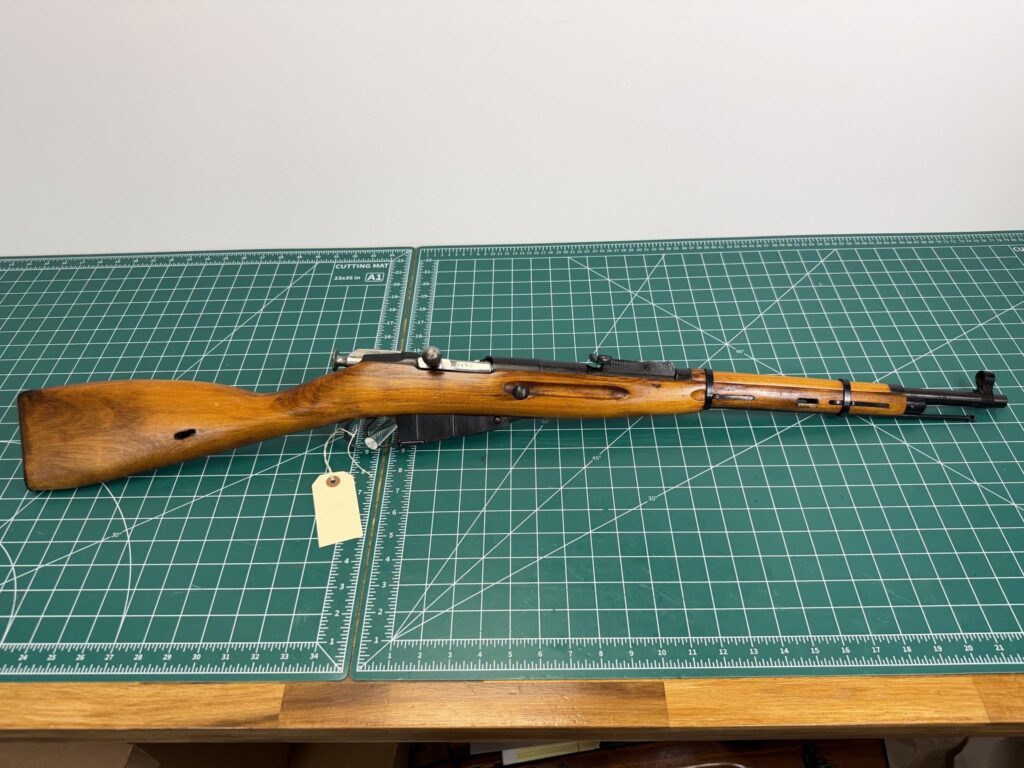 1943 Tula 91/59 rifle$615.00
Shop Mosin-Nagant rifles in stock now →
Common Questions
What is the difference between a hex receiver and a round receiver Mosin-Nagant?
Early Mosin-Nagant receivers were machined with a flat-sided, octagonal profile at the rear — collectors call that a hex receiver. From the mid-1930s, Soviet production moved toward a cheaper, faster round receiver. On a Russian or Soviet rifle the shape is a rough date marker: hex often earlier, round wartime and later. The shape does not change the calibre, the bolt, or how the rifle shoots. On Finnish rifles an old Russian hex receiver was routinely reused under a new Finnish barrel decades later, so a hex receiver on an M39 says nothing about when that rifle was built as an M39. See current Mosins → /firearms/mosin-nagant/Where is a Mosin-Nagant dated, and why do Finnish rifles show two different dates?
On a Russian or Soviet Mosin the year is stamped on the receiver alongside the arsenal mark — that single date is the production year. Finnish rifles carry two dates: the receiver keeps its original Russian date (often 1890s–1910s), while the Finnish barrel fitted later carries its own date on the barrel shank next to the maker mark. A receiver stamped 1898 under a barrel stamped 1942 is what a correct Finnish rebuild looks like, not a mismatch. Read together, the pair tells which arsenal made the action and which Finnish shop rebuilt it. See current Mosins → /firearms/mosin-nagant/What is a counterbored muzzle on a Mosin-Nagant, and does it hurt accuracy?
Counterboring is an arsenal repair: the last stretch of the bore is drilled slightly oversize so the rifling crown sits back on fresher steel. Soviet and Finnish arsenals did it deliberately on worn or damaged muzzles. It is not a sign the rifle is shot out. A counterbored barrel with sound rifling further down commonly shoots serviceably; identify it from the muzzle as a smoother, wider section ahead of the rifling. See current Mosins → /firearms/mosin-nagant/What is an arsenal-refurbished Soviet Mosin-Nagant, and how can you tell?
After WWII the Soviet Union ran surviving rifles through arsenal lines, rebuilding them to serviceable standard for storage. Refurbished rifles often show re-applied finish, replaced or reconditioned stocks, and force-matched numbers — parts assembled then electro-pencilled or restamped to the receiver serial. Electro-pencilled numbers look scratched and slightly wavering rather than crisply struck. Refurbishment is common and not a mechanical defect; it does affect how collectors weigh originality. See current Mosins → /firearms/mosin-nagant/What is an ex-sniper 91/30, and how does it differ from a PU sniper rifle?
A PU sniper is a 91/30 selected for accuracy, fitted with a mount and PU telescopic sight, usually with a bent bolt handle to clear the scope. An ex-sniper is one of those rifles after the mount was removed and the rifle returned to ordinary service or refurbished to standard configuration. The tell is filled mounting holes in the left side of the receiver, and often a bolt handle replaced or straightened. Ex-snipers are a collectible sub-type; they are not the same as a complete PU with original scope and mount. See current Mosins → /firearms/mosin-nagant/What are the finger-spliced stocks seen on Finnish Mosin-Nagant rifles?
A finger splice joins a new section of stock to the original with interlocking wood fingers glued together, often at the forend or wrist. Finland used the technique as arsenal practice when good blanks were scarce. On an M28/30 or M39 a neat, tight splice is correct factory work, not a later amateur repair. Separate that from a crude modern glue job that does not interlock and does not match the rest of the stock. See current Mosins → /firearms/mosin-nagant/Does an importer stamp reduce the value of a Mosin-Nagant?
An importer marking is a small stamp on barrel or receiver naming the company that brought the rifle into the United States — required on firearms imported since 1968. Nearly every surplus Mosin sold in America carries one. On a shooter-grade rifle it usually has little effect. On a high-condition collector piece, stamp size and placement matter to some buyers. The stamp does not make a rifle a reproduction or a parts gun, and it says nothing about original arsenal build or matching. See current Mosins → /firearms/mosin-nagant/Which Mosin-Nagant variants have a permanently attached folding bayonet?
The M44 carbine has a bayonet permanently hinged on the front sight base — folds alongside the barrel, swings forward to lock. The Chinese Type 53, a 91/44-pattern carbine, shares that arrangement. The full-length 91/30 uses a detachable socket bayonet. The M91/59 cut-down has no bayonet. Knowing which pattern should have which fitting is a quick check that a carbine is what it is described as. See current Mosins → /firearms/mosin-nagant/Sources
- NRA Museums — Mosin Nagant Model 1891 Bolt Action Rifle — nramuseum.org
- National Army Museum (UK) — object note, Mosin-Nagant — collection.nam.ac.uk
- Jalkaväkimuseo (Finnish Infantry Museum) — Riikka Sinokki, Civil Guard Weaponry (4 Jan 2022) — jalkavakimuseo.fi
- Ilmatorjuntamuseo — 7.62 Military Rifle M39 “Ukko-Pekka” — ilmatorjuntamuseo.fi (cites Palokangas, 1991)
- Jaeger Platoon — Finnish Army 1918–1945 rifles (M/39 pattern specs) — jaegerplatoon.net/RIFLES3.htm
Museum and specialist sources sometimes disagree on exact production totals and end dates. We cite them for pattern history — not as inventory claims for Old Steel Arsenal stock.